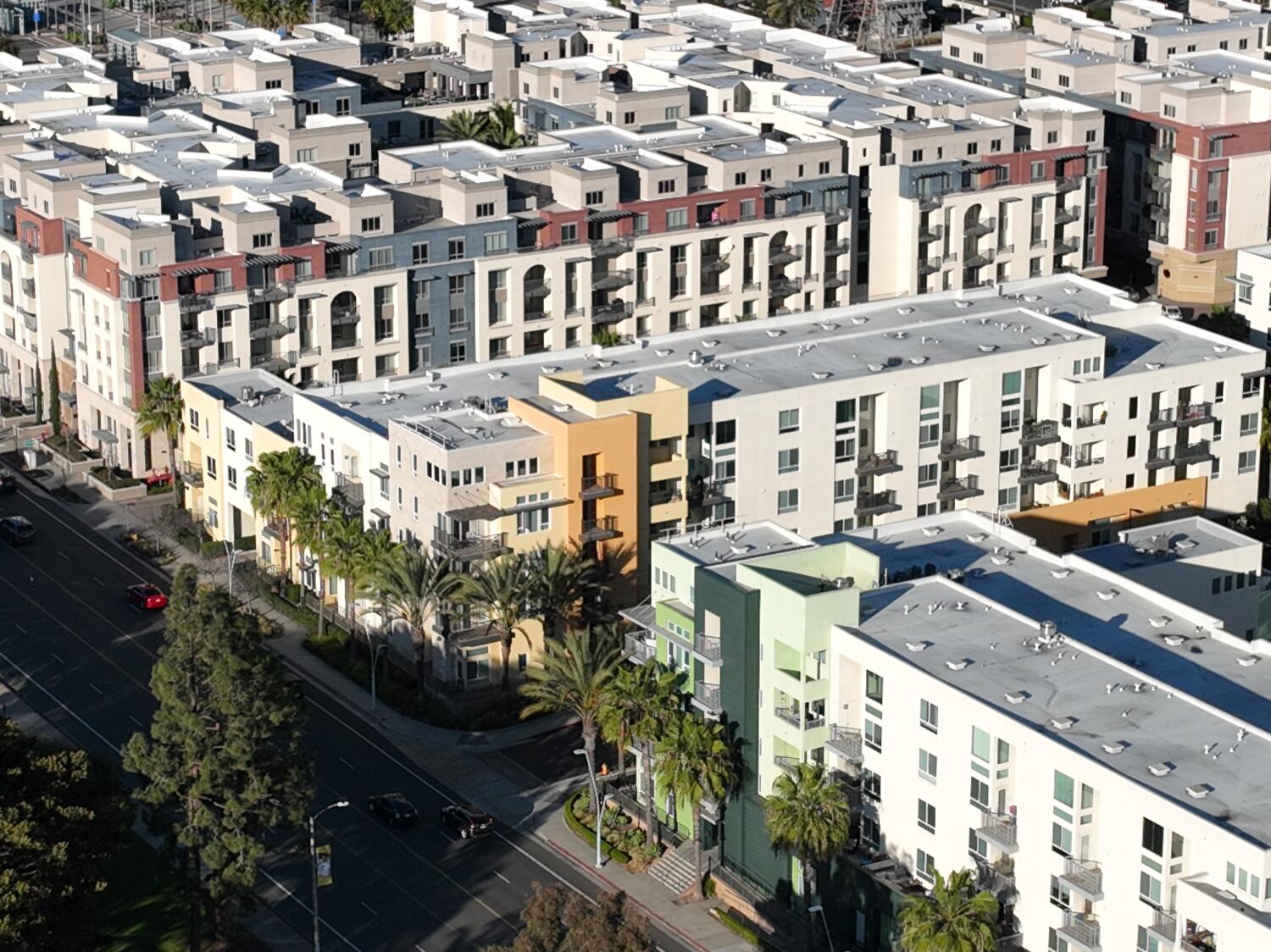
The Los Angeles Planning Department is patting itself on the back for a sleight of hand that would make a Vegas magician blush. By touting a "bold" move to allow four-story buildings in single-family zones, they aren't fixing the housing crisis. They are performing a controlled demolition of Senate Bill 9 (SB 9) to ensure the status quo remains untouched.
If you think a four-story apartment building is coming to a quiet cul-de-sac in Bel Air or Brentwood anytime soon, you’ve been sold a bridge. This isn't a "density revolution." It is a bureaucratic firewall designed to delay real progress while pretending to lead it. For an alternative view, check out: this related article.
The city’s proposal to allow these heights in "sensitive" areas—ostensibly to comply with state law—is actually a poison pill. By creating their own local version of density rules, L.A. officials get to override the more aggressive state mandates. It is a classic move: "We’re doing something, so please stop making us do the thing that actually works."
The Myth of the "Missing Middle"
Every urban planner in a Patagonia vest loves to talk about the "missing middle." They claim that if we just build duplexes and small apartments, the housing market will stabilize. Similar analysis regarding this has been published by Financial Times.
It won't.
The math is broken. I have spent a decade looking at pro-formas for mid-sized residential projects. When you factor in the cost of land in Los Angeles, the predatory permitting fees, and the "discretionary review" process that can take three years, a four-story building isn't a solution. It’s a financial suicide mission.
To make a four-story project "pencil" in a high-value ZIP code, a developer has to charge luxury rents. You aren't getting workforce housing. You are getting $4,500-a-month "micro-studios" with a view of an alley. The city knows this. By pushing for four stories instead of allowing true high-density where it belongs, they ensure that only a handful of these projects ever get built. It's performative policy.
SB 9 and the Art of the Stall
SB 9 was supposed to be the "NIMBY Killer." It allowed homeowners to split their lots and build up to four units. It was supposed to bypass the endless city council hearings where retired neighbors complain about "neighborhood character" (code for "I don't want renters near me").
L.A.’s new plan is a tactical retreat. By "allowing" four stories in specific zones, the city creates a new layer of local regulation. Once the city has its own plan in place, it can argue that state intervention is no longer necessary. They are choosing the lesser of two "evils"—controlled, slow-moving local density over the rapid, market-driven density the state wants to impose.
The "delay" mentioned in the headlines isn't a byproduct; it is the goal. Every month of delay is another month where property values for existing homeowners skyrocket while the younger generation is priced out into the Inland Empire.
The Infrastructure Lie
The most common weapon used against density is the infrastructure argument. "Our pipes can't handle it!" "The traffic will be a nightmare!"
Let’s be clear: L.A.’s infrastructure is failing because the tax base is stagnant and spread too thin. Density is the only way to pay for better pipes and better transit. Sprawl is a Ponzi scheme where new suburbs pay for the crumbling infrastructure of the old ones.
When a city official tells you we can't have four-story buildings because of "capacity issues," they are admitting to a century of mismanagement. They aren't protecting your water pressure; they are protecting the exclusionary zoning that keeps their donor base happy.
Why 100% Affordable Mandates Kill Housing
The city’s plan often comes with "incentives" for affordable housing. On paper, it sounds noble. In reality, it’s a tax on new residents.
If you tell a developer they can build four stories but 25% must be "deeply affordable," you have just increased the rent for the other 75% of the tenants. You are forcing the new middle-class residents to subsidize the lower-income residents because the government refuses to do its job.
This creates a "doughnut hole" in the market. We get ultra-luxury condos and subsidized "lottery" housing. The person making $80,000 a year? They get nothing. They get a U-Haul rental to Texas.
The Counter-Intuitive Truth: We Need More Five-Over-Ones
Critics hate the "Five-Over-One"—those boxy, wood-framed apartment buildings that look the same in every city. They call them ugly. They call them soulless.
I call them the only thing standing between us and total economic collapse.
The reason they are everywhere is that they are efficient. They use standardized materials. They maximize the height allowed by fire codes without requiring expensive steel-frame construction. By capping "single-family zone" conversions at four stories, L.A. is intentionally hobbling the efficiency of the modern building industry. They are forcing developers into a height bracket that is too tall for a house but too short to be truly profitable.
It’s the "Goldilocks Zone" of failure.
The NIMBY Feedback Loop
The city’s plan includes "community input" phases. This is where good ideas go to die.
When you ask a neighborhood if they want a four-story building next door, the answer will always be "no." Not because it's a bad building, but because human beings are biologically wired to resist change to their immediate environment.
True leadership means ignoring the "input" of 50 angry people at a community meeting to serve the 50,000 people who need a place to live. By framing this four-story plan as a "compromise," the city is signaling that they are still willing to negotiate with the forces of stagnation.
Stop Asking for "Compatibility"
The competitor article stresses that these new buildings must be "compatible" with existing neighborhoods.
"Compatibility" is a dog whistle.
It means "make the building so small and so expensive to design that it doesn't bother the person living in the 1950s bungalow next door." If we wanted compatibility, we’d still be riding horses. Cities are supposed to evolve. The most vibrant neighborhoods in the world—Paris, Tokyo, New York—are a chaotic mix of heights and styles.
L.A.’s obsession with "neighborhood character" is a death cult. It’s the preservation of a museum exhibit at the expense of a living, breathing city.
The Hard Reality of Land Values
Here is the data the planning department won't show you: The average lot in a "sensitive" L.A. zone costs $1.2 million.
- Land: $1,200,000
- Soft Costs (Permits/Architecture/Legal): $400,000
- Construction (4 units at $350k each): $1,400,000
- Financing Costs: $300,000
Total: $3.3 million.
To make a 15% profit (which banks require to even issue a loan), the developer needs to sell those four units for nearly $1 million each.
That isn't "affordable." That isn't "solving" anything.
The only way to drive prices down is to allow 10, 20, or 50 units on that same lot. But the city won't do that. They’d rather argue about whether a fourth story "blocks the sun" for a swimming pool that hasn't been used since 1998.
The Verdict
The city’s plan to delay SB 9 by offering a four-story "alternative" is a masterclass in bureaucratic survival. It satisfies the state's minimum requirements while ensuring that the actual physical reality of Los Angeles doesn't change an inch.
It is a plan for more lawsuits, more delays, and more expensive housing.
Don't celebrate the four-story "concession." It’s the scrap of bread they’re throwing you so you don't notice they’ve locked the bakery doors. If we want to fix L.A., we don't need "four stories in some zones." We need to stop pretending that single-family zoning is a sacred right instead of a failed 20th-century experiment.
Until the city stops "planning" and starts permitting, the housing crisis isn't a problem to be solved—it’s a policy choice being made every single day.
Build up or shut up.