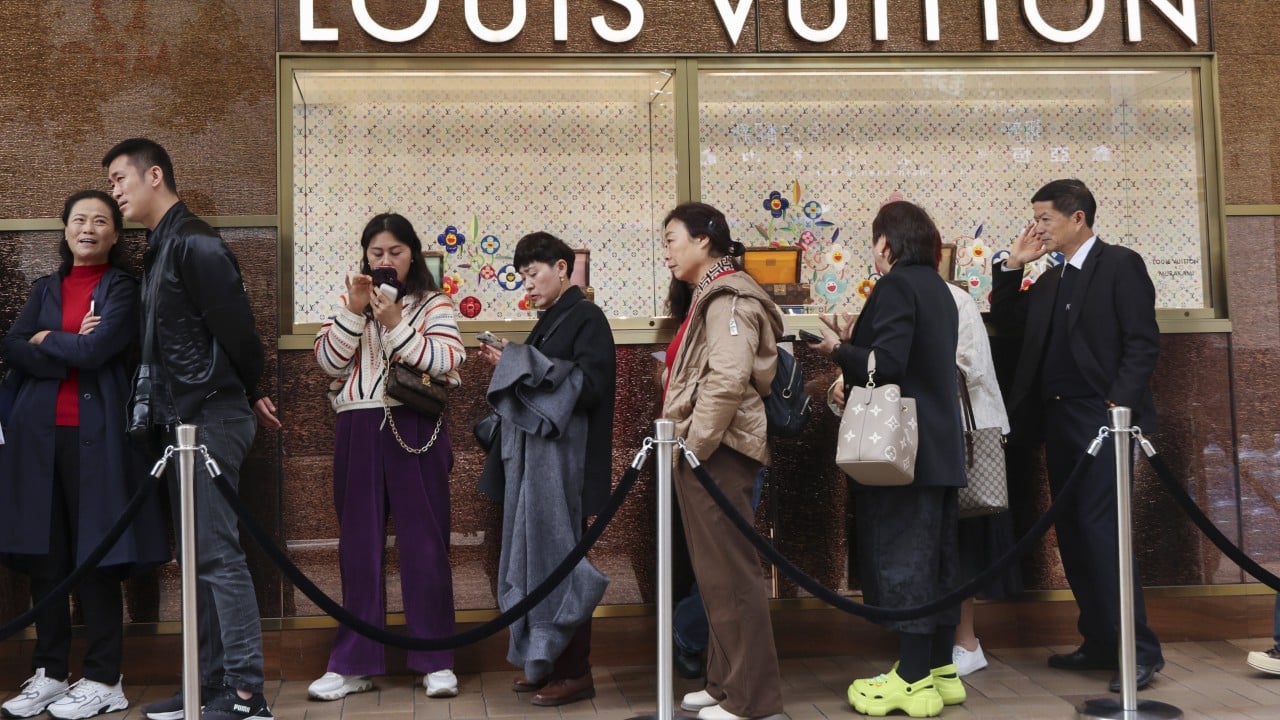
The luxury fashion elite loves a good courtroom drama. When word broke that Louis Vuitton Malletier dragged China’s National Intellectual Property Administration (CNIPA) to the Beijing Intellectual Property Court, the legal and fashion press predictably fell over themselves. The consensus narrative was instant: a brave, multi-billion-dollar bastion of Western heritage fighting the good fight against the unstoppable tide of Chinese counterfeits. It is a comforting, high-minded story about protecting brand equity.
It is also completely wrong. For another perspective, consider: this related article.
Taking a sovereign state's regulatory body to court over trademark disputes is not a display of strength. It is an admission of failure.
For decades, European luxury houses have operated under the delusion that Western legal frameworks can simply be copy-pasted into the Chinese market. They view intellectual property through a rigid, litigious lens, believing that if you file enough lawsuits, the market will magically purify itself. I have watched multinational corporations burn tens of millions of dollars on aggressive IP litigation in Asia, only to secure pyrrhic victories that do absolutely nothing to shift consumer behavior or stop the flow of unauthorized goods. Further coverage on the subject has been published by The Motley Fool.
Louis Vuitton’s legal offensive against the CNIPA is the ultimate manifestation of this systemic blindness. By treating a cultural, economic, and logistical challenge as a mere courtroom technicality, the brand is exposing its own strategic fragility in its most critical growth market.
The Illusion of Judicial Enforcement
Let us dismantle the core premise of the luxury legal strategy. The conventional wisdom states that aggressive trademark enforcement in Chinese courts builds a protective wall around a brand’s intellectual property.
It does not.
In the realm of global commerce, winning a trademark lawsuit in Beijing is not the same as eradicating IP infringement on the ground. China's market mechanics are hyper-fragmented and decentralized. The CNIPA operates under a massive, overwhelmed administrative apparatus that handles millions of filings a year. When a Western brand sues the regulator over a rejected trademark or an invalidation ruling, they are fighting a bureaucratic phantom.
Imagine a scenario where Louis Vuitton wins every single legal challenge it brings against the CNIPA over the next twenty-four months. What changes on the streets of Guangzhou or the digital storefronts of domestic e-commerce platforms? Nothing.
The production and distribution of replica goods do not rely on official trademark registrations. The underground economy thrives entirely outside the bounds of CNIPA approval. By shifting its focus to high-profile lawsuits against government entities, Louis Vuitton is misallocating resources away from the actual battlefield: supply chain disruption, digital authentication, and localized consumer education.
The Counter-Intuitive Truth About Luxury Replicas
Here is the reality that luxury executives refuse to admit in public: litigation cannot fix a demand-side problem.
The standard corporate narrative positions counterfeiting as a parasitic parasite draining revenue from the rightful brand owner. The data tells a far more complicated story. Academic research into consumer behavior, including long-term studies on luxury brand consumption in East Asia, consistently demonstrates that the market for replicas and the market for authentic $3,000 handbags overlap far less than the legal departments want you to believe.
- The Aspirational Buyer: A consumer purchasing a $50 replica canvas tote on a social commerce app was never in the conversion funnel for an authentic piece. They lack the disposable income. The replica acts as free, decentralized marketing, driving cultural ubiquity for the brand's visual language.
- The Affluent Arbitrageur: Conversely, wealthy consumers who buy authentic goods do so for the status, the retail experience, and the social signaling. They are not tricked into buying fakes; they know exactly what they are purchasing.
When Louis Vuitton wages an aggressive, highly publicized legal war against domestic regulators, it risks alienating the very market it seeks to protect. It frames the Western brand as an antagonistic outsider weaponizing courts against local institutions, rather than an integrated participant in the domestic economy.
Why the First to File Rule Isn't the Real Enemy
Western legal teams constantly complain about China’s "first-to-file" trademark system, contrasting it with the "first-to-use" system prevalent in the United States. They frame it as an inherently flawed structure that favors opportunistic local squatters over established global giants.
This argument is lazy. The first-to-file system is used by the vast majority of countries worldwide, including the European Union. The problem is not the law; the problem is corporate complacency.
Too many luxury brands entered the Chinese market late, assuming their global fame exempted them from local administrative realities. They failed to defensively register their core marks, sub-brands, transliterations, and historical logos across all relevant product classifications decades ago.
Now, they are paying the price for that historical arrogance. Suing the regulator to overturn a decision that was likely reached through a strict application of existing statutory law is an attempt to rewrite history through judicial pressure. It rarely works, and it creates deep institutional friction with the very regulators whose cooperation is required for real, boots-on-the-ground enforcement actions.
The Danger of Regulatory Friction
You cannot sue a regulator on Monday and expect their field agents to enthusiastically raid an illegal manufacturing facility on Friday.
Real IP protection in China relies on administrative enforcement—working directly with the State Administration for Market Regulation (SAMR) and local law enforcement to seize physical inventory and shut down production lines. This requires deep institutional trust, constant communication, and a shared operational alignment.
When a brand takes the CNIPA to court, it shifts the dynamic from collaborative enforcement to adversarial litigation. It forces government lawyers to defend their administrative decisions in a public forum. The institutional blowback from this approach is subtle but devastating:
- Slower Administrative Processing: Future trademark applications and modifications submitted by the litigious brand face hyper-scrutiny, delaying product launches and market pivots.
- Deprioritized Field Actions: Local enforcement bureaus, taking cues from the top, may reallocate their limited raid resources to brands that adopt a more cooperative, less confrontational stance.
- Loss of Local Nuance: Legal battles in Beijing do nothing to address the regional protectionism that often shields large-scale manufacturing hubs in the provinces.
Stop Suing, Start Out-Innovating
The obsession with legal dominance has blinded the luxury sector to technological and strategic alternatives that actually work. If a brand wants to secure its market share and protect its intellectual property in China, it needs to abandon the courtroom and focus on operational realities.
Weaponize Traceability
Instead of asking a judge to declare a monogram exclusive, embed proprietary cryptographic tech directly into the product architecture. Blockchain-backed digital product passports, unique near-field communication (NFC) chips woven into the lining, and un-clonable material DNA markers do more to secure authenticity than a stack of legal briefs ever could. This shifts the burden of proof from a flawed legal system to immutable technology.
Flip the Scarcity Mechanics
The ultimate antidote to replication is extreme scarcity and hyper-localization. Counterfeiters rely on mass-produced, static designs that remain in a brand's catalog for years. By accelerating the cadence of limited-edition, regionally exclusive drops created in collaboration with domestic artists, a brand can outrun the replica supply chain. By the time a counterfeit factory reverse-engineers a design, samples it, and scales production, the authentic trend has already moved on.
Own the Resale Ecosystem
The rise of secondary luxury platforms in China presents a massive opportunity. Instead of fighting external platforms over counterfeit listings, brands must launch their own authorized, certified pre-owned marketplaces domestically. By controlling the secondary market, authenticating the goods themselves, and offering trade-in incentives for new purchases, brands can dry up the liquidity of the unauthorized market from the inside out.
The legal team at Louis Vuitton will undoubtedly view their latest court filings as a necessary defense of a historic legacy. They will rack up billable hours, issue press releases, and perhaps even win a few narrow legal points on appeal.
But the broader war is already being lost. While Western luxury houses hide behind high-priced litigators to fight bureaucratic battles, the market is moving forward. True market dominance in China belongs to those who understand that prestige cannot be legislated into existence. It must be maintained through relentless cultural relevance, structural agility, and technological supremacy.
Put down the legal briefs. Fix the strategy.