The mainstream media is suffering from a severe case of Apollo-era nostalgia, and it is blinding everyone to reality.
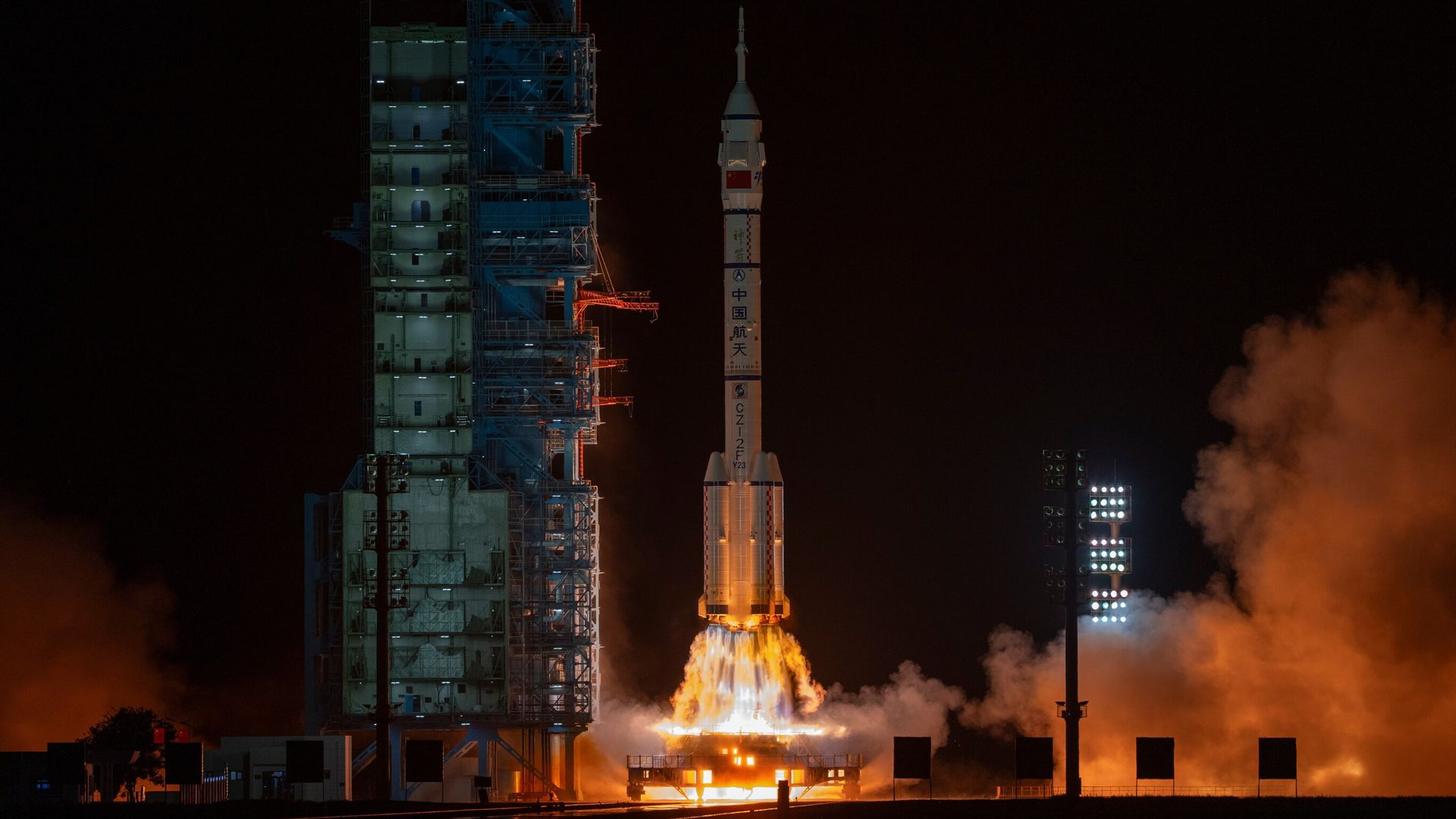
Open any major news outlet and you will see the same breathless narrative: China just launched another crew of taikonauts to the Tiangong space station, signaling an "intensifying lunar race" that threatens Western dominance. The talking heads are in a full panic, painting a picture of a 21st-century Cold War where the first nation to plant a flag at the lunar south pole owns the moon. Recently making headlines in related news: The Multi Billion Dollar Machine Kept in the Dark.
It is a compelling story. It is also entirely wrong.
The premise that the United States and China are locked in a neck-and-neck sprint to the moon fundamentally misunderstands the geopolitics, the economics, and the engineering of modern spaceflight. There is no lunar race. What we are actually witnessing is a sluggish, bureaucratically bloated prestige pageant on both sides—and the West is falling into a strategic trap by pretending otherwise. More information into this topic are explored by TechCrunch.
The Flawed Premise of the "New Space Race"
The media loves a binary conflict. USA vs. USSR worked in the 1960s, so they are recycling the script for USA vs. China today. But the mechanics of the current era do not match the old playbook.
During the Apollo program, NASA swallowed over 4% of the US federal budget. Today, NASA hovers around 0.5%. The political will for a blank-check space race simply does not exist in Washington or Beijing.
More importantly, the strategic value of the moon has been wildly overstated. Mainstream articles point to water ice in permanently shadowed craters at the lunar south pole as if it is oil in the 1920s Middle East. They claim whoever controls this ice controls the future of deep space travel, using it to manufacture rocket propellant.
Let us look at the actual physics. Mining volatile ice in a -250°C crater, processing it into liquid hydrogen and liquid oxygen, storing it at cryogenic temperatures without boil-off, and launching it off the lunar surface is an engineering nightmare of epic proportions. I have spent years analyzing aerospace supply chains, and the consensus among deep-tech logistics experts is clear: until you have a fully functioning, heavy-industrial infrastructure on the moon—which is decades away—it is vastly cheaper and more efficient to just launch fuel from Earth.
By treating the moon as a prize to be won in a mad dash, we are prioritizing flag-planting over sustainable infrastructure. China knows this. They are not sprinting; they are walking a slow, deliberate line.
China Is Not Sprinting, They Are Copying
To understand why the "race" narrative is broken, you have to look at what China is actually doing.
The recent launches to the Tiangong space station are impressive operational achievements, but they are not revolutionary. Tiangong is roughly one-fifth the mass of the International Space Station (ISS). The technology underpinning it—modular habitats, life support loops, docking mechanisms—is essentially a refined, modernized version of the Soviet Mir architecture from the 1980s.
China’s lunar roadmap aims for a crewed landing by 2030. NASA’s Artemis program, despite its systemic delays and budget overruns, is still targeting a crewed landing years before that.
So where is the race?
China's space program is highly risk-averse and tied to rigid five-year bureaucratic plans. They do not do leaps; they do iterations. They watch what the West does, let the West absorb the astronomical R&D costs of pioneering new architectures, and then build their own version at a lower price point.
Calling this a race is like saying a runner pacing themselves two laps behind the leader is about to win the marathon.
The Artemis Elephant in the Room
If the Chinese program is a slow, methodical march, the American response is a chaotic, politically motivated mess.
The Western establishment insists that the Artemis program is our ticket to securing the cis-lunar economy. But as an industry insider, I have watched the defense primes bleed billions of dollars from taxpayers to build expendable hardware that belongs in a museum.
Consider the Space Launch System (SLS). It is a rocket built on legacy Space Shuttle components, designed primarily to sustain jobs across specific congressional districts. It costs over $2 billion per launch. Every time an SLS flies, that massive financial investment completely burns up in the atmosphere or crashes into the ocean.
Compare that to the commercial sector, where reusable architectures are radically driving down the cost per kilogram to orbit.
Rocket System      Reusability Scale     Estimated Cost Per Launch
------------------------------------------------------------------
NASA SLS           100% Expendable       $2,000,000,000+
SpaceX Starship    100% Reusable         $10,000,000 - $90,000,000 (Projected)
By framing our space strategy around a "race" against China, Washington politicians use national security panic to justify funding these obsolete legacy platforms. We are burning capital on a political trophy hunt instead of building a highly efficient, reusable orbital logistics network.
The real danger is not that China beats the US to the moon. The danger is that the US bankrupts its own space strategy by chasing a superficial timeline, while China quietly builds a low-cost, state-subsidized supply chain that undercuts Western commercial launch providers in the long run.
Dismantling the "Space Weaponization" Panic
The third pillar of the competitor's lazy argument is the imminent threat of space weaponization. The narrative suggests that if China reaches the moon first, they will establish military high ground, deploy kinetic weapons, or claim lunar territory in violation of the Outer Space Treaty.
This is fundamentally flawed.
From a military standpoint, the moon is a terrible strategic position. It takes three days to travel there. If you want to knock out an enemy's satellite constellation or disrupt their communications, you do it from Low Earth Orbit (LEO) or Geostationary Orbit (GEO)—not from 240,000 miles away. A weapon based on the moon gives you zero tactical advantage and massive latency issues.
Furthermore, territorial claims on the moon are functionally meaningless. You cannot guard a sphere with a surface area larger than Africa using a handful of astronauts. If China sets up a habitat at the Shackleton Crater, they own that specific patch of dirt—nothing more.
The panic over space territory is an artificial crisis manufactured by defense contractors looking to secure next-year hardware procurement contracts.
The Actionable Pivot: Stop Racing, Start Building
If we want to maintain dominance in space, we need to stop reacting to every Chinese launch with Cold War rhetoric. The current strategy is reactionary. We are letting Beijing dictate our priorities.
Here is the unconventional blueprint the Western aerospace apparatus needs to adopt immediately:
1. Defund Legacy Expendable Hardware
The SLS and its associated legacy components must be phased out. Hard stop. Continuing to pour billions into non-reusable heavy-lift systems to hit an arbitrary deadline is strategic suicide. Shift those funds entirely into public-private partnerships that incentivize fully reusable architectures.
2. Focus on LEO Infrastructure, Not Moon Dust
The economic engine of the space economy is, and will remain for the next half-century, Low Earth Orbit. This is where satellite communications, Earth observation, and point-to-point suborbital transport happen. If we abandon LEO to focus exclusively on deep-space flag planting, we lose the actual market that generates revenue.
3. Build a Legal Framework for Commercial Space Property
Instead of worrying about China breaking the Outer Space Treaty, the West needs to establish a robust, workable legal framework for private property and resource extraction in space. The Artemis Accords are a start, but they lack teeth. We need clear, enforceable commercial laws that give private investors the confidence to fund space-based manufacturing and asteroid mining without needing a government safety net.
The media will keep writing the "Lunar Race" headline because panic sells newspapers and drives clicks. But do not buy into the hysteria.
China is playing a long, calculated game of economic emulation. The US is playing a short-term game of political theater. If we keep sprinting to the moon just to prove we can still do what we did in 1969, we will arrive there broke, exhausted, and utterly unprepared for the actual commercial space economy developing right above our heads.
Stop watching the launch pads in Hainan. Start looking at the balance sheets in Washington. That is where the real battle is being lost.