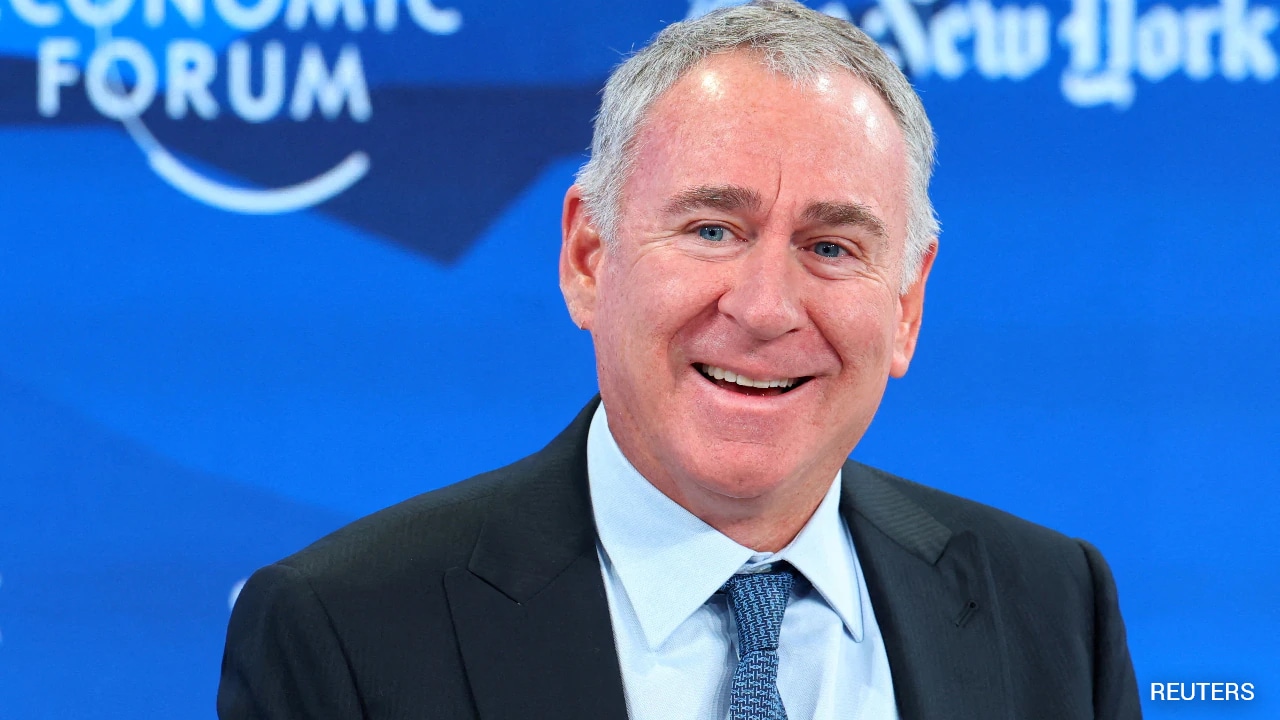
The screen flashes red. Numbers bleed downward in a synchronized cascade that usually ends in ruined careers, locked trading terminals, and the quiet, heavy click of an office door closing for the last time. Somewhere in Manhattan, a partner at a venerable trading house stares at his portfolio and feels the cold sweat of a margin call tightening around his throat. Markets are breaking. Liquidity has vanished. Everyone who promised to buy is suddenly running for the same narrow exit.
Then, the phone rings. Building on this topic, you can find more in: Why the US Dollar is Tanking Right Now and What Traders Are Missing.
It is not a plea. It is an offer. On the other line is a billionaire who has spent decades waiting for precisely this kind of total, suffocating terror.
Ken Griffin does not panic when the floor drops out. He calculates. While others see a collapsing financial system, the founder of Citadel sees a garage sale. Observers at Harvard Business Review have also weighed in on this trend.
To understand modern finance, you have to understand the psychology of the rescue buyer. These are not traditional philanthropists. They are apex predators of the balance sheet, entities with enough dry powder to alter the trajectory of a failing enterprise before the sun sets. When a massive broker-dealer wobbles on the edge of insolvency, or when a high-profile portfolio needs immediate stabilization, the speed of capital matters more than the sentiment. Speed is Citadel's primary currency.
Consider what happens inside a market maker during a liquidity crunch. Millions of retail investors are trying to sell shares simultaneously. Orders pile up like wrecks on a foggy highway. Normal market-making operations choke on the volume, paralyzed by the sheer mathematical risk of holding toxic inventory. But Citadel Securities handles a staggering fraction of all U.S. equities trading. They step into the breach because they have built a technological apparatus capable of pricing chaos in milliseconds.
People often wonder how a single firm accumulates that kind of influence. The answer lies in infrastructure and an absolute intolerance for hesitation.
Griffin started young. As an undergraduate at Harvard, he placed a satellite dish on the roof of his dorm room to stream real-time stock quotes, trading convertible bonds from a telephone line while his peers studied macroeconomics out of textbooks. By the time he founded Citadel in 1990 with a modest stake from grandmotherly seed capital and a handful of phone lines, he was already operating under a different set of physical laws. He understood that information velocity dictates profit.
Years later, during the 2008 financial crisis, the world teetered on a structural precipice. Lehman Brothers was gone. Bear Stearns had vanished into the jaws of JPMorgan. Entire institutions that had stood for a century dissolved over a weekend. In that freezing climate of 2008, when credit markets froze solid and institutional trust evaporated, Citadel faced its own terrifying drawdowns. Investors panicked. Redemption requests piled up. For a brief, white-knuckle moment, the empire wobbled.
Griffin did something counterintuitive. He locked the gates on redemptions, not out of panic, but out of preservation. He chose survival over immediate appeasement. It was a brutal, controversial move that earned him a fierce reputation among skittish allocators. Yet, it preserved the capital required to buy assets at the absolute bottom of the cycle. When the smoke cleared, Citadel emerged not weaker, but structurally dominant.
That survival instinct forged a specific kind of corporate DNA. Today, when a major financial entity experiences a liquidity crisis or needs to offload distressed portfolios to survive a regulatory squeeze, the Rolodex often points to Chicago.
When Melvin Capital imploded in 2021 during the meme stock frenzy—crushed by a coordinated retail rebellion and bad short positions—it was Griffin who anchored a critical capital infusion to stabilize the broader ecosystem before the shockwaves could cascade into systemic contagion. Critics viewed it through a cynical lens, seeing a rescue mission designed to protect institutional allies. Defenders saw it as a pragmatic firewall. Both perspectives miss the underlying reality: markets abhor a vacuum, and when a major participant implodes, someone has to absorb the shrapnel so the rest of the street can keep opening tomorrow.
Power in the modern financial architecture is invisible. It does not look like a boardroom with mahogany tables and cigar smoke. It looks like racks of servers humming in a nondescript data center in New Jersey, cooled by industrial fans, processing millions of orders a second. It looks like a quantitative model running simulations on a cluster of GPUs, calculating the probability of default for a corporate debt issuance before a human analyst can even open the PDF.
Griffin operates at the intersection of this cold, mathematical machinery and high-stakes political influence. Moving Citadel's sprawling headquarters from Chicago to Miami was more than a relocation of corporate mailing addresses; it was a loud statement about tax policy, urban safety, and the shifting geography of American wealth. He has poured tens of millions of dollars into political campaigns, shaping policy debates, funding educational institutions, and staking out a definitive position as a defender of free-market capitalism.
Yet, for all the public posturing and philanthropic donations to museums and medical centers, the core of the enterprise remains ruthlessly transactional.
When you strip away the billions of dollars in assets under management and the headlines about record-breaking real estate purchases from New York to Palm Beach, you are left with a fundamental human dynamic. It is the tension between order and entropy. Markets naturally tend toward chaos. Fear is contagious, spreading faster than any algorithm can rebalance a portfolio.
Men like Griffin thrive because they have trained themselves to feel the terror and use it as a compass. They do not fight the panic. They monetize it.
The terminal screen in lower Manhattan eventually stops flashing red. The stabilization package clears. The wire transfers land. A failing balance sheet is scrubbed clean, its toxic assets absorbed into a larger, hungrier portfolio. The executives who nearly lost everything step back into the daylight, nursing their wounds, wondering how close they really came to the abyss.
And miles away, in a quiet office overlooking a new skyline, another set of numbers ticks upward, measured, cold, and entirely indifferent to the storm outside.