The Cold Room at the Edge of Europe
There is a specific kind of quiet that belongs to intelligence headquarters. It is not the quiet of a library, which smells of old paper and dust. It is the quiet of a vault. Heavy doors with pneumatic seals. Air that has been conditioned until it has no taste. Light that stays the same whether a storm is breaking over the Spree or the sun is flattening out into a dull copper coin at dusk.
For years, Carsten Linke sat inside rooms very much like that.
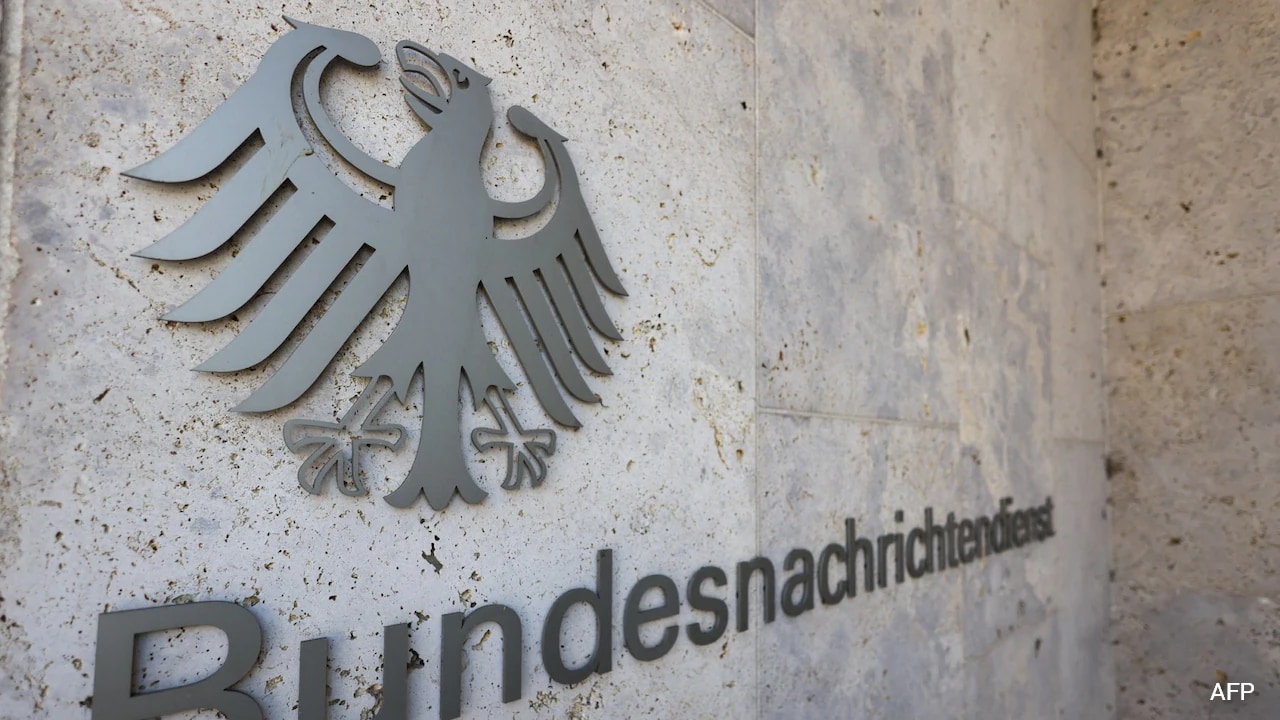
To look at him was to see the architecture of the modern state. Tailored charcoal suits that whispered nothing. Eyes that had been trained to slide off a face rather than meet it. A career built on the meticulous collection of whispers, the sorting of paranoia, the quiet compartmentalization of human lives into manila folders and encrypted files. He was the chief of operations for Germany’s foreign intelligence service, the Bundesnachrichtendienst. He was the man who decided which threats were real and which were ghosts.
Until the morning the ghosts came for him.
They did not burst through the frosted glass with automatic weapons. That belongs to the cinema. In the real world, the fall of a senior intelligence officer is remarkably bloodless. It looks like a change in the Wi-Fi password. It looks like an email that cannot be delivered. It looks like three men in plain grey jackets waiting by a black sedan in a gravel driveway, their hands tucked comfortably into their pockets, looking not at all like history, but very much like accountants who had found a discrepancy in the ledger.
We like to think of treason as a grand, operatic betrayal. We imagine midnight meetings on rain-slicked bridges in Vienna, a briefcase exchanged under a lamppost, a flash of microfilm. We want our villains to look like villains. We want them to sweat, to twitch, to smoke Russian cigarettes with intense, cinematic guilt.
Carsten Linke did not sweat. When the cuffs clicked around his wrists, his pulse likely did not register a blip that a polygraph would have flagged as irregular. He had spent his life managing risk. He had simply calculated a different set of odds, placed a different kind of bet on the table, and lost.
The Anatomy of a Fracture
How does a man whose entire existence is consecrated to the defense of a nation decide that the nation is no longer worth defending? Or perhaps, more accurately, how does he convince himself that the boundary lines have shifted?
To understand Linke's arrest, you have to abandon the neat categories of spy novels. This was not about ideology. Nobody was reading Marx by candlelight or dreaming of a workers' paradise. We live in an era of post-ideological cynicism, which is far more dangerous because it is entirely frictionless.
Consider the modern bureaucrat at the apex of power. He sees everything. He reads the intercepts that never make the front page of the Süddeutsche Zeitung. He watches politicians posture for the cameras by day and panic in private briefings by night. He sees the clumsy machinery of democracy grinding against the ruthless efficiency of autocracy. Over time, a peculiar form of rot sets in. It is the rot of the insider.
We are all just actors in a poorly staged play, the internal monologue whispers. Why not sell the program?
The allegation against Linke was as blunt as a hammer: passing state secrets to Russia. Not just any secrets, but the delicate, trembling nerve endings of German intelligence collection—assessments of Russian military capability, evaluations of intercepted communications, the names and contours of operations that took years to plant in the shifting soils of Eastern Europe.
Imagine sitting across from a handler from Moscow. No vodka. No clandestine drop in a park. Just an encrypted messaging app on a phone that disappears into a drawer, or a quiet dinner in a restaurant where the wine list is expensive enough to deter journalists.
Data is weightless now. You do not need a microfilm camera disguised as a cigarette lighter. You need a thumb drive the size of a postage stamp. You slip it into a pocket. You walk out of the secure perimeter. The scanner beeps its familiar, boring tone. The guard nods because he recognizes your face, because your face is the face of the institution itself.
That is the terrifying part of modern espionage. The perimeter isn't breached from the outside. It dissolves from within.
The Shadow of the Past
Germany has a particular, agonizing relationship with betrayal. Its soil is soaked in the history of divided loyalties. For forty years, the Berlin Wall cast a long, grey shadow across the national psyche, a monument to a country split down the middle by ideology, wire, and suspicion.
Every German of a certain generation grew up knowing that the man living across the hall might be writing reports for the Stasi. The milkman, the teacher, the uncle who laughed too loudly at family gatherings—any of them could be recording your casual complaints about coffee shortages or foreign policy. It created a culture of deep, generational wariness.
When the Wall fell in 1989, the West breathed a collective, golden sigh. The monster was dead. History had ended. The intelligence services could finally pivot from the grim business of ideological warfare to terrorism, organized crime, and economic monitoring.
It was a comforting fiction.
While the West spent thirty years dismantling its counter-intelligence apparatus, treating Russia as a difficult trading partner rather than an adversary, Moscow never stopped playing the long game. They understood what Francis Fukuyama and the triumphalist West refused to see: history does not end; it merely hibernates.
When Linke allegedly turned his gaze toward Moscow, he was stepping into a well-oiled machine that had been operating in the shadows of European capitals since the Cold War never really ended. The methods had modernized, but the underlying psychology remained unchanged. Greed, ego, resentment, or a toxic mixture of all three.
We look for grand motives because they comfort us. We want to believe that a man who sells his country's secrets must be driven by a magnificent grievance or a sweeping vision of the world. But more often than not, the descent is remarkably banal. It begins with a dinner invitation. It continues with a flattering conversation with someone who seems to appreciate your brilliance more than the anonymous committee back home. It solidifies when the first payment clears.
By the time you realize you are a traitor, you have already forgotten what you were defending in the first place.
The Cost of the Invisible War
Most people go through life imagining that security is a state of being, like a fortress with high stone walls and a heavy oak door.
It is not. Security is a living tissue. It is made of trust, habit, institutional memory, and the unspoken agreement that millions of people will share a common myth about their obligations to one another.
When an intelligence chief is arrested for treason, it is not just a legal event. It is a laceration in that living tissue.
Think of the agents in the field. The operatives working in difficult, hostile environments across Eastern Europe and beyond. They wake up the morning after the headlines break, look at their encrypted communication channels, and wonder: Is this the node that was compromised? Was the meeting I had last Tuesday known to the very people I was trying to outsmart?
That is the true yield of treason. It is not just the documents handed over on a flash drive. It is the paralysis that follows. It is the paranoia that spreads through the ranks like black mold behind wallpaper. For months, perhaps years, intelligence analysts will have to go back through historical intercepts, reassess sources, shut down operations, and wonder if every success they thought they had was actually a managed illusion fed to them by an adversary who knew their hand before the cards were even dealt.
And what of the public?
The public shrugs. Another headline. Another politician making a grave statement on television about "thorough investigations" and "zero tolerance." The news cycle rolls on, grinding the extraordinary down into the ordinary, until the arrest of an ex-spy chief is just another piece of digital flotsam sliding down the screen between a recipe for sourdough bread and a clip of a celebrity divorce.
We have become comfortably numb to the erosion of our own foundations.
The Final Ledger
In the end, Carsten Linke’s story is not really about Russia, or the BND, or the arcane mechanics of modern espionage. It is about the fragility of human loyalty in a world that has stopped believing in sacred things.
We have built a civilization of immense technological wizardry, surrounded by steel-reinforced doors and algorithmic firewalls. We encrypt our messages, secure our servers, and monitor our borders with satellites that can read the serial number on a watch from five hundred miles up.
Yet we still have no defense against the quiet turning of a human heart.
The door of the holding cell closes with a heavy, metallic thud. The lights hum above. Somewhere in a subterranean office in Pullach, an analyst is looking at a redacted file, trying to measure the exact depth of the crater Linke left behind.
Outside, the rain starts to fall over Munich, slicking the cobblestones, washing over the asphalt where the black sedan sat idling on that quiet morning. The world goes on. The news cycle shifts. But the silence in the room remains, deep and absolute, holding secrets that even the vault can no longer keep.


