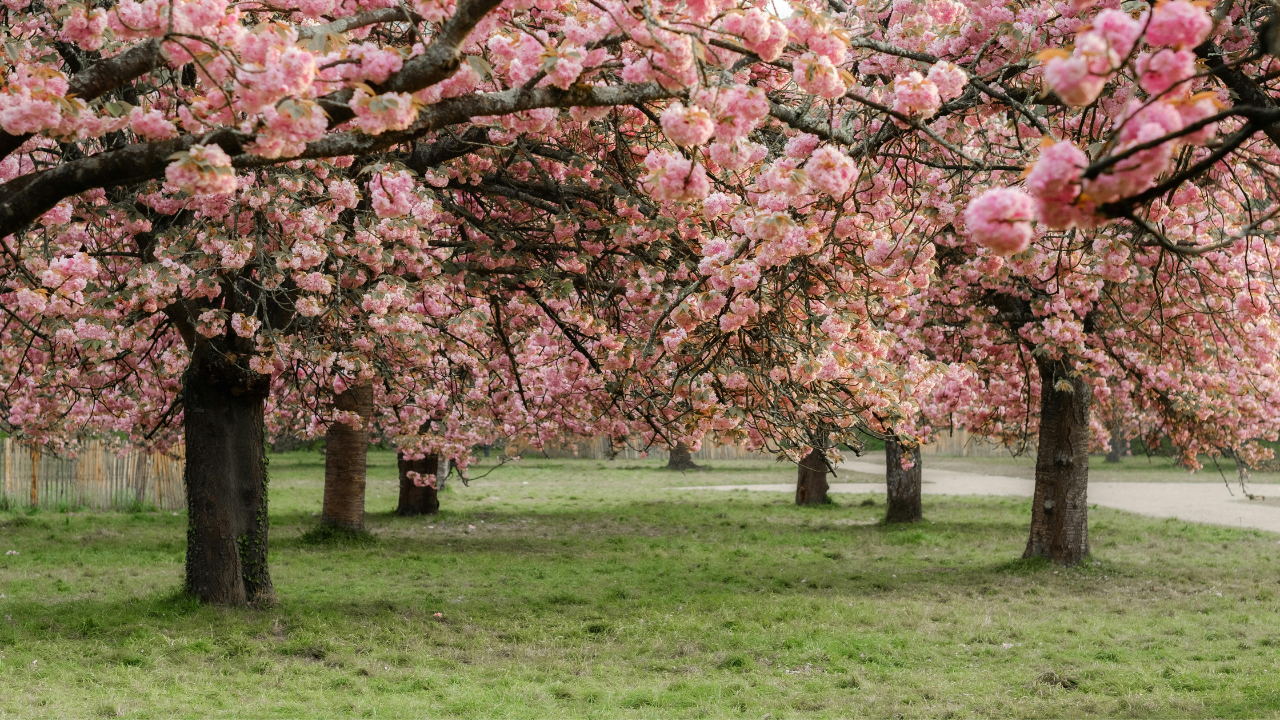
Yasuyuki Aono didn't just study flowers. He spent his life obsessed with a specific biological clock that's been ticking in Kyoto for over 1,200 years. While most people see cherry blossoms as a backdrop for a picnic, Aono saw them as a data set that could explain the planet’s future. He's the reason we know exactly how much warmer our springs have become since the year 812.
The data he managed isn't just a list of dates. It's the longest continuous record of a biological phenomenon in human history. When Aono passed away recently, he left behind a legacy that bridges the gap between ancient imperial diaries and modern climate modeling. Most researchers talk about trends over decades. Aono talked about trends over a millennium. In similar updates, we also covered: The Museum of Dead Ideas Why Curiosity Cabinets are Killing Modern Art.
Why 1,200 Years of Petals Actually Matters
You've probably seen the headlines about cherry blossoms blooming earlier every year. In 2021, Kyoto hit its peak bloom on March 26. That was the earliest date in 1,200 years. We wouldn't know that without the meticulous work of Yasuyuki Aono. He wasn't just looking at trees in his backyard. He was digging through the messy, handwritten records of emperors, monks, and aristocrats from the Heian period.
Think about the dedication that requires. He had to cross-reference ancient calendars with modern ones. He had to account for the fact that a "peak bloom" described by a monk in 1342 might be slightly different from how a satellite sees it today. He standardized it. He turned poetry into hard numbers. The Spruce has provided coverage on this critical issue in extensive detail.
This record is a proxy for spring temperatures. Trees don't lie. They react to the heat. By knowing when the Prunus jamasakura bloomed in the 9th century, Aono could reconstruct the temperature of Kyoto long before thermometers existed. It turns out the city has warmed by about 3 degrees Celsius since the mid-1800s. That’s a massive shift for a biological system.
The Scientist Behind the Blossoms
Yasuyuki Aono was a professor at Osaka Metropolitan University. He wasn't a flashy guy. He was a phenologist—someone who studies the timing of natural events. Most people in his field focus on the now. They look at current sensors and weather stations. Aono looked backward to see forward.
He realized early on that the cherry blossom records were a goldmine. In Japan, the blooming of the "sakura" is a massive cultural event. Because it was so important, people wrote it down. Every. Single. Year. Aono spent decades scouring library archives for mentions of "Hanami" parties or festival dates. He found records in the diaries of powerful court officials and the humble logs of local shrines.
He didn't just collect these dates for fun. He used them to build mathematical models. These models showed a clear, undeniable correlation between rising urban temperatures and earlier blooms. The "urban heat island" effect wasn't just a theory to him. He could see it eating away at the traditional Japanese spring.
The Problem With Modern Climate Data
We have a bad habit of thinking history started when we began using digital sensors. That’s a mistake. Modern records are great, but they're short. To understand if what we're seeing today is truly "unprecedented," you need a baseline that stretches back way further than the industrial revolution.
Aono provided that baseline. He showed that for hundreds of years, the bloom dates were relatively stable. There were fluctuations, sure. A cold decade here, a warm year there. But the sharp, aggressive trend toward earlier March blooms is a modern phenomenon. It’s a red flag waving in the form of a pink petal.
He often pointed out that these trees are sensors. They're living pieces of technology. They integrate all the weather data—the rainfall, the sunlight, the nightly lows—and give us one single output: the bloom. Aono’s work proved that nature is the best historian we have.
Breaking Down the Aono Dataset
The records he compiled aren't just about one tree. They represent a collective memory of a region. Here is what his research actually tells us about the world we're living in:
- Consistency is gone. For centuries, the bloom hovered around mid-April. Now, late March is the new normal.
- Urbanization kills the spring. Kyoto’s growth from a medieval capital to a modern metropolis changed the local climate as much as global shifts did.
- Biological timing is shifting. It’s not just the flowers. The insects that pollinate them and the birds that feed on those insects have to keep up. If the timing gets too far out of sync, the whole system breaks.
Aono was honest about the limitations. He knew that relying on ancient diaries meant dealing with some level of human error. But he also knew that when you have 1,200 data points, the signal becomes much louder than the noise. He spent his final years ensuring this dataset was accessible to the global scientific community.
How to Track Your Own Environment
You don't need a PhD or a 1,000-year-old diary to do what Aono did. Phenology is something anyone can participate in. In fact, modern scientists rely heavily on "citizen science" to fill the gaps that satellites miss.
If you want to contribute to the kind of record Aono kept, start small. Pick a tree in your yard or a park you visit every day. Don't just look at it. Record it. Note when the first bud appears. Note when it’s in full bloom. Note when the leaves start to fall.
There are apps like iNaturalist or the National Phenology Network's "Nature's Notebook" that take this data and feed it into global databases. You're basically becoming a sensor for the planet. Aono’s work started with a single diary entry from the year 812. Your notes could be the data a scientist uses 200 years from now to understand what happened to our world in 2026.
Carrying the Torch Forward
Yasuyuki Aono's death is a loss, but the record is alive. Other researchers at Osaka Metropolitan University and across Japan are continuing to log the dates. The 2024 and 2025 blooms were added to the tally. We are now watching the 1,214th year of this story unfold.
The lesson here isn't just about global warming. It’s about the value of persistence. Aono taught us that some of the most important scientific discoveries don't come from new gadgets, but from old books and a lot of patience. He looked at a cherry tree and saw a clock. Now it’s up to us to make sure we don't let that clock run out of time.
Start your own nature log today. Use a simple notebook or a dedicated app. Track one species consistently for three years. You’ll begin to see patterns that you never noticed before. That’s how you start thinking like Aono.