The wind in northern Missouri smells like crushed limestone and old panic. It is a dry, stubborn smell that clings to the fences and the fenders of pickups that have been patched together with baling wire and hope.
For generations, the math here was simple. You put a seed in the ground. You pray for rain. You fight the bank. You pass the dirt to your children, or you watch it go to auction when the machinery breaks down for the last time. The horizon is a flat line broken only by grain elevators and the ghosts of small towns where the hardware store closed the same year the high school consolidated. You might also find this similar story insightful: Why SK Hynix Buying Back Billions in Stock Is Actually a Desperate Cry for Help.
Then came the thirst.
It does not look like a monster. It looks like a gray metal box the size of a shipping container, humming in the dark. It looks like fiber-optic cables buried four feet deep beneath the soybean stubble. It looks like billions of dollars desperately searching for a place to sit down, plug in, and pull twenty thousand gallons of cooling water every minute from aquifers that took ten thousand years to fill. As highlighted in recent coverage by ZDNet, the results are significant.
Across the state line, and down county roads where the asphalt turns to caliche, the neighbors are furious. They are standing on courthouse steps with handwritten signs. They are shouting at county commissioners about noise that sounds like a jet taking off and never leaving. They are pointing at their wells, watching the water tables drop, terrified that the invisible ghost of the twenty-first century is eating their future to feed a machine that writes poetry for teenagers in Tokyo.
Backlash. That is the word the newspapers use. Resistance. Protest.
But out here on eighty acres of marginal dirt, one man looked at the backlash and reached for a fountain pen.
His name does not matter for a moment, because his story belongs to every person who ever watched a way of life slip through their fingers and wondered if they could catch enough of it to pay off the combine.
He didn't chain himself to a tractor. He didn't start a Facebook group. He walked out to the edge of his north pasture, where the soil is too thin to grow anything better than cheatgrass and scrub oak, and he asked himself a very hard question.
Why am I protecting dirt that won't protect me?
Consider what happens next: The developers arrived in a rented Tahoe with dusty tires and dark suits. They didn't look like land speculators from the movies. They looked tired. They had spent six months getting yelled at in town halls three counties over. They had been called monsters by people who had never seen a server rack in real life. They had faced zoning boards that treated them like an invading army.
They expected a fight here, too. They brought paperwork, concession strategies, and a defensive posture.
Instead, the farmer poured them stale coffee from a thermos that tasted faintly of chicory, pointed out across the scrub, and said, "The power lines are half a mile that way. The substation has the capacity if you upgrade the transformers. How much do you need?"
This is the hinge upon which the modern world swings. We like to pretend that the expansion of digital infrastructure is an act of pure violence, an alien force dropped onto an unwilling landscape by tech barons who have never held a shovel. And often, it is. The grid is strained. Rural communities are being asked to bear the environmental load of a technological revolution that pays its taxes in Silicon Valley and leaves its heat behind in the cornfields.
Yet reality is messier than a protest sign.
The farmer is not a villain. He is a realist. He has lived through three agricultural recessions, two droughts that turned his topsoil into a dust storm, and a commodity market controlled by men who live three thousand miles away. He knows that his children do not want to farm this dirt. He knows that the local tax base is eroding faster than the creek banks after a spring thaw.
When a data center corporation offers to buy eighty acres of low-yield scrubland for ten times its agricultural value, they aren't just buying dirt. They are buying a retirement. They are buying college tuition for a granddaughter who wants to be a nurse. They are buying the survival of a rural fire department that can't afford a new pumper truck.
The data centers need vast swaths of cheap land near major transmission corridors. The rural economy needs a defibrillator.
It is a strange, jarring collision of eras. Inside the windowless concrete fortresses that rise from these pastures, millions of graphics processing units calculate the weights of artificial intelligence models, rendering human thought into mathematical probabilities. Outside the chain-link fence, a red-tailed hawk circles over a rusted hay rake, completely indifferent to the fact that the humming box beneath it is currently answering a legal question for a lawyer in Chicago and generating a photorealistic cat for a child in London.
The tension is real. The environmental concerns are not imaginary. Water usage is a legitimate crisis. Noise pollution is a assault on the quiet that people moved to the country to find. When a community wakes up to find its rural tax haven transformed into an industrial power sink, the shock is visceral.
The mistake is pretending that the resistance is universal, or that the people selling are traitors to the soil.
Land has always been transactional. Our ancestors didn't clear the forests out of a pure aesthetic love for oak trees; they cleared them to survive. The tractor replaced the horse, and the old-timers cursed the noise and the smell of diesel. Rural electrification brought hums and buzzing poles to valleys that had known only the dark, and people shot holes in the insulators because they didn't want the wires across their view.
History does not repeat, but it rhymes in a very annoying key.
The farmer in Missouri understood this better than the activists thirty miles away who were printing flyers on recycled paper. He looked at the digital gold rush not as an invasion, but as a crop. A strange, metallic, water-drinking crop that doesn't care about rain, doesn't lodge in a high wind, and pays out in cash on the designated closing date.
He signed the papers last Tuesday.
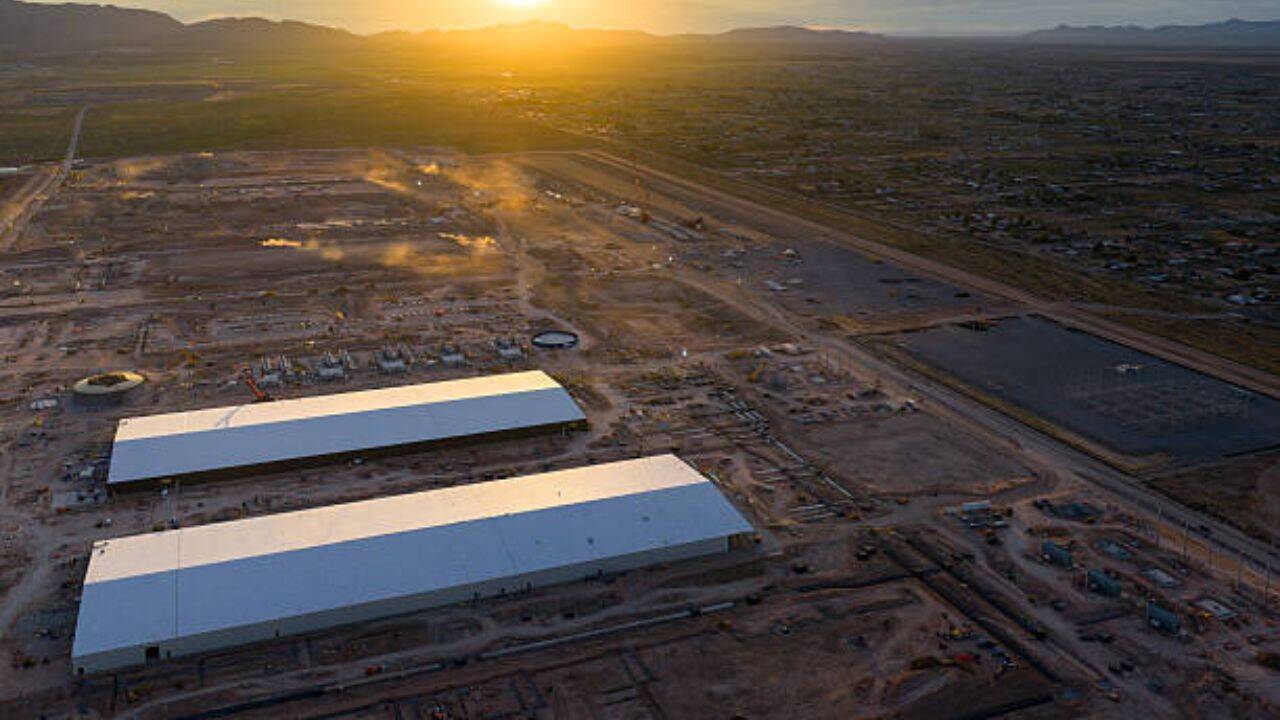
The surveyors are out there now, driving little pink flags into the dirt where the thistles grow thickest. Soon, the bulldozers will come. They will strip away the topsoil, lay down industrial-grade gravel, and pour the massive concrete pads that will support the cooling towers and the server halls. The hawks will move to another pasture. The quiet will break.
And in the bank account of an old man who spent fifty years wondering if he would die broke, a series of digital numbers will change.
We stand at a strange precipice. The infrastructure of human thought is physical, heavy, and hungry. It has to go somewhere. It cannot live in the cloud; it lives in the dirt. It demands power, water, and space. And as long as there are people who love the land enough to know its limits, and bills that the land can no longer pay, there will always be someone willing to open the gate, pour a cup of stale coffee, and ask the men from the city how much space they really need.


