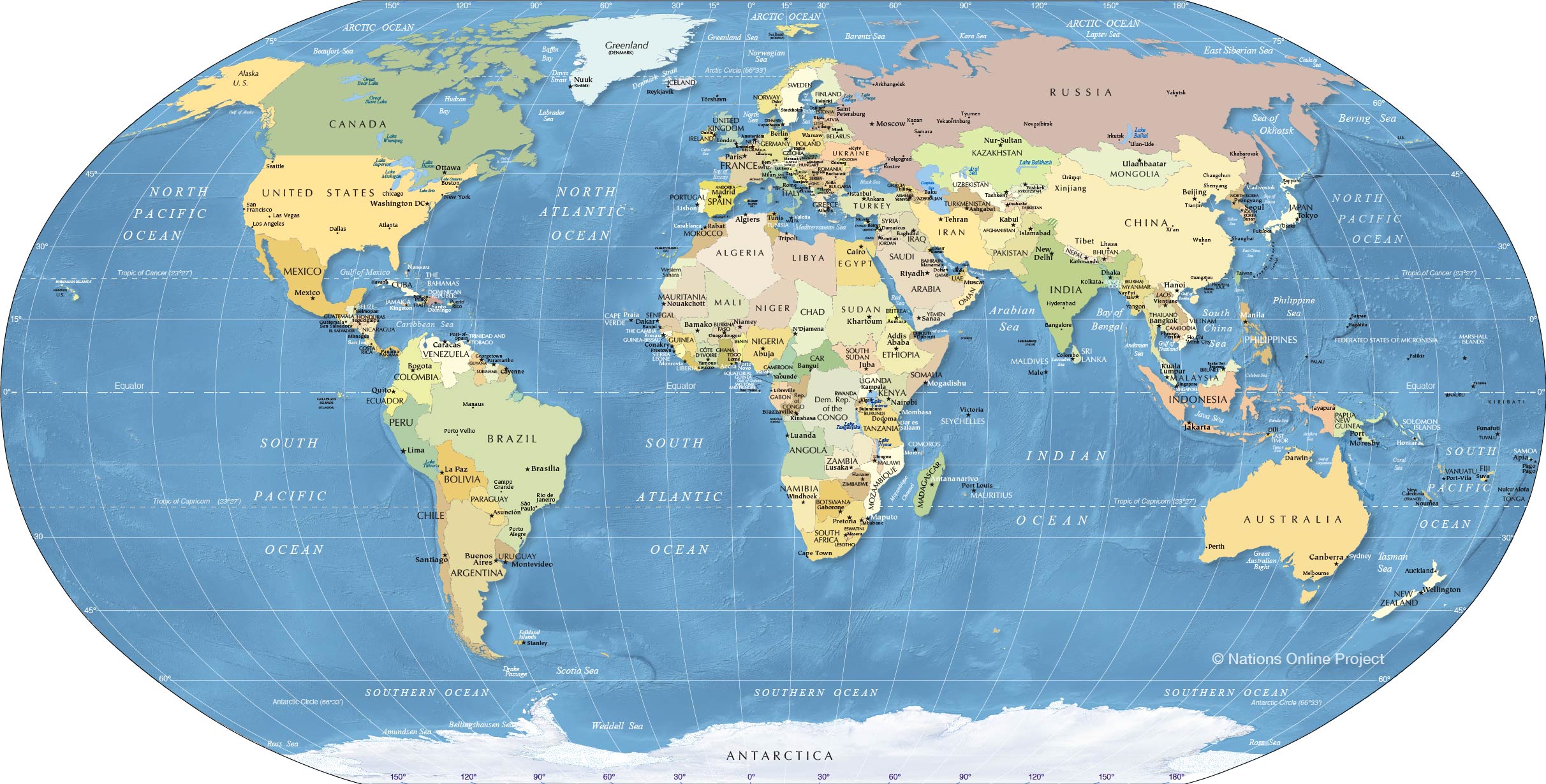
The ink on a political map is deceptively clean. It draws sharp, silent lines across valleys and crests, splitting rivers in half and deciding, with the stroke of a cartographer’s pen, which flag a child will salute. But on the ground, where the Karakoram mountains pierce the sky, those lines are anything but silent. They are loud, heavy, and fraught with a decades-old tension that can ignite over a single bureaucratic decree.
When news broke that Pakistan planned to hold assembly elections in Gilgit-Baltistan, a region nestled within Pakistan-occupied Kashmir (PoK), it triggered a diplomatic earthquake. India issued a fierce, uncompromising demand: vacate. To the casual observer scanning international headlines, it looked like another standard geopolitical spat between two nuclear-armed neighbors. Another press release. Another formal protest.
But look closer.
This is not just a dispute over a piece of paper or a voting booth. It is a battle over identity, sovereignty, and the dangerous precedent of altering borders by administrative stealth. When a state attempts to formalize its grip on occupied territory through the ballot box, it changes the geometry of a conflict. It forces us to confront a deeper, more unsettling reality about how modern nations fight for land without ever firing a shot.
The Illusion of the Ballot
To understand why a regional election can provoke such fury, consider a hypothetical scenario. Imagine a stranger moves into your backyard. Over the years, they build a fence, plant a garden, and ignore your repeated demands to leave. Then, one morning, they host a family meeting in that backyard to vote on who owns the patio. They call it a democratic process. They call it a vote. But to you, looking out from the kitchen window, it is nothing less than a formalized theft.
This is the lens through which New Delhi views the developments in Gilgit-Baltistan.
By organizing legislative assembly elections in an area that India claims as an integral part of its territory since the 1947 instrument of accession, Pakistan is not just practicing governance. It is attempting to legitimize an occupation. The Indian Ministry of External Affairs did not mince words, stating clearly that Pakistan has no locus standi on these lands. The message was unmistakable: you cannot hold a legal election on illegally occupied soil.
The strategy behind these elections is subtle but profound. By giving the local population a semblance of democratic representation, an occupying power can attempt to absorb a disputed region into its constitutional framework through the back door. It creates a veneer of normalcy. It tells the international community that the people have spoken, while conveniently ignoring the fact that the entire exercise is built on contested ground.
The Stakes Written in Stone
The geography of Gilgit-Baltistan explains why the stakes are so incredibly high. This is not barren wasteland; it is the gateway to Asia. It is the crucial junction where South Asia, Central Asia, and China meet.
For Pakistan, securing a permanent, uncontested grip on this region is vital, particularly because it serves as the corridor for massive foreign investments, most notably the China-Pakistan Economic Corridor (CPEC). Billions of dollars are riding on the stability of this terrain. Roads, pipelines, and infrastructure projects require legal certainty. An unresolved territorial dispute is bad for business; a formalized provincial status, even if heavily contested by a neighbor, offers a shield of legitimacy that foreign investors crave.
Consider what happens next when billions of dollars flow into a disputed zone. The conflict ceases to be just a bilateral issue between India and Pakistan. It becomes internationalized. It draws in global superpowers who now have a financial and strategic interest in ensuring that the occupying nation maintains its grip. The ballot box in Gilgit-Baltistan is, therefore, a tool to rewrite the geopolitical reality of the entire subcontinent.
But India’s counter-offensive is grounded in historical memory and constitutional law. The entirety of Jammu and Kashmir, including the regions of Gilgit-Baltistan and what is broadly referred to as PoK, remains an inalienable part of India. When New Delhi demands that Pakistan vacate these areas, it is reminding the world of a fundamental truth: a long-standing occupation does not grant ownership. Time does not erase a legal claim.
The Human Cost of the Invisible Line
Behind the grand strategies of prime ministers and generals are the people who actually inhabit these mountainous borderlands. For generations, the families living along the Line of Control and within Gilgit-Baltistan have existed in a state of political limbo. They are caught in the crossfire of history, their daily lives dictated by decisions made in distant capitals.
When an occupying administration moves to alter the status of a region, it creates a profound sense of anxiety on both sides of the divide. On one side, there is the fear of demographic engineering—the worry that the local culture, language, and identity will be systematically diluted to ensure compliance with the occupying state. On the other side, there is the pain of separation, of families severed by a militarized border, unable to visit ancestral homes or mourn loved ones who pass away just a few miles, yet an entire world, away.
The tragedy of Gilgit-Baltistan is that its people are often used as pawns in a much larger chess game. The promise of elections feels like a gift, but it functions as a cage. It binds the population to a system that lacks true autonomy, while isolating them from the historical reality to which they belong.
The Dangerous Precedent of Silence
If the international community turns a blind eye to these administrative maneuvers, it sets a perilous precedent for global politics. It suggests that if an occupation lasts long enough, and if enough bureaucratic layers are added over the decades, the original injustice can simply be voted away.
It is a tactic we see playing out in various corners of the globe. A nation occupies land, moves its own population in, sets up local councils, and then points to those councils as proof of self-determination. It is a slow-motion annexation, a quiet reshaping of the world map that relies on the exhaustion and distraction of the rest of the world.
India’s sharp reaction is a refusal to let that exhaustion win. It is a declaration that no matter how many elections are held, no matter how many legislative seats are filled in Gilgit-Baltistan, the fundamental status of the land remains unchanged. It is disputed. It is occupied. And the demand for its return will not fade with the passage of time.
The mountains of the Karakoram have stood for millions of years, indifferent to the empires and nation-states that rise and fall at their feet. They do not care about ballots, borders, or bilateral agreements. But for the human beings living in their shadow, the lines drawn across those peaks determine everything. Until the root of the issue is addressed—until the occupation is recognized for what it is—any election held in these valleys is merely a ghost play, an exercise in casting votes for a future that remains trapped in the unyielding grip of the past.