In a small, windowless briefing room in Tehran, the air usually smells of old paper and bitter tea. On the wall hangs a map of the Middle East, its borders drawn with the crisp, confident lines of a bygone era. But look closely at the hands hovering over that map today. They aren't tracing the familiar contours of the Persian Gulf or the jagged edges of the Levant. They are moving far beyond the frame.
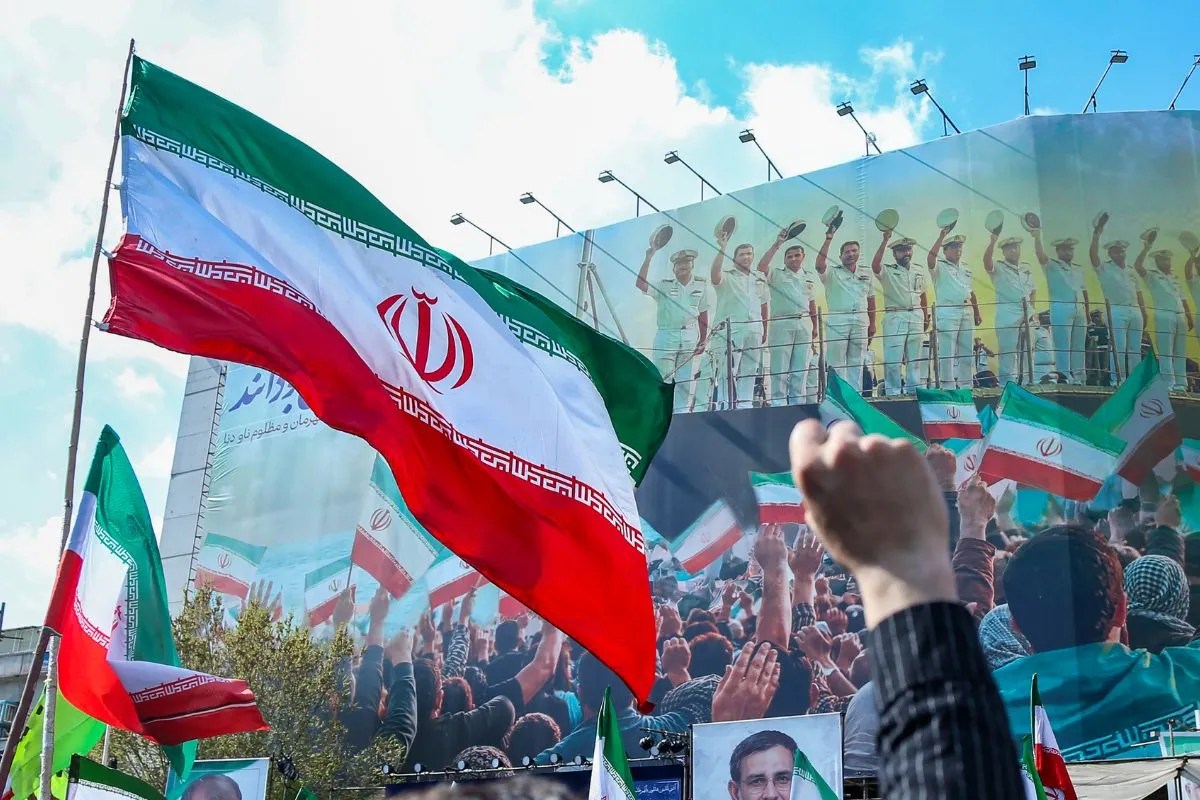
When Major General Abdolrahim Mousavi, the commander-in-chief of Iran’s army, stepped toward the microphones recently, he wasn't just issuing a standard military update. He was redrawing the geometry of modern conflict. He spoke of a response that would occur "outside the borders of the region."
The words were heavy. They hung in the air like the humidity before a desert storm. This isn't just about a localized skirmish anymore. We are witnessing the death of the traditional battlefield.
Consider a merchant sailor aboard a cargo ship in the Indian Ocean. He is thousands of miles from the missile batteries in Isfahan or the Iron Dome interceptors over Tel Aviv. To him, the war is a flickering image on a satellite TV in the mess hall. Then, the alarm sounds. A drone, launched from a mobile platform he will never see, guided by coordinates calculated in a basement halfway across the globe, appears on the horizon. For this sailor, the "region" just became everywhere.
The threat from Iran’s top brass to push the theater of operations beyond the Middle East is a calculated psychological strike. It targets the very idea of safety. For decades, the West viewed these tensions as a contained fire—something to be managed, dampened, or occasionally stoked, but always kept within the hearth of the Levant. Mousavi’s rhetoric suggests the hearth has cracked. The fire is looking for the carpet.
History teaches us that when a nation feels cornered, its primary weapon is no longer its inventory of steel, but its ability to create uncertainty. Iran knows it cannot win a conventional, ship-for-ship or jet-for-jet war against the United States and its allies. The math doesn't work. The U.S. defense budget is a towering monolith that dwarfs the entire Iranian economy. So, the strategy shifts. It moves from the physical to the ethereal. It moves from the border to the network.
Think of the global economy as a nervous system. A pinch in the Strait of Hormuz is felt in the gas stations of Ohio. A disruption in the Mediterranean sends ripples through the stock exchanges of Tokyo. By threatening to strike "beyond the region," Iran is effectively saying they have their fingers on the nerves. They are reminding the world that in a hyper-connected age, there is no such thing as a distant war.
The tension between Israel and Iran has reached a fever pitch that feels different this time. It lacks the performative quality of previous years. When Israel strikes an embassy or a high-level commander, they aren't just taking a piece off the board; they are challenging the very concept of Iranian sovereignty. Iran’s response—the threat of a borderless retaliation—is the scream of a tiger that has been backed into a cave. It is an admission that the old rules of engagement have failed.
I remember talking to a veteran diplomat who spent thirty years navigating these back-channels. He told me that the most dangerous moment in any negotiation isn't when the parties hate each other. It’s when they stop believing the other side cares about survival. If Iran truly believes that the "limit" has been crossed, as Mousavi claims, then the logic of self-preservation changes. The goal is no longer to win. The goal is to ensure that the cost of your defeat is a global catastrophe.
The "beyond the region" doctrine is also a nod to the silent actors in this drama: the proxy networks. From the Mediterranean to the Red Sea, and now potentially into the vast blue waters of the Atlantic or the digital infrastructure of the West, the theater is expanding. It is a war of shadows played out in the dark corners of the internet and the lonely stretches of international shipping lanes.
Behind the headlines of "big threats" and "military readiness" are the people who actually have to live in the shadow of the sword. In Haifa, a mother checks the location of the nearest bomb shelter before she takes her kids to the park. In Tehran, a student wonders if his future will be decided by a drone strike or a collapsing currency. These people don't care about the "geometry of conflict." They care about the fact that the world feels like it’s tilting.
The rhetoric of the Iranian military is designed to make us feel that tilt. It is meant to make a businessman in London or a tech worker in Singapore look at the news and feel a cold prickle of dread. If the war can happen anywhere, then nowhere is safe. That is the ultimate goal of asymmetrical psychological warfare.
But what does "beyond the region" actually look like?
It looks like cyber-attacks that turn off the lights in a city you’ve never visited. It looks like "ghost" tankers disappearing from tracking screens. It looks like political assassinations or bombings in neutral capitals. It is the export of chaos.
The United States finds itself in a precarious position. Every move to deter Iran risks proving their point—that the West is the aggressor that knows no bounds. Yet, every moment of hesitation is seen by the Iranian hardliners as a green light to push the boundaries further. It is a chess match where both players are starting to realize the board is on fire.
The most terrifying thing about Mousavi’s statement isn't the threat of a missile. Missiles can be shot down. The terrifying thing is the intent. It is the formal declaration that the "limits" have been reached. In the language of international relations, "limits" are the only things that keep us from the abyss. They are the unspoken agreements that say: We will fight here, but not there. We will kill these people, but not those.
Once those limits are declared void, we enter a state of pure volatility.
We often talk about these geopolitical shifts as if they are weather patterns—large, impersonal forces that we can only watch from a distance. But these are choices made by men in rooms. They are the result of pride, fear, and a desperate need to maintain the illusion of control. When a general stands before a microphone and tells the world that the borders no longer matter, he is inviting the world into a reality where the map is just a piece of paper.
The true stakes aren't found in the caliber of the missiles or the range of the drones. They are found in the fragility of our shared peace. We have built a world that is incredibly efficient and deeply integrated, but that integration is also our greatest vulnerability. We are all connected by the same wires, the same water, and the same thin atmosphere of stability.
As the sun sets over the Persian Gulf, the silhouettes of warships and tankers cut through the water like knives. On both sides of the water, soldiers wait for orders that they hope will never come. They look at the horizon, wondering if the next threat will come from the front or from somewhere entirely unexpected.
The map on the wall in Tehran hasn't changed. The borders are still where they were fifty years ago. But the men in the room are no longer looking at the lines. They are looking at the gaps between them. They are looking at the spaces where the law doesn't reach and the cameras don't see.
The threat to move "outside the region" is a reminder that in the modern world, the front line is a ghost. It is everywhere and nowhere. It is in your pocket, in your power grid, and in the quiet anxiety that hums beneath the surface of the daily news. The fire is no longer in the hearth. It is in the wind.