Walk into the diplomatic quarters of Warsaw in late autumn, and the air carries a crisp, unforgiving chill. It is a landscape shaped by geography, where borders have historically behaved like shifting sand rather than concrete lines. For centuries, Poland has understood a brutal truth: independence is not a birthright; it is a relentless logistical effort.
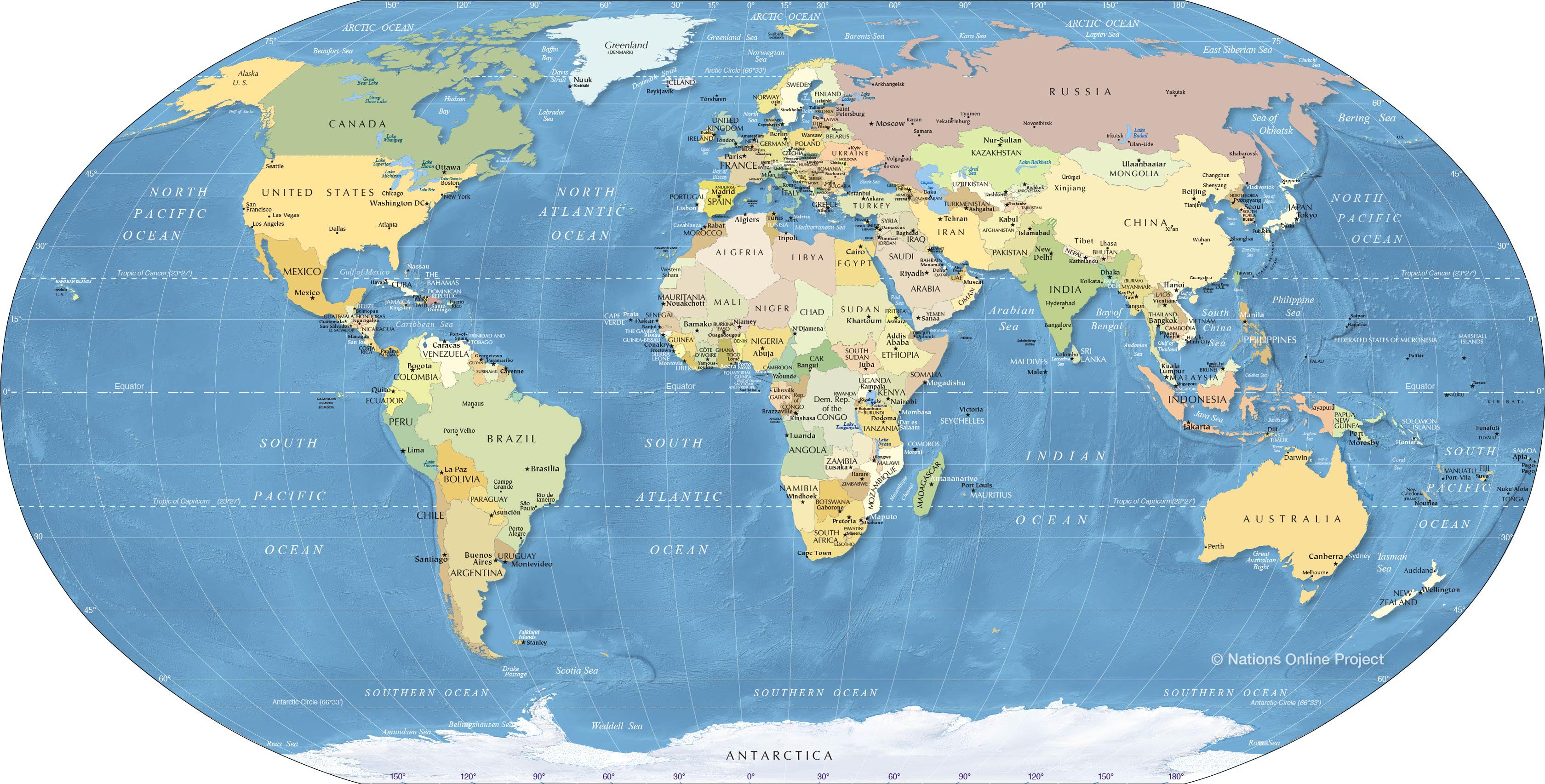
Now, fly seven thousand kilometers southeast. Step off the plane in New Delhi. The heat hits like a physical wall, thick with the hum of a billion lives in motion. On the surface, these two worlds share nothing. One is a European nation defined by the scars of twentieth-century partitions; the other is a rising Asian titan navigating the complex dynamics of the Indo-Pacific.
Yet, beneath the surface of global statecraft, a quiet alignment is happening.
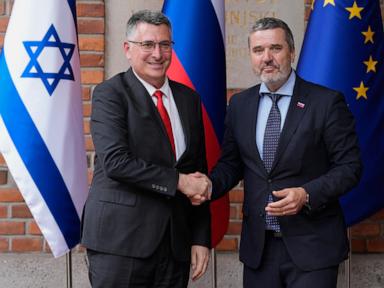
Geopolitics often sounds like an abstraction. We talk about bilateral trade, strategic frameworks, and multilateral cooperation as if these concepts exist in a vacuum. They do not. They exist in metal, in code, and in the minds of engineers working late into the night under the glare of fluorescent laboratory lights. Poland has formally thrown its weight behind India’s bid for a permanent seat on the United Nations Security Council, while simultaneously opening the vault to its most prized military technologies.
This is not standard diplomatic courtesy. It is a calculated gamble on a shared future.
The Ghost in the Grand Chamber
To understand why a permanent seat on the United Nations Security Council matters, you have to look past the mahogany tables and the translation headsets. The Council was built in 1945, reflecting a world that no longer exists. It is an architectural relic of the post-World War II balance of power, dominated by five veto-wielding permanent members.
Imagine a neighborhood council formed eighty years ago. The original five families still decide where the roads go, who gets water, and who gets evicted. Meanwhile, the biggest house on the block—housing a sixth of the human population—has to ask for permission just to speak at the microphone.
That house is India.
For decades, New Delhi has argued that an international system excluding a nation of 1.4 billion people from core decision-making is fundamentally broken. It lacks legitimacy. When global crises erupt, the current structure fractures along old cold war fault lines, leaving the global south to inherit the economic fallout.
Poland’s endorsement of India’s permanent bid is an acknowledgement of reality. Warsaw recognizes that the center of gravity has shifted. By backing New Delhi, Poland is not just doing a favor for a distant partner; it is actively trying to remodel the house before the old structure collapses under its own weight. It is an admission that European security can no longer be decoupled from Asian stability.
Blueprint for a New Factory Floor
But declarations in New York are cheap. The real substance of this relationship is being forged in industrial workshops and defense laboratories through technology transfer.
Historically, nations bought weapons the way consumers buy cars. You pay the money, you drive the vehicle off the lot, and when a part breaks, you go back to the dealership and pay whatever price they demand. If the dealership decides they no longer like your politics, they stop sending the spare parts. Your expensive machine becomes an oversized paperweight.
India has resolved never to be in that position again. Under its domestic manufacturing push, the directive is clear: do not just sell us the machine; teach us how to build it.
This is where the partnership turns from theory into tangible reality. Poland possesses highly specialized defense capabilities, particularly in armored vehicle technology, radar systems, and drone defense. Warsaw is not proposing to ship crates of finished hardware to Indian ports. Instead, Polish engineers are preparing to sit side-by-side with Indian engineers, sharing blueprints, metallurgy secrets, and proprietary source code.
Consider a hypothetical engineer in Bengaluru—let's call her Priya. For years, her team has worked on localized defense systems, occasionally hitting walls in advanced material science or sensor integration. Under a deep technology transfer framework, the missing piece of her puzzle arrives not as a black box imported from abroad, but as an open-source architecture shared by a Polish counterpart who faced the exact same engineering bottleneck in Central Europe.
Suddenly, the production line moves. The knowledge transfers. The capability becomes indigenous.
For India, this accelerates the transition from being the world’s largest arms importer to a self-reliant defense exporter. For Poland, it secures a massive, high-tech industrial ally, creating a supply chain that cannot be easily disrupted by regional conflicts in Eastern Europe.
The Invisible Stakes
Why now? The answer lies in the shifting mechanics of global deterrence.
We live in an era where traditional alliances are fraying. Reliance on a single superpower for protection is increasingly viewed as a structural vulnerability. Small and mid-sized powers are realizing they must build webs of overlapping minilateral partnerships to survive.
Poland sits on the frontline of NATO’s eastern flank, hyper-aware of the fragility of peace. India manages contested borders in the Himalayas and watches the critical shipping lanes of the Indian Ocean with constant vigilance. Both nations understand that weakness invites miscalculation from larger, predatory neighbors.
By deepening defense ties, they are creating a subtle form of counter-weight. It is a message to the rest of the world that the democratic arc extends beyond traditional Western alliances. The cooperation between Warsaw and New Delhi proves that strategic autonomy is not about isolation; it is about choosing your partners based on shared pragmatism rather than historical obligation.
The Shared Room
The ink on diplomatic communiqués dries quickly, and public attention inevitably drifts to the next immediate crisis. Yet, the work set in motion by this alignment will quietly reshape the industrial and political landscape for the next three decades.
It will be measured in the graduate students from Warsaw studying advanced computation in Hyderabad. It will be seen in the joint ventures setting up manufacturing plants in the plains of Uttar Pradesh. It will be felt when the next major global resolution is debated in New York, and the voice demanding a seat at the table is backed not just by numbers, but by the quiet respect of old European capitals.
The map of the world is no longer drawn merely by geography. It is drawn by the networks of trust we choose to build across the vast, open spaces between us.