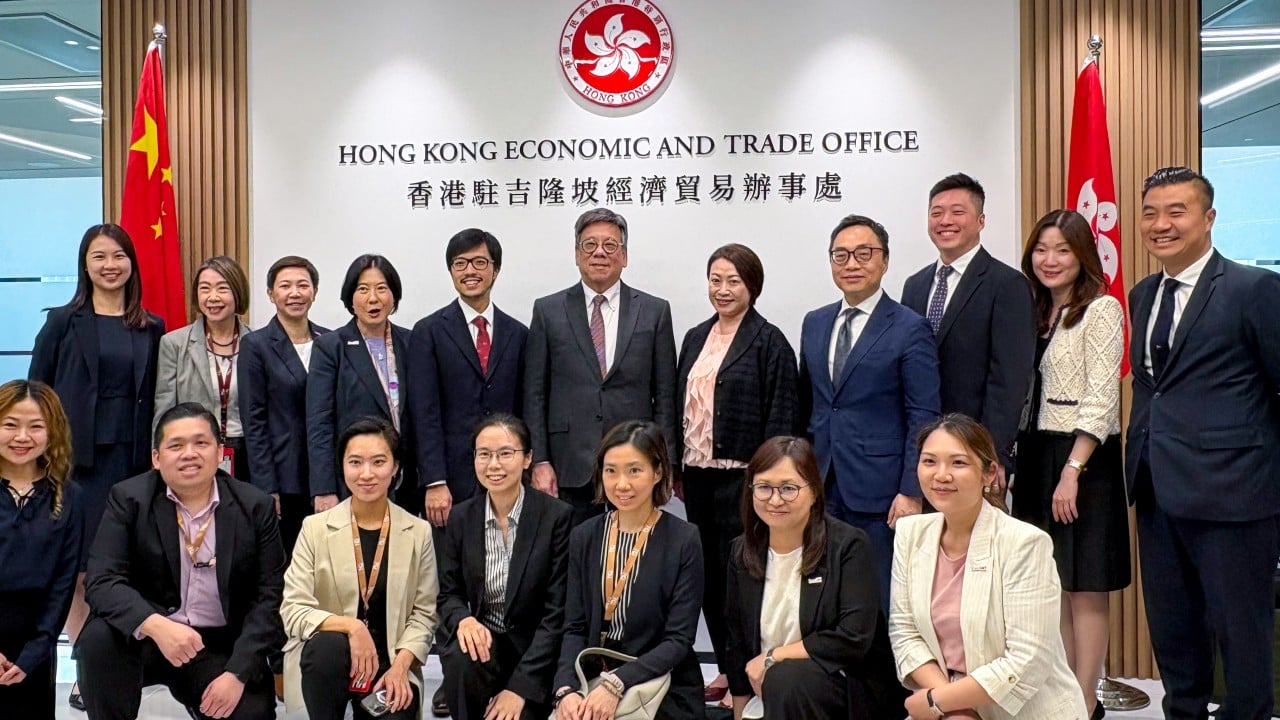
The air inside the Kuala Lumpur trade office always smells faintly of hot asphalt and wet monsoon leaves, the persistent humidity of a city that never stops sweating. On a Tuesday morning in October, Mei steps through the frosted glass doors, a stack of customs manifests tucked under her arm. She is thirty-four, born in Penang, educated in Singapore, and spent the last decade watching her family’s electronics component business lose twenty percent of its operating margin simply because a shipping form had to travel through three different regulatory loops between Shenzhen and Port Klang.
Mei is not a diplomat. She is not a politician carving grand visions into mahogany tables. She is a logistics coordinator who spends her nights calculating whether a container ship should dock in Guangzhou or Hong Kong to shave four hours off a delivery time.
To understand why a brand-new Hong Kong trade office opening in Malaysia matters, you have to stop looking at trade maps and start looking at Mei's desk.
For decades, the economic relationship between Southeast Asia and southern China has operated like a highway built with too many toll booths. The raw materials move. The finished goods return. But the paperwork? The legal alignment? The dispute resolutions? Those have traditionally required bouncing communications between distant capitals, turning every minor cross-border transaction into an exercise in bureaucratic patience.
Enter the Greater Bay Area.
It is a bureaucratic term that sounds like a real estate development, but it is actually an economic engine of staggering scale. Hong Kong, Macau, and nine cities in Guangdong province, fused together into a singular powerhouse housing over eighty million people. It is a region that manufactures everything from microchips to electric vehicles, yet its sheer size has long made it impenetrable for mid-sized enterprises based in Malaysia.
Consider what happens next: a Malaysian palm oil processor wants to pitch a sustainable biofuel product to a municipal distributor in Zhuhai. Previously, this meant navigating an opaque web of municipal contacts, dealing with different tax interpretations, and hoping a remote liaison office in Beijing or Shanghai would eventually forward the paperwork to the right desk.
Now, look at the physical reality of the new trade office. It sits right in the heart of Kuala Lumpur. It functions as a physical anchor for a digital economy.
Mei’s company tried to break into the Shenzhen tech market three years ago. It failed. Not because their product was inferior, but because when a contract dispute arose regarding intellectual property protection, the legal advice they received was six months outdated and cost more than the shipment itself.
Confidence is the invisible currency of international trade. Without it, capital stays home.
When governments open trade outposts like this one, cynical observers shrug. Another ribbon-cutting. Another press release about strategic alignment and mutual prosperity. But walk the floor of a manufacturing plant in Penang or a tech incubator in Cyberjaya, and you realize these offices act as shock absorbers for the human friction of commerce. They translate. They clarify. They shorten the distance between a small business owner in Southeast Asia and the sprawling markets of southern China.
The Greater Bay Area is hungry for talent, green technology, and Halal-certified products from Southeast Asia. Malaysia, in turn, needs capital investment, high-end manufacturing expertise, and a reliable gateway into the northern innovation hubs.
Yet, bridges are only as strong as the people willing to cross them.
Mei sits down at her terminal, opens a secure portal linked directly to the new trade liaison desk, and submits her export compliance query. Twenty minutes later, an acknowledgement arrives. Not from a generic automated inbox, but from a trade officer stationed right down the road.
The paperwork is still complicated. The logistics are still grueling. But for the first time in her career, Mei feels like the map is finally matching the territory.
The office doors slide open again, letting in a brief gust of tropical wind and the distant roar of city traffic. Somewhere out there on the shipping lanes, a container is moving north. And the distance just got a little bit shorter.