The morning air in Warsaw carried the sharp, metallic bite of an early European autumn. Standing on the pavement outside the Chancellery, you could hear the distant rumble of trams and the crunch of amber leaves beneath hurried footsteps.
Diplomacy often looks like velvet curtains and crystal chandeliers from the outside. Up close, it smells like cold coffee, wet wool, and old paper.
Consider a hypothetical diplomat standing near a tall window in the Polish capital, watching the grey clouds stack up over the Vistula River. That observer is holding a schedule filled with handshakes, ministerial meetings, and joint statements. But documents do not capture the weight of what is actually happening in the room.
External pressures shift. Old alliances fray at the edges. Nations that once stared past one another across vast geographic gulfs now find themselves searching for reliable anchors in a volatile international storm.
Enter Subrahmanyam Jaishankar.
To understand why an Indian external affairs minister flies thousands of miles to touch down in Poland, you have to look past the protocol manuals. You have to look at a map. For decades, the relationship between New Delhi and Warsaw was polite, distant, and largely transactional. It was built on dusty trade agreements signed in different eras by governments that no longer exist in the same form.
Distance was the primary barrier. Not just physical miles, but the psychological distance of separate orbits.
Now, the world is shrinking in the worst possible ways. Supply chains snap overnight. Security architectures built after the Cold War groan under unprecedented weight. In this climate, middle powers cannot afford to remain isolated islands. They need bridges.
Poland knows what it means to live at a geopolitical crossroads. History has repeatedly carved paths right through its plains, leaving its people with an acute, hard-earned instinct for survival and strategic depth. They understand vulnerability. They also understand the urgent necessity of diversifying partnerships before crises force the issue.
When Jaishankar arrived in Warsaw, the dialogue immediately bypassed superficial pleasantries. This was not a routine diplomatic stopover meant to check a box on an annual itinerary. It was a deliberate, calculated alignment of two heavyweights on the periphery of traditional Western-centric narratives, seeking common ground in a multipolar reality.
Think about the merchant ships currently rerouting across stormy seas, or the frantic boardrooms trying to secure critical technologies without relying on a single volatile supplier. That chaos is the silent backdrop to every bilateral meeting.
During closed-door sessions, the conversation moved swiftly from abstract geopolitical theory to gritty specifics. Defense industrial cooperation. Critical minerals. Educational exchanges. Green energy transitions that do not bankrupt developing economies.
These are not sexy topics for evening news broadcasts. They do not make for viral social media clips. But they are the invisible rivets holding the modern global order together.
For India, engaging deeply with Central Europe is an exercise in strategic autonomy. It is about refusing to let any single region or superpower hold a monopoly on partnership. For Poland, looking toward New Delhi is a recognition that the future of global commerce and security will be written across a broader canvas than just Brussels and Washington.
Walking through the historic streets of Warsaw later that evening, past the meticulously restored brick facades of the Old Town, the past and future felt strangely close. This city was leveled to the ground less than a century ago, only to rise again brick by painstaking brick. Resilience is encoded into its architecture.
That same stubborn refusal to accept a predetermined fate drives India's current foreign policy doctrine. A country of 1.4 billion people charting its own course through a turbulent century cannot afford passivity. It must actively construct its friendships.
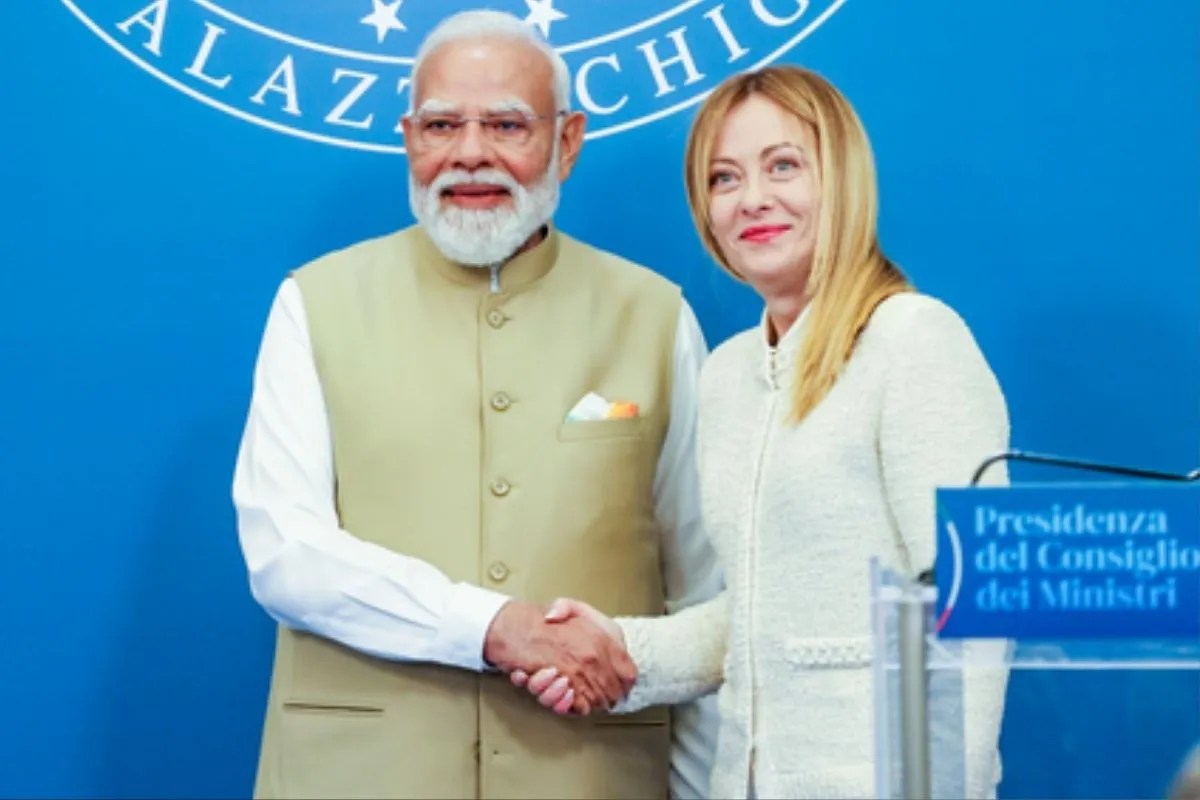
The meetings concluded with handshakes, solemn nods, and communiques filled with diplomatic terminology. Words like mutual respect, shared values, and enhanced frameworks.
Strip away the jargon, and a much simpler story remains. Two distinct nations, shaped by very different histories, looked across the map and realized they needed each other to navigate the dark waters ahead.
The official motorcade rolled away from the ministry buildings, slicing through the evening drizzle. Streetlights flickered on, casting long, wavering reflections on the wet asphalt. The mapmakers had finished their work for the day, but the real journey of turning ink on paper into lived reality had only just begun.