Public health bureaus and mainstream media love a good apocalypse narrative. When the Africa Centres for Disease Control and Prevention (Africa CDC) flagged a Marburg virus death against the backdrop of an active Ebola monitoring zone, the international press immediately defaulted to its favorite script. They painted a picture of a fragile health system pushed to the brink by a dual-front viral assault. They warned of a complicated crisis that could overwhelm regional containment efforts.
They are fundamentally misreading the operational reality of infectious disease control.
Simultaneous filovirus alerts do not double the biological risk. They do not tear up the containment playbook. In fact, if you are going to drop a highly lethal pathogen into a population, doing so when the entire public health apparatus is already on high alert for an identical threat is the best possible timing.
The media treats these outbreaks as separate fires burning down the same house. Field epidemiologists know the truth. An active Ebola response is the most efficient shield against Marburg. The alarmism surrounding this overlap exposes a deep ignorance of how field diagnostics, contact tracing, and isolation units actually function.
The Myth of the Compounded Crisis
The standard argument claims that managing two distinct hemorrhagic fevers splits resources, confuses field workers, and creates diagnostic chaos. This logic assumes that public health responses are built from scratch for every single bug.
They are not.
Marburg virus and Ebola virus belong to the same family: Filoviridae. They share identical transmission modes, near-identical clinical presentations, and precisely the same vulnerabilities to environmental control. They kill through the same mechanics of vascular leakage and severe shock.
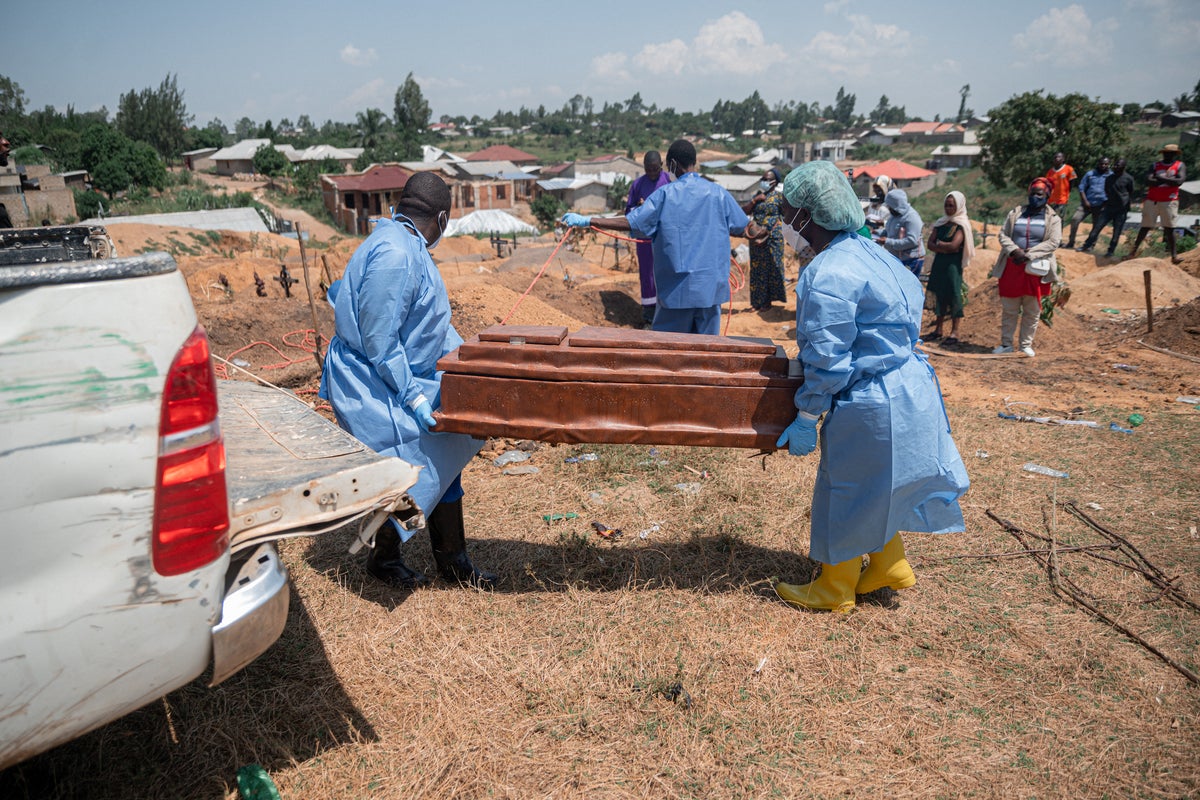
When an Ebola outbreak response is active in a region, the heavy lifting of epidemic management is already paid for and operational. The community surveillance teams are already walking the villages. The burial teams are already trained in safe, dignified protocols. The isolation tents are pitched. The personal protective equipment (PPE) supply chains are warm.
To a field team, a Marburg case entering an Ebola zone requires zero behavioral changes. You do not change your gloves differently. You do not alter your decontamination solution concentrations. You do not rewrite the contact tracing criteria. The administrative panic implies that health workers are running around trying to fight two separate wars, when they are actually using the exact same weapon against two slightly different targets.
The Operational Redundancy of Filovirus Containment
I have spent years watching international agencies misallocate millions of dollars because they treat pathogens as siloed funding streams rather than operational realities. Let us break down the exact mechanics of why the "complicated outbreak" theory falls apart under scrutiny.
1. The Diagnostic Architecture is Prefabricated
The modern field response relies heavily on automated molecular diagnostics, specifically platforms like the Cepheid GeneXpert. These units do not care which virus is in the blood sample; they care about the cartridge you slide into the machine.
When a field lab is set up for Ebola, the infrastructure for cold chain maintenance, sample transport, and biosafety is established. Adding Marburg testing to the queue does not require a new building or a new set of scientists. It requires swapping out a primer or adding a multi-plex assay cartridge to the existing machine. The diagnostic pipeline is already there. If anything, the active Ebola screening protocol catches Marburg cases weeks faster than a passive, routine surveillance system ever would.
2. Contact Tracing Overlap
Contact tracing is the most labor-intensive part of breaking a transmission chain. It involves tracking down every human who stood within a meter of a symptomatic patient, logging their temperature twice a day, and maintaining this for 21 days.
If Marburg emerges in an active Ebola sector, the tracking networks are already mapped. The community leaders are already engaged. The communication channels to combat denial and misinformation are established. The marginal cost of adding a contact from a Marburg cluster to an existing monitoring list is nearly zero.
3. The Protocol is Pathogen-Agnostic
In a clinical setting, we do not wait for a genetic sequencing report to protect the staff. We use the Viral Hemorrhagic Fever (VHF) protocol.
- Strict isolation in a dedicated ward.
- Fluid management and electrolyte replacement.
- Double-gloving, impermeable gowns, and fluid-resistant face shields.
- Rigid tracking of entry and exit times to prevent staff fatigue.
Whether the PCR comes back positive for Ebola Zaire, Ebola Sudan, or Marburg does not change a single order on the patient’s chart in the early stages of care. The supportive therapy remains the same. The safety parameters remain absolute.
The Real Point of Failure Everyone Ignores
The danger of the Africa CDC announcement is not that Marburg will slip through the cracks of an Ebola response. The danger is that the global health apparatus will use this "compounded threat" to justify more top-heavy, pathogen-specific funding rather than fixing the broken foundation of rural medicine.
International donors love funding specific crises. It is clean. It fits on a PowerPoint slide. You can buy 10,000 Ebola diagnostic kits and take a picture of them on a tarmac.
But when you flood a zone with money earmarked strictly for Ebola and Marburg, you create a perverse incentive structure. Field clinics become hyper-focused on catching the exotic killers while ignoring the routine pathogens that actually decimate the population.
During major filovirus outbreaks, mortality from malaria, typhoid, and maternal health complications skyrockets. Why? Because every fever is treated as a potential Ebola or Marburg case. Patients are terrified to visit clinics for fear of being locked in an isolation ward. Routine triage collapses under the weight of hyper-specialized protocols.
If a patient presents with a fever of 39°C and severe headaches in a dual-alert zone, they are isolated immediately. If their PCR tests come back negative for Ebola and Marburg 48 hours later, they might finally get tested for malaria. By then, cerebral malaria has set in, and the patient dies. The death is logged as a casualty of the outbreak era, but it was actually a casualty of bureaucratic tunnel vision.
Dismantling the PAA Fallacies
The public health commentary surrounding this news is filled with flawed premises. Let us address the most common anxieties with actual operational data.
Does the lack of a Marburg vaccine ruin Ebola ring vaccination strategies?
No. The deployment of the Ervebo vaccine for Ebola Zaire is a targeted tool to create a buffer around known cases. The fact that Marburg does not currently have an equivalent widely deployed commercial vaccine does not compromise the Ebola vaccine's efficacy. It simply means that for the Marburg cluster, you rely on classic, shoe-leather epidemiology: rapid isolation, rigorous contact tracing, and safe burials. These are the same tactics that ended every filovirus outbreak between 1976 and 2014 before vaccines existed. The presence of one tool for one virus does not paralyze your ability to use fundamental public health measures on the other.
Will concurrent outbreaks cause laboratory cross-contamination?
Only if the lab is incompetent. Standard molecular diagnostic laboratories operate under strict quality control measures, using negative controls and separate clean rooms for master mix preparation. A laboratory capable of safely handling Ebola samples is already operating at Biosafety Level 3 or higher equivalents in the field. The risk of cross-contamination does not increase linearly with the number of targets you are testing for; it remains a constant function of technician discipline and adherence to standard operating procedures.
The Vulnerability of My Own Argument
To maintain absolute transparency, my perspective relies on one critical assumption: that the regional public health leadership is competent enough to manage resource allocation dynamically.
If the local emergency operations center is completely rigid, tied up in bureaucratic red tape, and unable to reallocate field staff from an Ebola sector to a Marburg sector without six weeks of committee meetings, then yes, the system will buckle. If international NGOs refuse to let their "Ebola-funded" vehicles be used to transport "Marburg" samples due to donor contract restrictions, the response fails. But that is a failure of administrative design, not a failure dictated by the biology of the viruses.
Stop Funding the Threat, Fund the Network
The narrative that a Marburg case complicates an Ebola response is a useful fiction for securing emergency grants. It creates a sense of unprecedented urgency that unfreezes international capital.
But as an industry insider, I am tired of watching the same play clear the theater.
We do not need a Marburg strategy stacked on top of an Ebola strategy stacked on top of a Mpox strategy. We need an integrated disease surveillance and response framework that treats all high-consequence pathogens as variations of the same operational problem.
The next time you see a headline screaming about dual viral threats in Africa, look past the panic. Look at the infrastructure already on the ground. If the Ebola response is working, the Marburg virus has walked into a trap. Stop treating operational redundancies as existential crises.