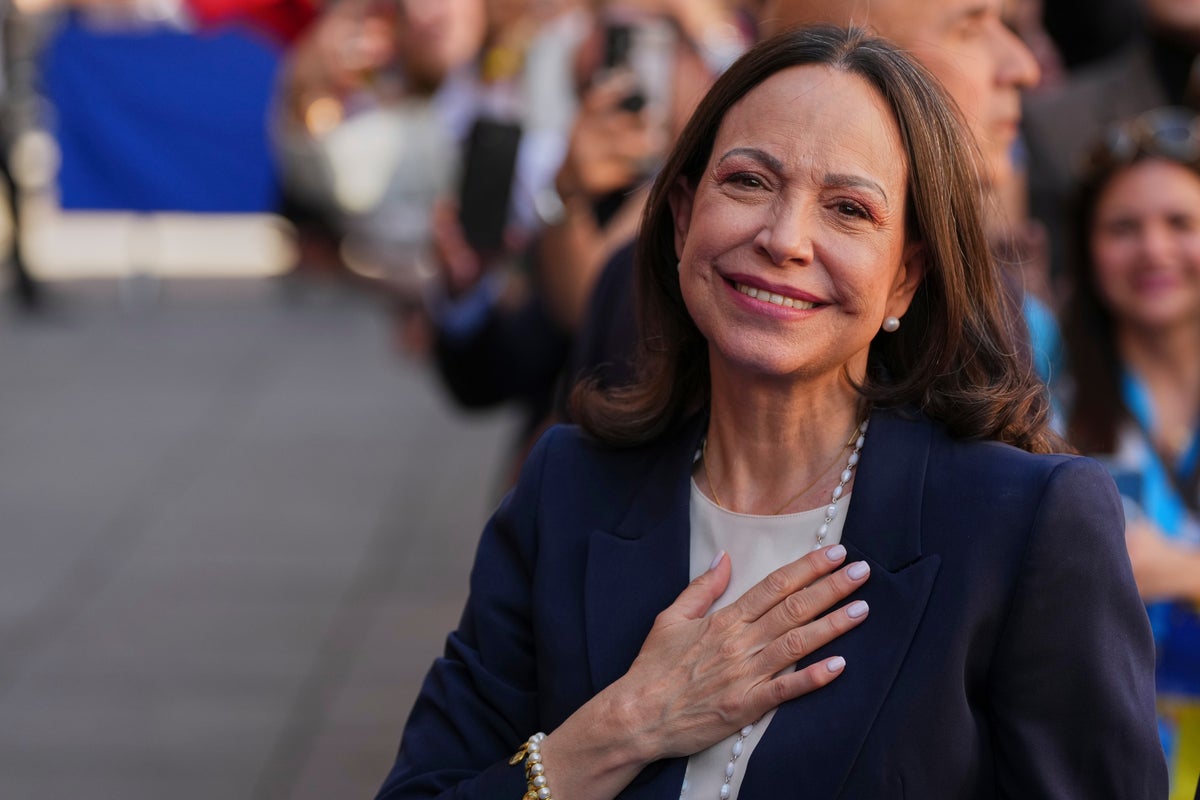
The political theater currently unfolding in Madrid reveals a lot about the changing state of the Venezuelan transition. When Maria Corina Machado, the 2025 Nobel Peace Prize laureate, touched down in the Spanish capital this week, she wasn't just there to receive a medal from the regional government. She was there to send a message.
By publicly snubbing a meeting with Prime Minister Pedro Sánchez while simultaneously cozying up to conservative figures like regional president Isabel Díaz Ayuso, Machado is doing more than just choosing political sides. She is signaling that her roadmap for Venezuela’s future is no longer tied to the soft diplomacy favored by Spain’s socialist government. You might also find this connected article interesting: Strategic Consolidation of MENAFATF within the Global Financial Safety Net.
The Madrid snub explained
If you’re wondering why this meeting didn't happen, look no further than the optics. Sánchez is currently hosting a summit of progressive leaders in Barcelona. For a figure like Machado—whose recent trajectory has been defined by a hardline stance against the legacy of the Maduro regime and a strategic alignment with Washington—attending an event hosted by a collection of left-leaning international leaders was never in the cards.
Machado put it bluntly to the press. She argued that the context of the Prime Minister's current diplomatic engagements made such a meeting ill-advised. She’s not interested in moderate calls for "democratic dialogue." She’s looking for concrete timelines for elections and the complete dismantling of the structures that defined the previous era of repression. As discussed in recent reports by Associated Press, the effects are worth noting.
Why this matters right now
You have to understand the current climate in Venezuela to see why Machado’s movements in Europe feel so heavy. Since the January 2026 military intervention in Caracas that led to the capture of Nicolás Maduro and Cilia Flores, the country has been in a weird, fragile state of flux.
Vice President Delcy Rodríguez currently leads the government, but the real power dynamics are being negotiated through Washington. With the Trump administration and the U.S. State Department—led by Marco Rubio—coordinating the transition, the old rules of engagement don't apply.
Machado is playing a high-stakes game of political positioning. She knows her base back home is exhausted and demanding results. By aligning herself with right-wing leaders in Europe, she’s reinforcing her commitment to a vision of Venezuela that rejects any remnants of the old status quo. She isn't just a symbol of the resistance anymore. She is actively coordinating with the U.S. to ensure that when she finally steps foot back on Venezuelan soil, she does so under a framework of guaranteed free elections.
The strategy behind the silence
Many observers often mistake silence for weakness. When Machado stays quiet on certain diplomatic channels or avoids meeting with specific European leaders, it’s usually because she has already locked in support where it counts.
Her recent trip—meeting with French President Emmanuel Macron in Paris and Dutch Prime Minister Rob Jetten in The Hague—shows she’s building a network of support that goes beyond ideological labels. When it comes to Sánchez, however, the distance is intentional. She needs to remain untainted by the "neutrality" that many Venezuelan exiles believe has allowed the current governing structure to linger longer than it should.
Practical implications for the road ahead
If you’re watching the situation in Caracas, don't look for traditional diplomatic statements. Look at these three things:
- The electoral calendar. Machado’s primary demand is now a clear, public timeline for when the next elections will happen. Any entity that doesn't push for this date is effectively being sidelined in her strategy.
- The return plan. She has promised she will return to Venezuela. Her coordination with Washington is the only thing that makes this even remotely possible without her landing in prison or worse.
- The transition audit. The IMF’s renewed oversight is something she supports because she knows it will expose the state of the central bank's vaults. Follow the money. That’s where the true story of the transition will be told.
Machado is betting everything on the idea that the "chaos and violence" of the past decade is finally ending. By avoiding the distractions in Madrid and focusing on the power players who can actually enforce the transition, she’s signaling that the end game is officially in sight.
She isn't looking for a photo opportunity with European heads of state. She’s looking for an exit strategy for a regime that is already on its way out. The rally in Madrid was a show of strength for the diaspora, but the real work is happening behind closed doors with the people holding the keys to the transition. Keep your eyes on the election dates and the U.S. State Department’s next moves. That’s where the actual shift is happening.