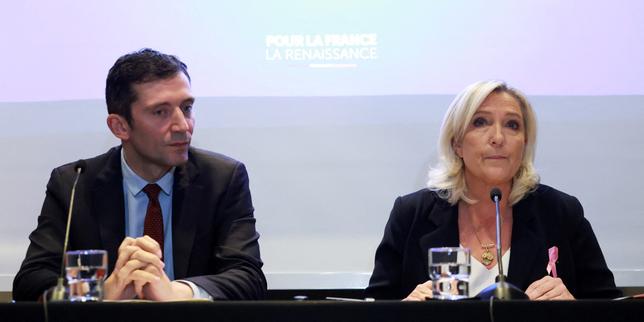
You can't threaten the European Union’s financial architecture without expecting a cold shoulder from the rest of the continent. Marine Le Pen recently touched down in Brussels with a loud message for European leaders: if elected, she plans to slash France's financial contributions to the EU and start a harsh political standoff. But instead of striking fear or building a coalition, her hardline stance achieved the exact opposite. She stood almost entirely isolated.
Brussels isn't just a city of bureaucrats; it's a tight network of pragmatic alliances. When national politicians try to break the rules by withholding funds, they usually look for heavy hitters to back them up. Right now, the political math doesn't add up for her brand of confrontation. Even other right-wing and conservative factions across Europe are shifting toward strategic negotiation rather than outright economic sabotage. Read more on a related subject: this related article.
The Cost of Financial Threats
The core of the recent dispute centers on money. Le Pen argued that France pays far too much into the common EU budget and suggested holding back payments to force institutional reform. On paper, it sounds like a bold negotiation tactic. In practice, it triggers immediate alarm bells among member states who rely on those very streams for regional development and stability.
If France cuts its checks unilaterally, the financial gap has to be plugged by someone else, or major community programs face instant collapse. Other European capitals understand this reality very well. By threatening to pull the rug out from under the bloc's budget, Le Pen alienated moderate allies and even frustrated neighboring populists who prefer working within institutional loopholes to total gridlock. Additional analysis by The New York Times highlights similar views on the subject.
The Shift in European Alliances
A few years ago, the European nationalist movement looked like a unified front ready to storm the gates of Brussels. Today, the landscape is fractured. Leaders like Italy's Giorgia Meloni have chosen a path of institutional engagement, working inside the system to secure national interests without blowing up diplomatic ties.
Le Pen’s insistence on a violent "bras de fer"—a classic arm-wrestling match—places her outside these practical diplomatic channels. When she met with her parliamentary group, the Patriots for Europe, the underlying tension was obvious. Pushing an anti-establishment narrative plays well at home during domestic political campaigns, but inside the European Parliament, it turns you into a spectator rather than a decision-maker.
What Happens Next for French Diplomacy
If a country like France adopts an open confrontation policy with Brussels, the fallout goes way beyond budget numbers. Decades of French influence built around strategic autonomy and diplomatic leadership could vanish overnight. Other member states aren't going to fold just because Paris issues an ultimatum. They'll simply route around French objections, leaving the country isolated on crucial votes concerning trade, defense, and foreign policy.
Politicians love to promise easy fights against distant capitals. Delivering those promises without completely destroying your nation's international standing is an entirely different challenge. Right now, Brussels is showing that defiance without allies carries a very heavy price tag.
MARINE LE PEN gives a conference in BRUSSELS ahead of the EU
This video provides a direct look at Marine Le Pen's press conference in Brussels, where she addressed the upcoming political summits and her confrontational stance toward European institutions.


