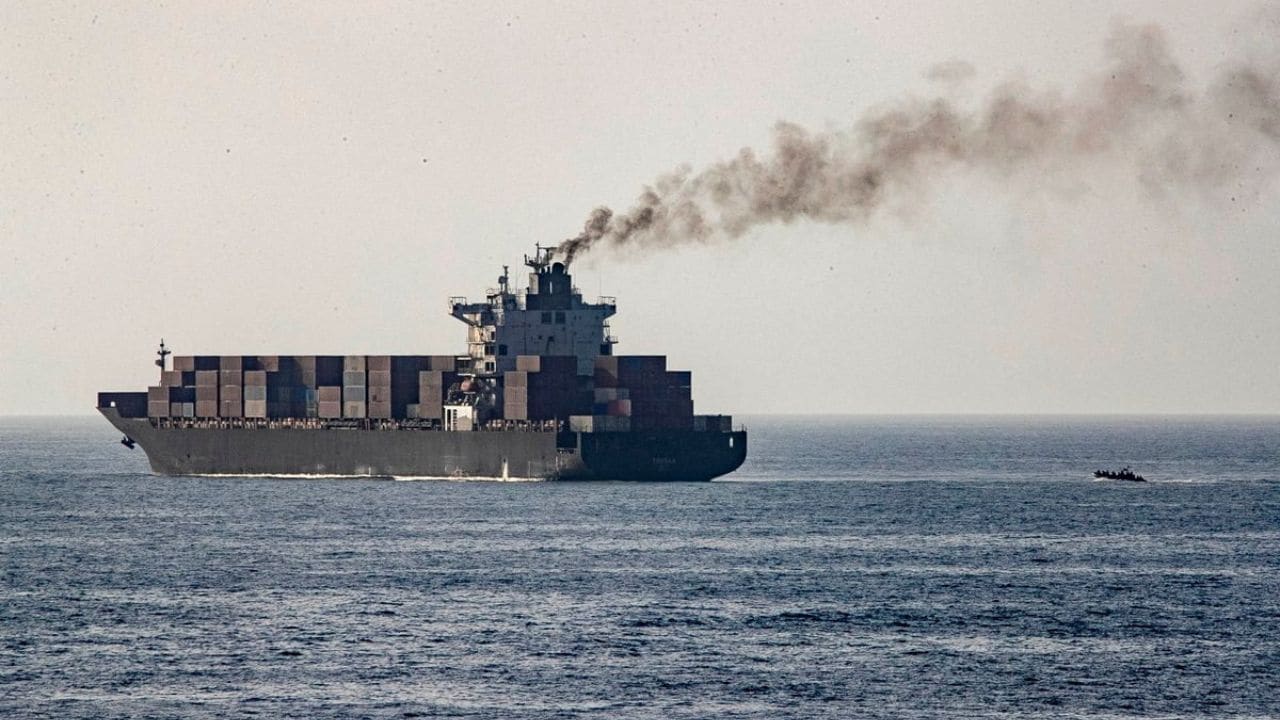
The seizure of an Iranian-affiliated vessel and the subsequent extraction of 22 crew members to Pakistan represents a sophisticated exercise in kinetic risk mitigation. In maritime security, the physical control of a hull is often secondary to the management of human capital and the legal jurisdiction of the personnel involved. By offloading the crew to a third-party neutral zone rather than detaining them on U.S. soil or a high-readiness military platform, the U.S. Navy executed a maneuver designed to decapitate the escalatory cycle before it reached a diplomatic breaking point.
This operation functions within three distinct analytical pillars: Operational Sovereignty, Personnel Liability Transfer, and Logistical Deterrence. Discover more on a related subject: this related article.
The Mechanics of Maritime Interdiction
When a vessel is seized under suspicion of violating international sanctions or maritime law, the United States faces an immediate "liability of possession." A seized ship is not merely an asset; it is a floating jurisdictional vacuum that requires constant resources to maintain, guard, and navigate.
The Cost Function of Vessel Retention
The operational burden of maintaining a seized vessel follows a non-linear growth curve. Each hour the U.S. military remains in physical control of both the ship and the crew, the probability of a counter-escalation increases. Further journalism by USA Today highlights comparable views on the subject.
- Supply Chain Friction: Guarding 22 foreign nationals requires a dedicated security detail, medical oversight, and adherence to international humanitarian protocols. This diverts "Tier 1" assets from active patrolling to passive guarding.
- Legal Entanglement: Bringing the crew to a U.S. territory triggers the "Article III" judicial process. This transforms a military operation into a multi-year legal odyssey, granting the Iranian state a platform for high-profile litigation.
- Hostage Reciprocity: Retaining the crew creates a "value-parity" target. It incentivizes the Iranian Revolutionary Guard Corps (IRGC) to seize Western merchant sailors to facilitate a lopsided prisoner exchange.
By transferring the crew to Pakistan, the U.S. removes the human element from the tactical equation. Pakistan serves as a logistical "pressure valve." It allows the U.S. to maintain control of the physical vessel (the evidence) while offloading the political and humanitarian liability of the crew to a regional actor capable of facilitating their eventual repatriation.
Strategic Geography: Why Pakistan?
The selection of Pakistan as the disembarkation point is a calculated move in regional signaling. Pakistan maintains a complex, often transactional relationship with both Washington and Tehran.
The Triangulation of Interests
The U.S. leverages Pakistan's geographical proximity to the Gulf of Oman to minimize the "transit window"—the time during which a seized asset is most vulnerable to swarm-style drone attacks or fast-attack craft.
- Proximity: Reducing the distance between the interdiction point and a neutral port limits the fuel and escort requirements for the transport.
- Diplomatic Buffering: Pakistan can act as a non-combatant intermediary. If the crew were transferred to a staunch U.S. ally like Bahrain or the UAE, it would be viewed as a direct provocation by Iran, potentially leading to strikes against those nations' infrastructure. Pakistan’s neutrality provides a layer of deniability for all parties involved.
- Intelligence Capture: The window between seizure and hand-off provides a controlled environment for the U.S. to conduct biometric screening and "soft" questioning without the oversight of Iranian consular officials.
The Architecture of Sanctions Enforcement
The seizure of Iranian-linked vessels is rarely about the value of the cargo itself. Instead, it is a method of atrition-based deterrence. The goal is to raise the "Insurance and Risk Premium" for any entity willing to facilitate Iranian maritime trade.
The Breakdown of Shadow Fleet Economics
Iran utilizes a "Shadow Fleet"—vessels with obscured ownership, frequently changed flags, and disabled AIS (Automatic Identification System) transponders. To counter this, the U.S. employs a strategy of Systemic Friction.
- Flag De-registration: When a ship is seized and its crew removed, the flag state (often "flags of convenience" like Panama or Liberia) is pressured to revoke the vessel’s registration. A ship without a flag is a pariah in the global maritime system, unable to enter most legitimate ports.
- Hull Value Degradation: Once a ship is seized and the crew is evacuated, the vessel often sits in a state of "warm layup." Without a full engineering crew to maintain the engines and pumps, the ship’s resale and functional value plummets.
- Crew Incentivization: By ensuring the safe, albeit forced, transit of the crew to a third country, the U.S. sends a message to the global labor market: Working for the Iranian shadow fleet results in detention, displacement, and professional blacklisting.
Tactical Limitations and Asymmetric Risks
Despite the surgical execution of the evacuation to Pakistan, the strategy is not without significant bottlenecks.
The Bottleneck of Physical Capacity
The U.S. Navy’s 5th Fleet has a finite number of boarding teams (VBSS - Vessel Boarding, Search, and Seizure). Each interdiction requires a "Cover and Support" structure. If the frequency of these seizures increases, the U.S. risks overextending its maritime presence.
The Symmetry Problem: For every ship the U.S. seizes, Iran has demonstrated a willingness to harass or "bridge-ride" Western tankers in the Strait of Hormuz. This creates an asymmetric cost. The U.S. seizes a ship based on complex legal frameworks and sanction violations; Iran seizes a ship based on physical proximity and raw power. The U.S. must then decide if the "Legal Win" of a seized Iranian ship is worth the "Economic Loss" of a stalled global oil supply.
The Identification Gap
Modern maritime interdiction relies heavily on SIGINT (Signals Intelligence) and IMINT (Imagery Intelligence). The challenge lies in the "Last Mile" of identification.
- Fact: Many ships used by Iran are legally owned by shell companies in the Marshall Islands or Hong Kong.
- Mechanism: The U.S. must prove "Beneficial Ownership" before a seizure can be justified under international law. This requires a fusion of financial forensic data and real-time satellite tracking. If the data is flawed, the U.S. faces massive maritime lawsuits and a loss of credibility among neutral shipping nations.
The Shift Toward "Sanctions-by-Proxy"
This operation suggests a shift in U.S. maritime strategy toward a more "disjointed" enforcement model. Rather than the U.S. holding every asset it interdicts, it is moving toward a model where it performs the Kinetic Capture but delegates the Administrative Custody.
This creates a "distributed risk" model. If Pakistan, or other regional partners, becomes the standard processing hub for evacuated crews, it forces Iran to negotiate with its neighbors rather than exclusively with the "Great Satan." This localizes the conflict, making it a regional border and labor issue rather than a global geopolitical showdown.
The strategic play here is not the seizure of one ship, but the establishment of a Repeatable Interdiction Framework.
The U.S. will continue to exploit the "Human Liability" of Iranian operations. By proving that they can seize a vessel and successfully neutralize the crew’s presence through third-party extraction, they are signaling to Tehran that the "Human Shield" strategy—using civilian crews to deter military action—is no longer effective. The focus now shifts to the legal disposal of the hull and the permanent removal of the vessel from the global supply chain through judicial forfeiture.
Operators should monitor the frequency of "third-party hand-offs" as the primary indicator of a looming surge in maritime enforcement. If this Pakistan model becomes the blueprint, expect a spike in interdictions as the U.S. has effectively solved the "Crew Custody" bottleneck.