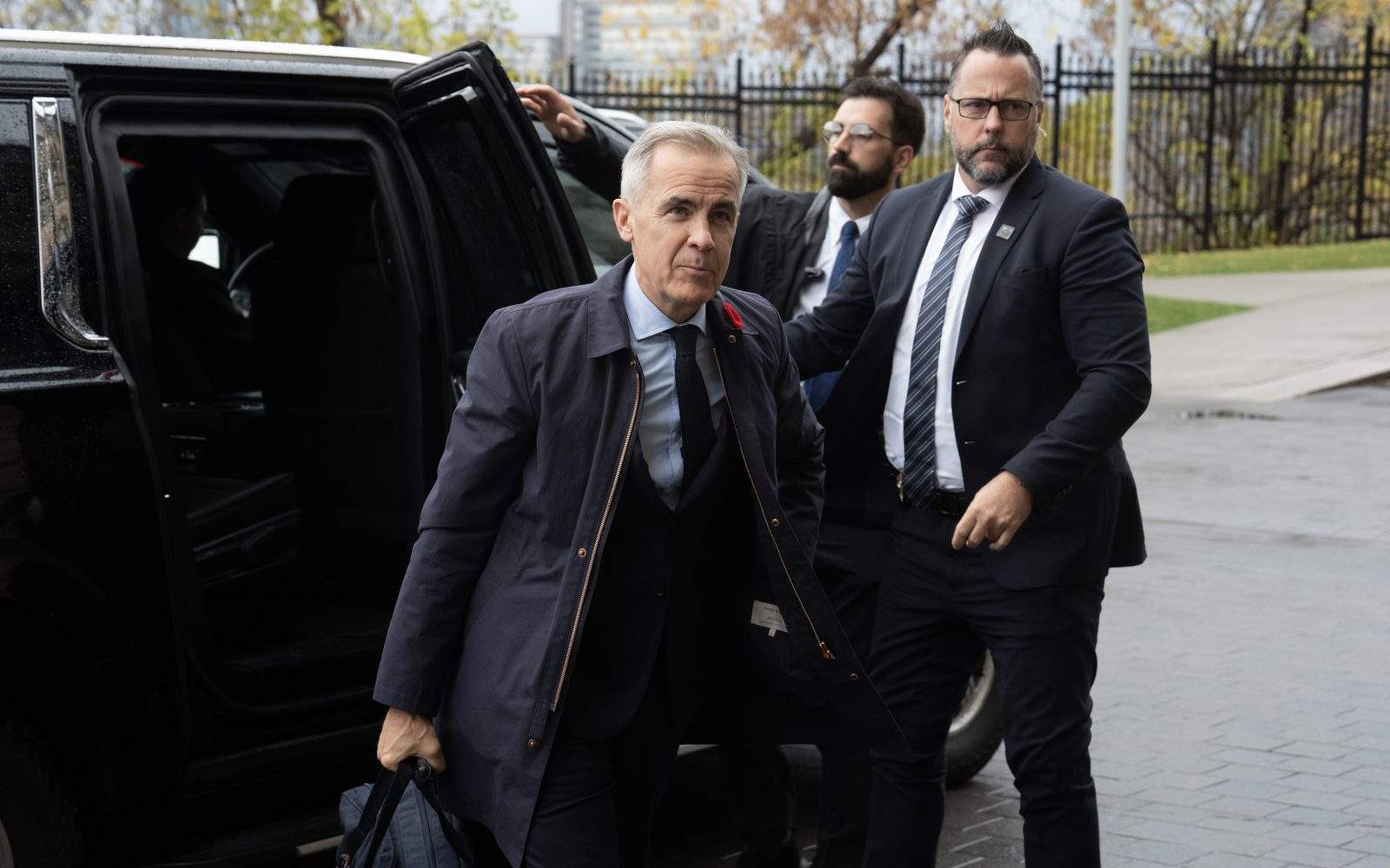
Political pundits in Ottawa and Washington are hyperventilating because Mark Carney admits he hasn’t picked up the phone to call congressional Democrats about U.S. tariffs. "Short answer is no," he told reporters. And just like that, the talking heads spun into their usual predictable frenzy.
They call it diplomatic negligence. They call it rookie hesitation. They argue that a prime minister facing an existential trade war should be working every backchannel on Capitol Hill to build a bipartisan firewall against protectionism.
They are completely wrong.
In fact, Carney’s refusal to lobby the minority party in Washington is the smartest, most disciplined move he has made since taking the top job. The lazy consensus assumes that traditional retail diplomacy works in a populist trade war. It doesn’t. Calling Democrats right now wouldn't save a single Canadian manufacturing job, wouldn't lower a single tariff rate, and would actively sabotage Ottawa's actual negotiating position with the only person who holds the pen in Washington.
The Illusion of Bipartisan Trade Rescue
To understand why Carney is ignoring the Democrats, you have to understand how American trade authority actually functions under executive-driven protectionism.
The pundit class still operates on a 1990s NAFTA-era mental model. Back then, trade policy was a legislative tug-of-war. You flew to Washington, wined and dined the chairs of the Senate Finance Committee and the House Ways and Means Committee, built a coalition of free-trade Democrats and chamber-of-commerce Republicans, and let Congress check the White House.
That world is dead.
Under statutes like Section 232 of the Trade Expansion Act of 1962—which allows the president to impose tariffs on national security grounds—and the International Emergency Economic Powers Act (IEEPA), the executive branch has virtually unilateral authority to slap duties on foreign goods overnight. Congress ceded this ground decades ago, and even when lawmakers grumble, overturning executive tariff actions requires a veto-proof two-thirds majority in both chambers.
Imagine a scenario where Carney spends three weeks quietly courting Senate Democrats to introduce a resolution condemning tariffs on Canadian aluminum, lumber, or auto parts. What happens? First, the resolution dies in committee or gets buried on the floor because the Republican leadership controls the calendar. Second, even if by some miracle it passes, it gets vetoed immediately.
You end up with zero policy relief, a handful of flattering quotes in the Globe and Mail from Democratic senators who have zero power to stop the bleeding, and an enraged White House that views the Canadian Prime Minister as conspiring with its domestic political enemies.
I have watched corporate boards and foreign trade delegations burn millions of dollars on K Street lobbying firms chasing this exact mirage. They hire former staffers from the out-of-power party, hold briefings on the Hill, and feel productive because their calendars are full. Six months later, their goods are still stuck at the border, and the executive branch has locked them out of the room entirely.
Why Backchanneling Backfires in Populist Politics
The fundamental flaw in the "talk to the Democrats" critique is a failure to grasp the psychology of transactional nationalism.
When you are dealing with an administration that views trade deficits as personal slights and tariffs as the ultimate badge of virility, traditional multilateral triangulation is fatal. In a normal administration, building pressure through the opposition party creates political friction that forces the White House to compromise. In a populist administration, opposition pushback does the exact opposite: it validates the tariffs.
If Democratic leaders suddenly start parroting Canadian talking points on the Senate floor, tariffs cease to be an economic debate and become a partisan loyalty test. Any Republican senator from a border state—like Michigan, Ohio, or Montana—who might otherwise quietly pressure the White House to carve out an exemption for Canadian supply chains is suddenly forced to fall in line. Nobody in the GOP is going to side with Chuck Schumer and a Canadian prime minister against their own president.
Carney knows this. He spent years running both the Bank of Canada and the Bank of England during periods of acute political volatility, including Brexit. He understands institutional power dynamics better than almost anyone currently holding office in North America. When he says "short answer is no," he isn't confessing to an oversight; he is signaling to the West Wing that he deals strictly with the principal, not the spectators.
The Asymmetric Trap of Democratic Protectionism
There is another uncomfortable truth the Ottawa press gallery refuses to confront: the Democrats aren't actually free traders anymore.
Over the last decade, the ideological center of gravity within the Democratic Party shifted dramatically toward economic nationalism. Look at the Biden-Harris administration's trade record. They kept the Trump-era Section 301 tariffs on China, slapped new ones on electric vehicles and solar cells, leaned heavily into aggressive "Buy American" procurement rules that froze out Canadian contractors, and fought Canada tooth and nail on softwood lumber and dairy.
When you strip away the polite rhetoric, both parties in Washington have embraced industrial policy and protectionism as core tenets of national security. The only difference is style. Republicans use tariffs as a blunt-force weapon to force bilateral concessions; Democrats use subsidies, domestic content mandates, and regulatory hurdles to achieve the exact same outcome.
Why on earth would Carney expend political capital begging for help from a party whose own platform relies on subsidizing American manufacturing at Canada’s expense?
What People Are Getting Wrong About Trade Diplomacy
If you look at what people are actually searching for right now—questions like "How can Canada stop US tariffs?" or "Will Congress block tariffs on Canada?"—you see the exact same misconception playing out in real time. Voters and analysts alike are looking for a constitutional or diplomatic cheat code. They want to believe there is a magic coalition in Washington that will step in and restore order.
Let's dismantle that premise brutally:
- Will Congress step in to protect NAFTA/USMCA? No. Even lawmakers from states whose economies depend entirely on cross-border trade will not risk primary challenges to defend a foreign trade partner.
- Can state governors override federal tariffs? No. Governors can complain, write letters, and host trade missions, but customs duties are strictly federal jurisdiction under Article I, Section 8 of the U.S. Constitution.
- Does international trade law (WTO or USMCA panels) offer immediate relief? No. Dispute resolution mechanisms take years to adjudicate. By the time a panel rules that a tariff is illegal, the targeted factories have already closed or moved south of the border.
Once you accept that Congress, governors, and trade tribunals cannot save you in the short term, the entire strategic picture changes. You stop wasting energy on performative outreach and focus exclusively on leverage.
The Real Lever: Bilateral Pain and Direct Negotiation
If calling Democrats is a dead end, what actually works?
Only two things move the needle in a bilateral trade dispute with Washington: direct, surgical retaliation aimed at key political constituencies, and high-level transactional deals struck directly with the executive branch.
First, look at retaliation. When Canada successfully pushed back against U.S. steel and aluminum tariffs in 2018 and 2019, it wasn't because Chrystia Freeland charmed Senate Democrats. It was because Ottawa mapped out the exact congressional districts of key Republican leaders and targeted products made in their backyards—Kentucky bourbon, Florida orange juice, Wisconsin dairy, and Pennsylvania steel. That created immediate, localized economic pain for the people who actually had the president's ear.
Second, look at how you negotiate with a transactional leader. You do not go around them. You go straight to them, you flatter their strength, and you offer them a win they can sell at a rally—whether that's joint Arctic security spending, critical mineral supply guarantees, or coordinated border enforcement—in exchange for tariff exemptions.
Carney’s discipline in staying away from the Democrats keeps the door open for that direct deal. It preserves his credibility as a serious, pragmatic operator who understands who actually runs the American government.
The Risk of Carney’s Approach
To be clear, this strategy is not without massive risks. Acknowledging the downsides is essential because blind allegiance to any tactic is how leaders get blindsided.
By refusing to engage congressional Democrats, Carney forfeits the ability to build long-term institutional relationships that will matter if power flips in the 2026 midterms or the 2028 presidential election. If Democrats retake the House or the Senate, they will have oversight power, subpoena authority, and influence over the upcoming USMCA review process. Leaving them completely out in the cold today risks creating unnecessary friction down the road.
Furthermore, strict discipline looks like passivity to a domestic audience terrified of job losses. Voters want to see their leaders fighting on every front. Saying "no" to a basic diplomatic question makes for a terrible soundbite when auto workers in Windsor and steelworkers in Hamilton are watching their livelihoods hang in the balance. If Carney fails to extract direct concessions from the White House over the next six months, his refusal to work the Hill will be weaponized against him as proof that he was asleep at the wheel.
Stop Confusing Activity With Leverage
The obsession with who Carney has or hasn't called in Washington exposes a deeper rot in how political media covers economic statecraft. Journalists love process stories. A phone call to a senator is easy to report; complex macroeconomic leverage is hard to explain on a two-minute television panel.
But diplomacy is not a tally of phone calls made. It is the cold, calculated application of power.
Every minute the Prime Minister spends briefing powerless opposition lawmakers in Washington is a minute wasted—and a signal to the White House that Ottawa is trying to play domestic American politics instead of negotiating like a sovereign equal. Carney knows where the power sits, he knows who signs the executive orders, and he isn't wasting his breath on anyone else.
Let the pundits cry about etiquette while the adults handle the leverage.