The coffee in the boardroom had gone cold hours ago. Outside the window, the London drizzle smeared the city’s skyline into a watercolor wash of gray and charcoal. Inside, the quiet was absolute. There was no celebratory pop of champagne corks, no final frantic clicking of calculators, and no triumphant phone call to a cheering trading floor.
There was only a decision.
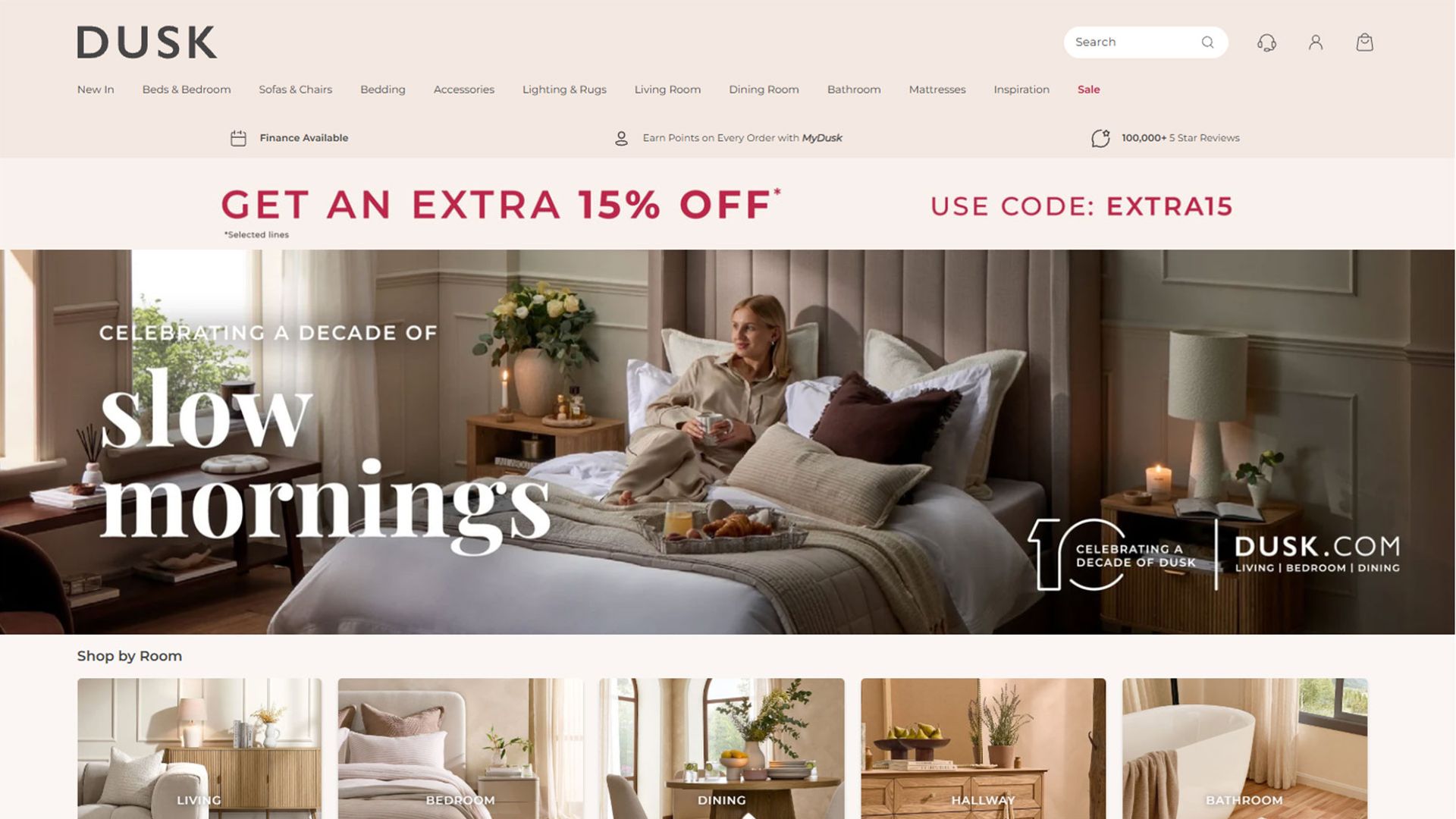
For months, the trajectory had seemed fixed. The growth charts pointed skyward, fueled by a generation of homebound buyers who had discovered that their living rooms were no longer just spaces to sit, but sanctuaries, offices, schools, and stages. Dusk, an online retailer born from the simple, radical notion that a well-crafted sofa should not cost a month’s wages, had built an empire on flat-pack boxes and digital storefronts. The ambition was grand, glittering, and stamped with a specific valuation: three hundred million pounds. A London float. A public debut.
And then, with the quiet turning of a page, the brakes were pulled.
To understand why a company steps back from the precipice of a massive stock market flotation is to understand the hidden psychology of modern commerce. It is a story told not in spreadsheets alone, but in the anxious hum of logistics hubs at midnight, the shifting currents of consumer confidence, and the heavy, unforgiving arithmetic of public market scrutiny.
The Architecture of Ambition
Imagine standing in a warehouse in Yorkshire or the Midlands at two in the morning. The cavernous space smells of fresh pine, dense cardboard, and the industrial plastic wrap that secures stacks of velvet-upholstered ottomans and solid oak dining tables. Forklifts drift like silent ghosts through aisles lit by harsh overhead fluorescents. This is where the physical reality of retail lives.
For years, companies like Dusk operated on a different frequency. They bypassed the traditional High Street, with its exorbitant rents, creaking Victorian floorboards, and armies of commission-driven salespeople. They sold straight to the screen, relying on algorithms, Instagram feeds, and next-day delivery promises to capture the imagination of buyers scrolling in bed at midnight.
A stock market flotation—an Initial Public Offering—is traditionally painted as the ultimate graduation day for such a business. It is the moment the founder trades the sweat of private struggle for the liquid gold of public liquidity. It is a validation stamp from the city of London, proclaiming that a digital storefront has matured into an institutional titan.
Yet, graduation day requires an audience willing to cheer. And in the financial capitals of Europe, the mood has shifted from celebration to a deep, watchful hesitation.
The Weight of a Price Tag
Three hundred million pounds is a curious thing. It is simultaneously a measure of past success and an anchor tied firmly to the future.
When a company goes public, it does not merely raise capital; it enters a fishbowl. Every quarterly earnings report becomes a public referendum on its survival. Every minor wobble in consumer spending is met with the sharp, punitive drop of a share price. For a direct-to-consumer brand navigating a turbulent economic climate, stepping onto that stage is a high-stakes gamble.
Consider what has happened to the British household over the past few years. The cost-of-living squeeze has turned the purchase of a new armchair from an impulse buy into a prolonged family summit. People measure their spending against utility bills, grocery inflation, and mortgage rates that refuse to offer comfort. When sofas become luxury items rather than routine upgrades, retail margins narrow.
To enter the public markets under such conditions is to invite a storm. Institutional investors—the pension funds, asset managers, and sovereign wealth portfolios that dictate the success of a float—are currently risk-averse. They are not looking for the explosive, unpredictable growth of yesterday’s tech darlings. They are looking for shelter. They want ironclad predictability in a world that feels increasingly chaotic.
When the leadership team at Dusk looked at the ledger, they faced a stark choice. They could press forward into a lukewarm market, accepting a discounted valuation that undervalued years of grueling labor, or they could hit pause. They could protect their equity, preserve their operational focus, and wait for the economic weather to clear.
They chose patience over pride.
A Quiet Exodus
The decision to shelf a multimillion-pound float is not happening in a vacuum. It is part of a broader, more troubling narrative for the London Stock Exchange. For years, the Square Mile has watched a slow, agonizing drift of homegrown champions looking elsewhere for capital, casting envious glances toward New York, where valuations are often higher and investor appetites are bolder.
London has historically prided itself on being the financial engine of Europe, a pragmatic hub where traditional commerce meets modern innovation. Yet, a string of canceled listings, delayed floats, and corporate migrations has forced a reckoning. When mid-market success stories decide that the public market is more trouble than it is worth, the silence echoes through the corridors of regulatory bodies and banking boardrooms.
It is easy to blame regulation or tax policy, but the root cause is often simpler and more human: fear. Public markets punish uncertainty. And right now, uncertainty is the only commodity in abundant supply.
When a retail brand pulls its IPO, it sends a signal to every other entrepreneur dreaming of the grand London debut. It whispers a sobering truth: survival and sustained, profitable growth inside the quiet machinery of private ownership are often infinitely more valuable than the fleeting glory of a bell-ringing ceremony.
The Art of Waiting
Back in the boardroom, the lights remain on. The papers are pushed aside. The decision has been made, and with it, an immense, invisible pressure lifts.
There is a profound misconception in business that momentum only moves in one direction—forward, faster, louder, bigger. We worship the growth hack, the explosive round of funding, the front-page IPO announcement. We forget that restraint is a strategy, too. Sometimes, the bravest thing a company can do is to refuse to play a game rigged against its best interests.
Dusk will continue to sell its beds and bookshelves. Couriers will still load vans in the damp dawn. Customers will still unwrap flat-pack boxes in newly painted living rooms, looking for a small island of comfort in an uncertain world. The lack of a stock ticker symbol on a financial news screen does not diminish the wood, the fabric, or the utility of what they build.
The city outside continues to drizzle. The financial district settles into its evening rhythm, oblivious to the uncelebrated victories and quiet recalibrations happening behind closed doors. But in the theater of commerce, the intermission is often where the real play is written. The bell has not rung today. That does not mean the story is over. It simply means the characters are waiting for a better dawn.