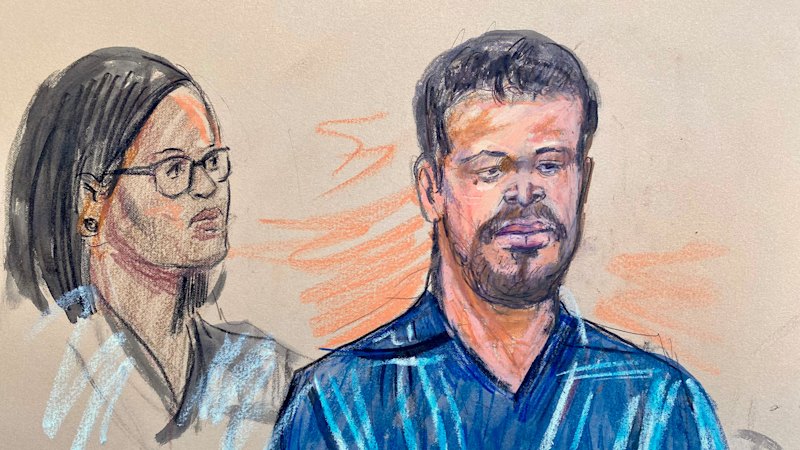
Ryan Wesley Routh now faces a life sentence for his attempt to assassinate President Donald Trump at a Florida golf club. While the legal system moves toward a conviction, the criminal charges only scratch the surface of a much deeper breakdown in national security and the radicalization of a man who moved through the world as a ghost before deciding to become a killer. Federal prosecutors have shifted the narrative from a simple weapons charge to a premeditated plot to execute a presidential candidate. This shift exposes a terrifying reality about the modern threat profile: it is no longer just organized groups we have to fear, but highly motivated, self-radicalized individuals who exploit the exact gaps in security that shouldn’t exist.
The Calculated Path to the Fence Line
Routh did not stumble into this situation. The evidence presented by the Justice Department details a month-long reconnaissance mission. Data recovered from his cellular devices shows he traveled from Greensboro, North Carolina, to West Palm Beach in mid-August. He spent weeks lingering near the Trump International Golf Club and the former president’s Mar-a-Lago residence. This was a methodical hunt.
When the Secret Service spotted a rifle barrel poking through the shrubbery on September 15, they weren’t looking at a spur-of-the-moment act of rage. They were looking at the culmination of a stakeout. Routh had positioned himself at a "sixth-hole" vantage point, a spot where a golfer is most exposed. He had food. He had a digital camera. He had a high-powered SKS-style rifle with a serial number that had been obliterated. This is the hallmark of someone who understands how to bypass standard law enforcement tracing. He wasn't just trying to kill; he was trying to vanish afterward.
A Manifesto of Failure
Perhaps the most chilling piece of evidence is the handwritten note Routh left with a civilian acquaintance months prior. The letter was a confession written in the past tense, as if the deed were already done. It called the attempt an "assassination" and offered a bounty to anyone who could "finish the job" if he failed. This suggests Routh understood his own limitations. He knew he might not survive or succeed, yet he viewed the act of violence as a necessary sacrifice for his warped worldview.
This letter destroys any defense regarding mental competency or a lack of specific intent. He explicitly stated that Trump "is not fit to be anything, least of all a president." This wasn't a cry for help. It was a cold-blooded contract he took out on a public figure, fueled by years of escalating political obsession. We see a pattern here of a man who traveled to Ukraine to fight, who tried to recruit foreign soldiers, and who felt the weight of the world's problems rested solely on his ability to commit a single, violent act.
The Secret Service Crisis and the Vulnerability of Routine
The fact that Routh was able to sit in the bushes for nearly 12 hours without being detected is an indictment of current protection protocols. The Secret Service is currently operating under a "bubble" philosophy that is clearly leaking. Trump was not on his official schedule that day; the golf outing was an off-the-record movement. This means Routh didn't need a leaked itinerary. He simply needed to understand the target's habits.
Routine is the enemy of security. If a man with a criminal record and a rifle can predict where a former president will be on a Sunday morning better than the agents assigned to protect him can sweep the perimeter, the system is broken. The Secret Service is currently stretched thin, facing a multi-front threat environment that hasn't been seen since the 1960s. They are reacting to threats rather than neutralizing the environment.
The Technological Gap
During the standoff, Routh fled the scene in a Nissan SUV. He was only captured because a witness had the presence of mind to take a photo of his license plate. Relying on the quick thinking of a bystander is not a security strategy. It is luck.
We are seeing a massive discrepancy between the surveillance tools available to the government and the boots-on-the-ground reality of presidential protection. Drones should have been loitering over that perimeter. Thermal imaging should have picked up a human heat signature in the treeline hours before Trump reached that hole. Instead, the "advance" team failed to identify a man who had essentially set up camp on the property line.
Decoding the Radicalization of Ryan Routh
Routh is a case study in "purpose-driven" radicalization. His history shows a man who was constantly seeking a grand cause. Whether it was his erratic attempts to influence the war in Ukraine or his self-published book urging Iran to assassinate Trump, he was a man screaming for relevance.
This is the new "lone wolf" profile. It isn't a teenager in a basement; it’s a middle-aged man with the resources to travel, the patience to surveil, and a conviction that he is a historical protagonist. He viewed himself as a savior. When people stop fearing the consequences of their actions because they believe they are serving a higher moral purpose, traditional deterrence fails. You cannot deter someone who has already written his own obituary.
The Legal Battle and the Road to Life Imprisonment
The federal government is not taking chances with the prosecution. By moving beyond the initial firearm charges to "attempted assassination of a major presidential candidate," they have signaled that this is a matter of national security. The sentencing guidelines for this charge are severe.
The defense will likely lean into Routh’s history of erratic behavior, perhaps attempting to paint him as a delusional individual incapable of forming true intent. However, the pre-written note and the weeks of GPS-tracked reconnaissance tell a different story. These are the actions of a man with high executive function. He planned. He traveled. He waited.
The Real Threat Beyond the Courtroom
While Routh sits in a cell, the vulnerability he exposed remains wide open. The political climate has turned every public appearance into a high-stakes gamble. We are currently in an era where the barrier to entry for an assassination attempt is remarkably low. An off-the-shelf rifle and a basic understanding of a target's lifestyle are apparently all that is required to get within striking distance of the most protected people on earth.
The security apparatus must move away from the "reactive" model. If the Secret Service continues to wait for a barrel to appear before they engage, it is only a matter of time before a more competent shooter takes the field. The focus must shift to proactive perimeter denial and the use of persistent surveillance technology that doesn't blink, doesn't get tired, and doesn't miss a heat signature in the Florida brush.
We are no longer dealing with a world where threats come from organized foreign intelligence services alone. The threat is local, it is motivated by 24-hour news cycles, and it is hiding in plain sight. Routh was a ghost in the system until he wasn't. The next one is likely already scouting a fence line, waiting for the routine to repeat itself.
The Justice Department will get its conviction, but the victory is hollow if the underlying security failures that allowed Routh to get that close aren't gutted and rebuilt from the floor up. You don't win by catching the shooter; you win by making sure he never finds a place to hide.