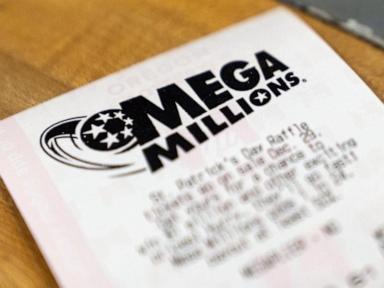
When the combined Powerball and Mega Millions jackpots eclipse $1.4 billion—with Mega Millions sitting at an estimated $800 million and Powerball trailing closely at $663 million—the national psyche shifts into a familiar, predictable trance. Office pools materialize, gas station lines stretch past the pumps, and otherwise rational adults begin budgeting their imaginary fortunes.
The media frames these soaring figures as a shared cultural jackpot party.
It is actually a masterclass in behavioral economics, probability design, and institutional revenue extraction.
The Architecture of the Climb
To understand why these numbers balloon to astronomical heights, one must look at the structural changes introduced to these lottery games over the last decade. Matrix expansions—worsening the odds of matching numbers to guarantee fewer immediate winners—were intentionally engineered to create massive, multi-month rollovers.
Consider the raw mathematics. The odds of securing a Mega Millions jackpot sit at roughly 1 in 302.6 million, while Powerball requires beating 1 in 292.2 million odds. These probabilities are so infinitesimal that human cognition fails to process them accurately.
When a jackpot rolls over continuously for months, ticket sales accelerate exponentially. A $2 Powerball ticket or a $5 Mega Millions play represents pocket change to an individual, but aggregated across hundreds of millions of participants, it forms a tidal wave of capital.
Each cycle feeds on itself. Media coverage drives ticket sales, ticket sales drive the jackpot higher, and higher jackpots justify more breathless media coverage.
The Expected Value Illusion
Every time the total reaches stratospheric levels, financial pundits trot out the same stale argument about expected value. They explain that when the jackpot exceeds the total number of possible combinations, multiplied by the cost of a ticket, the math technically turns in the player's favor.
This argument is dangerously incomplete.
Even if a player mathematically purchases every single unique combination for a $292 million Powerball cash option, operational reality intervenes. Buying millions of individual tickets manually or through automated terminals is logistically impossible within the brief window between drawings.
Worse, shared jackpots destroy the theoretical edge. If multiple people pick the winning numbers, that glittering $800 million headline figure gets chopped up into fractions.
Tax authorities take their mandatory bite before the winner even sees a dime. Federal withholding immediately claims 24 percent, and subsequent tax brackets quickly swallow up to 37 percent or more of the lump sum, depending on individual filing status and state regulations.
States without lottery tax winnings become tiny islands of exception, but for the vast majority of players, the advertised cash value shrinks dramatically upon impact with reality.
The Regressive Tax Reality
Behind the carnival atmosphere lies a sobering socio-economic footprint. Lottery participation is profoundly regressive.
Data compiled across multiple state jurisdictions consistently shows that lower-income households spend a significantly higher percentage of their disposable income on lottery tickets compared to affluent demographics. When jackpots spike into the billions, convenience store counter traffic skews heavily toward working-class neighborhoods where marketing is omnipresent and the promise of financial escape shines brightest.
The state lottery systems market these games under the banner of education funding or public infrastructure support. Yet, the mechanism essentially functions as a voluntary tax on desperation, extracting liquid capital from populations least equipped to absorb the loss.
Every rolled-over drawing represents millions of small transactions from people hoping to outrun inflation, stagnant wages, and housing crises.
The Psychology of the Long Shot
Why do millions continue playing a game with odds comparable to being struck by lightning multiple times?
Behavioral psychologists point to availability heuristics. The media endlessly profiles the rare, smiling winner holding an oversized check, while remaining entirely silent on the millions of tickets that yield zero return.
The human brain isolates the vivid image of ultimate wealth and discounts the invisible graveyard of losing slips.
Buying a ticket purchases more than a numerical combination. It buys a few days of sanctioned fantasy, a psychological break from the monotony of financial anxiety.
The ticket transforms an ordinary Tuesday into an open-ended narrative where every bill is paid, every debt is wiped clean, and absolute freedom is within reach. Lottery administrators understand this psychological product better than anyone. They are not selling numbers; they are selling hope packaged as a printed slip of paper.
As the current dual-jackpot cycle barrels toward its next drawing, the frenzy will peak, the numbers will be drawn, and the vast majority of tickets will find their way into asphalt parking lots and kitchen trash cans.
The jackpot will reset, the media cycle will pivot, and the quiet machinery of probability will begin its slow, inevitable climb all over again.



..jpg)