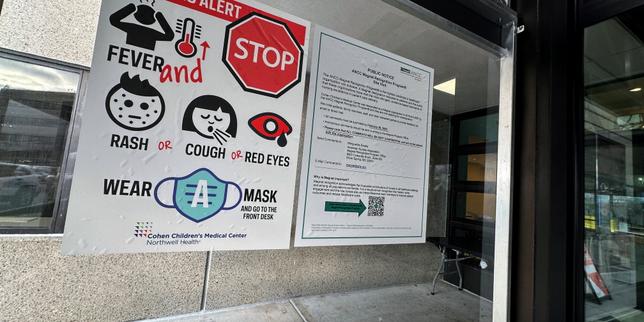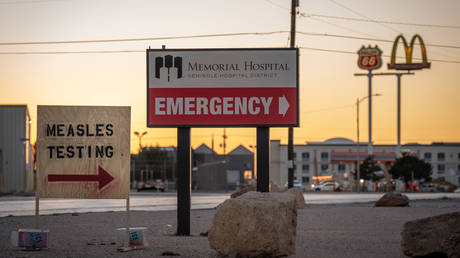
The recent confirmation of measles-associated fatalities in Pennsylvania marks a critical inflection point in modern public health. For decades, the structural suppression of the measles virus relied on an epidemiological shield known as herd immunity. When population-level vaccination coverage drops below the required mathematical threshold, the transmission dynamics of the virus shift from contained containment zones to exponential community spread. Understanding why this system failed requires examining the reproductive number of the virus, the erosion of population-level protection, and the operational breakdowns in public health response mechanisms.
The Mathematical Engine of Transmission
Measles operates as one of the most contagious pathogens known to science, driven by its baseline reproduction number, denoted as $R_0$. The $R_0$ of measles ranges between 12 and 18. This metric dictates that a single infected individual in a completely susceptible population will transmit the virus to an average of 12 to 18 other people.
To halt transmission entirely, a population must achieve a critical vaccination threshold, calculated via the formula:
$$V_c = \frac{1 - \frac{1}{R_0}}{\text{Vaccine Efficacy}}$$
Given a two-dose measles, mumps, and rubella vaccine efficacy of approximately 97% and an average $R_0$ of 15, the required herd immunity threshold sits strictly above 94% to 95% continuous population coverage. When kindergarten-level coverage rates drift downward from historical highs of over 95% to current national averages hovering near 92.4%, and localized pockets drop significantly lower—such as the roughly 88% coverage observed in specific high-risk clusters—the immunity buffer vanishes.
This creates an environment where localized outbreaks transition rapidly into multi-state transmission chains. The virus exploits structural gaps in community immunity, moving swiftly through networks of unvaccinated or immunocompromised individuals.
The Three Vulnerability Vectors in Modern Public Health
The resurgence of measles mortality and morbidity is not an accidental phenomenon; it is the systemic outcome of three distinct failure points in the public health infrastructure.
- Immunity Erosion via Exemption Creep: Non-medical and philosophical vaccine exemptions have risen steadily, reaching historic highs of 4.2% nationally. This incremental shift compounds over time, creating contiguous geographic and social clusters of unprotected individuals. Pathogens do not respect administrative boundaries; they exploit local density.
- The Recency Bias Deficit: Decades of successful elimination fostered a dangerous institutional and public amnesia. Because clinicians practicing today rarely encountered acute measles cases during their training, early diagnostic identification is frequently delayed. Patients present with prodromal symptoms—fever, cough, coryza, and conjunctivitis—that are easily misattributed to common upper respiratory infections, widening the window of active viral shedding before isolation protocols are initiated.
- Institutional Rhetoric and Trust Friction: Public health compliance relies on institutional trust. When federal and state messaging diverges or when vaccine skepticism is platformed by administrative leadership, public compliance with routine immunization schedules degrades. This friction converts a technical medical solution into a contested cultural choice, directly depressing uptake rates among hesitant cohorts.
Clinical Realities and the Cost of Infection
When an unvaccinated individual contracts the measles virus, the systemic toll is severe. The pathogen targets epithelial cells in the respiratory tract before spreading systemically through the lymphatic system. Complications manifest across a predictable clinical spectrum, driven by immune amnesia—a mechanism where the virus destroys preexisting immune memory cells, leaving the host vulnerable to secondary infections long after the acute measles episode resolves.
Hospitalization rates for unvaccinated cohorts during contemporary outbreaks average roughly 7% to 10%, with infants under five years of age experiencing the highest rates of pulmonary and neurological complications. Encephalitis occurs in approximately 1 out of every 1,000 reported cases, carrying a high risk of permanent neurological damage. Subacute sclerosing panencephalitis represents a delayed, fatal neurodegenerative complication that manifests years after initial infection in a small percentage of survivors.
Even with advanced critical care support, mortality persists at a baseline rate of 1 to 3 deaths per 1,000 reported cases. These figures underscore a fundamental epidemiological reality: measles is never a benign childhood inconvenience; it is a systemic viral shock to human physiology.
Strategic Operational Playbook
To reverse current transmission trajectories and protect population health, health systems and municipal authorities must transition from reactive outbreak containment to proactive structural reinforcement.
- Mandatory Micro-Surveillance and Rapid Trace Protocols: Public health agencies must deploy automated electronic health record triggers that flag suspected measles cases within two hours of clinical presentation, initiating immediate contact tracing before airborne dispersion occurs in waiting environments.
- Targeted Immunization Surge Deployment: Mobilize mobile vaccination units directly into communities where kindergarten coverage rates fall beneath the 94% threshold, bypassing logistical friction by offering walk-in administration of the MMR vaccine without copays or administrative barriers.
- Standardized Clinical Diagnostic Pathways: Disseminate mandatory diagnostic algorithms to primary care networks and emergency departments across all 50 states, emphasizing immediate polymerase chain reaction testing for any febrile rash illness in unvaccinated patients.
- Institutional Alignment of Messaging: Establish an unambiguous, unified communication protocol among federal, state, and local health authorities that frames vaccination as a non-negotiable structural baseline for national biosecurity, decoupling public health communication from political debate.