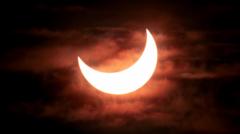
On August 12, 2026, the intersection of the lunar orbit and the Earth-Sun plane produces a celestial alignment yielding the most significant partial solar eclipse observed in the United Kingdom since August 11, 1999. While the true path of totality cuts across Greenland, Iceland, and northern Spain, observers across the British Isles will experience obscuration rates ranging from ninety to ninety-six percent.
Deconstructing this event requires analyzing orbital geometry, geographic variables, ocular physics, and observational timing constraints. Understanding these mechanisms separates casual observation from precise scientific tracking.
The Orbital Mechanics Of Obscuration
A solar eclipse is governed by orbital intersections known as nodes. Because the Moon orbits Earth on a plane tilted at approximately five degrees relative to the ecliptic, shadows rarely align perfectly. When alignment does occur during a new moon phase, the resulting shadow cast comprises two distinct zones: the umbra, where the Sun is completely obscured, and the penumbra, where obscuration is partial.
The United Kingdom sits entirely within the penumbral field for the August 2026 event. The structural distribution of this shadow follows a gradient defined by latitude and longitude. The south-western administrative regions experience the highest percentage of solar surface coverage due to their vector relative to the lunar shadow cone.
- Cornwall and Devon receive approximately ninety-six percent obscuration.
- Greater London records roughly ninety-one to ninety-two percent coverage.
- Western Scotland registers around ninety-three percent coverage.
The mathematical driver of this variation is the observer's physical displacement relative to the central axis of the lunar shadow projection. Every kilometer traveled south-west alters the chord length of the solar disc blocked by the lunar limb.
Temporal Constraints And Horizon Vectors
The temporal window for the event is narrow and dictated by Earth's rotational velocity. First contact across the British Isles initiates between 6:05 PM and 6:18 PM British Summer Time (BST), depending on the specific longitudinal coordinate. Maximum obscuration clusters tightly between 7:10 PM and 7:16 PM BST, with the entire sequence concluding near 8:05 PM to 8:10 PM BST.
This timing introduces a distinct operational variable: solar altitude. Because the event occurs late in the evening just prior to sunset, the Sun occupies a low position on the horizon—typically between five and ten degrees of elevation.
This low trajectory creates an environmental obstruction threshold. Urban infrastructure, mature tree lines, and topographical swells present physical barriers that can prematurely block the line of sight. Observers aiming to maximize collection time must secure positions featuring an unobstructed western horizon. Elevated coastal cliffs or flat western-facing expanses minimize these line-of-sight bottlenecks.
Ocular Physics And Safety Protocols
The physiological hazard of observing a partial solar eclipse stems from a mismatch between ambient illumination and retinal vulnerability. When ninety percent of the solar disc is obscured, ambient environmental light drops, causing the human pupil to dilate relative to baseline daylight conditions.
However, the remaining ten percent of the exposed photosphere retains an absolute luminance level high enough to deliver concentrated photonic energy directly onto the unshielded retina. Because retinal tissue lacks pain receptors, thermal and photochemical damage occurs without immediate sensory warning. Historical data from the 1999 UK eclipse documented numerous clinical presentations of solar retinopathy, characterized by temporary or permanent scotomas in patients who bypassed protective filters.
Mitigation requires certified physical filtration mechanisms that attenuate visible and invisible radiation to safe transmission thresholds.
- Certified solar viewing glasses adhering to the ISO 12312-2 international standard reduce optical transmission to safe levels.
- Indirect projection methods, including pinhole projection via perforated surfaces like colanders, entirely eliminate direct ocular exposure by mapping the solar image onto a secondary plane.
- Standard sunglasses, regardless of polarization or tinted density, fail to block infrared and ultraviolet wavelengths adequately and must be treated as structurally inadequate for direct observation.
Environmental Corollaries And Secondary Phenomena
The rapid withdrawal of solar irradiance triggers micro-meteorological shifts across the regional boundary layer. As ninety percent of incoming solar radiation is choked off within a forty-minute window, localized atmospheric cooling occurs. Surface temperatures drop measurably, often by several degrees Celsius, inducing localized shifts in barometric pressure and surface wind velocity.
Biological feedback systems respond to the artificial twilight. Avian species frequently exhibit roosting behaviors, and diurnal insect activity subsides while nocturnal vectors emerge. These ecological indicators manifest rapidly as the penumbral shadow accelerates across the surface at supersonic speeds.
Positioning observation equipment for the August 2026 partial eclipse requires prioritizing western horizon clearance, verified ISO-compliant optics, and strategic placement within the south-western geographic sector to capture maximum lunar encroachment before the solar disc descends below the horizon.