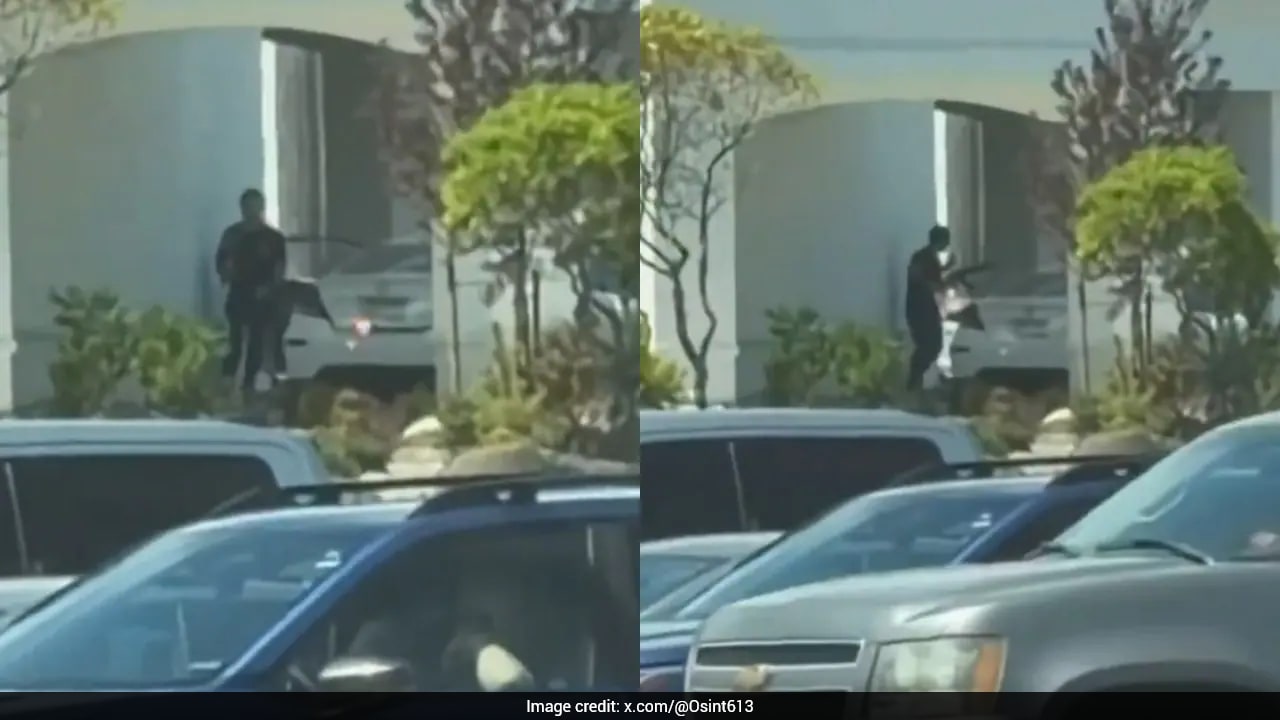
An active shooter event unfolds not as a singular flash of violence, but as a compressed sequence of operational failures, tactical responses, and immediate medical interventions. When an armed assailant opened fire outside a commercial restaurant on Blue Lakes Boulevard North in Twin Falls, Idaho, three individuals were killed and at least seven others sustained injuries before the gunman was neutralized. Deconstructing the mechanics of this event requires looking past surface-level media reporting to examine the structural response times, architectural vulnerabilities of high-density retail zones, and the kinetic timeline that dictates survival rates in public mass violence incidents.
The Chronology of Tactical Intervention
The operational footprint of a modern active shooter incident is measured in seconds. Public safety data from municipal communications indicates that the initial emergency call regarding an armed suspect at the commercial establishment was logged at approximately 2:30 local time.
The structural variables that define the first minutes of such an event include:
- The Reaction Latency Window: The duration between the initial discharge of a weapon and the cognitive recognition by civilian bystanders that an active threat is present, forcing a transition from routine activity to flight or concealment.
- Dispatch-to-Arrival Duration: The operational speed at which municipal police, county sheriff deputies, and state troopers converge on a localized urban coordinate. In this instance, multi-agency convergence led to the containment of the area within a compressed timeframe, prompting the local police chief to declare the immediate community threat mitigated shortly thereafter.
- The Neutralization Vector: The cessation of the active threat. Official briefings confirmed that the suspect was found deceased at the scene, ending the kinetic phase of the attack while transition protocols shifted immediately to triage, evidence preservation, and area containment.
This sequence underscores a harsh operational reality. Law enforcement and emergency medical services are structurally designed to respond after initiation. The variance in survival is almost entirely a function of immediate self-evacuation, physical cover, and rapid bystander or peer medical intervention before professional responders cross the perimeter.
Spatial Vulnerability and Urban Density Design
The location of the incident—a high-traffic commercial corridor anchored by retail outlets, high-density drive-thrus, and hospitality structures—introduces specific architectural and crowd-dynamics vulnerabilities. High-turnover retail spaces characterized by glass facades, open queue lines, and vehicular bottlenecks present distinct tactical challenges during an active threat.
When an assailant operates in a commercial zone with open pedestrian pathways, the density of the civilian population acts as a multiplier for potential casualties. Eyewitness accounts detailing chaotic movement through drive-thru lanes and adjacent parking lots highlight the absence of hardened safe zones in standard commercial architecture. Urban planners and security analysts categorize these environments as soft targets due to open access points and the complete absence of environmental hardening designed to delay or funnel an armed intruder.
The Information Propagation Bottleneck
During the unfolding emergency in Twin Falls, local public safety officials faced an immediate secondary crisis: informational entropy on digital social networks. The rapid dissemination of unverified videos, incorrect casualty figures, and speculative motives creates acute friction for emergency management teams.
Public information officers are forced to allocate finite administrative resources toward real-time myth-busting rather than focusing entirely on casualty tracking and next-of-kin notifications. The friction caused by unverified digital amplification distorts public perception, misdirects civilian traffic toward active zones, and overloads emergency dispatch infrastructure with non-actionable calls.
Tactical Healthcare Triage Under Duress
The casualty distribution—featuring multiple fatalities and several wounded individuals transported to regional medical facilities such as St. Luke's Magic Valley—tests the surge capacity of local healthcare networks. In sudden-onset trauma scenarios involving penetrating injuries, the primary determinant of mortality is exsanguination from extremity or junctional bleeding.
The presence of civilian bystanders and facility staff applying improvised pressure or dragging wounded individuals to protective cover prior to paramedic arrival represents the outermost tier of the trauma chain of survival. Medical command structures must instantly pivot regional hospitals from standard urgent care workflows to mass-casualty receiving protocols, locking down visitor access and reserving surgical assets for critical-state incoming patients.
Strategic Optimization for Public Safety Infrastructure
To minimize systemic vulnerability in commercial retail nodes, municipal risk management frameworks must transition from reactive policing models to predictive infrastructure design. Jurisdictions overseeing high-density commercial corridors must mandate standardized active threat orientation for private sector commercial employees, implement automated lockdown signaling mechanisms tied directly to municipal dispatch, and establish pre-vetted communication channels to bypass social media misinformation loops during the critical opening phase of a critical incident.