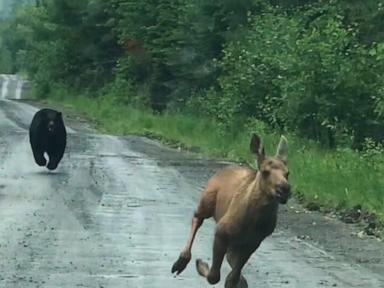
The intersection of human transport infrastructure and apex predator-prey dynamics creates immediate, non-linear shifts in wildlife survival rates. When human actors disrupt an active predation event—such as a black bear (Ursus americanus) pursuing a moose calf (Alces alces)—they introduce an artificial variable into a highly calibrated ecological equation. This analysis deconstructs the energetic cost functions, behavioral behavioral modifications, and systemic repercussions of human-induced prey preservation.
The Energetic Cost Function of Apex Predation
Predation success relies on a strict caloric balance sheet. For a black bear, pursuing large prey like a moose calf requires a massive upfront expenditure of metabolic energy, which must be offset by the caloric yield of a successful kill.
The energetic cost of a pursuit is determined by three core variables:
- The Velocity-Duration Core: The absolute speed maintained during the chase multiplied by the total duration of the pursuit. Black bears can achieve peak bursts of 48 kilometers per hour, but their heavy musculature ensures rapid heat accumulation, limiting high-velocity runs to short distances.
- Terrain Friction: The physical obstacles, including brush density, deadfalls, and substrate stability, which increase the mechanical work required per meter gained.
- The Vulnerability Window: The specific seasonal period—typically late spring to early summer—when moose calves lack the skeletal development and stamina to outrun apex predators.
When humans intervene during a chase, usually by using vehicles or auditory deterrents to startle the predator, they abruptly terminate the pursuit phase. The immediate result is a net-negative energy transaction for the predator. The bear has sunk a non-recoverable capital expenditure of calories into the chase with zero metabolic return. In areas with high human density, repeated disruptions of this nature can force predators to increase their foraging radius or shift toward lower-quality, easily accessible anthropogenic food sources, such as domestic waste.
Quantifying the Intervention Vector
Human interference in wildlife hunting sequences is rarely planned; it is a byproduct of spatial overlap. In rural regions like northern New England, secondary roadways cut directly through primary foraging habitats. This creates a high-frequency zone for spontaneous encounters.
[Human Vehicle Vector] ---> [Acoustic/Visual Disruption Zone] ---> [Predator Abandonment / Prey Escape]
The mechanism of a successful human intervention relies on altering the predator's risk assessment matrix. An apex predator evaluating a target processes sensory inputs to determine if a pursuit remains viable. A human vehicle approaching at high speed introduces a massive auditory and visual stimulus. The predator faces a binary choice: continue the pursuit and risk a collision with an unknown, higher-mass entity, or abandon the pursuit to preserve self-safety.
This choice can be modeled as a basic decision tree where the predator evaluates the probability of injury against the value of the prey. An approaching vehicle heavily weights the probability of injury. The prey escapes not because of an intentional rescue asset, but because the human presence introduces an unacceptable risk vector that breaks the predator's focus.
Biological Realities and Long-Term Prey Mortality
While human intervention provides an immediate survival outcome for the individual prey, it alters the natural selection pressures that govern herd health. Moose populations in North America face significant biological pressures, including heavy winter tick (Dermacentor albipictus) infestations and brain worm (Parelaphastrongylus tenuis) transmission.
Natural predation by black bears and coyotes acts as a primary culling mechanism for weaker, diseased, or genetically disadvantaged calves. By artificially shielding a calf from a predation event, human actors preserve an individual that may possess a higher vulnerability to parasites or disease. This preservation allows the individual to potentially re-enter the breeding pool, shifting the genetic baseline of the local population over multi-generational timelines.
The survival advantage handed to the calf is temporary. A calf separated from its mother during a high-stress pursuit remains highly vulnerable. If the human intervention causes the cow and calf to become permanently decoupled, the calf's probability of mortality via starvation or subsequent predation approaches unity within 48 to 72 hours. The maternal defense provided by an adult cow moose is the primary shield against predators; a disrupted chase that leaves the calf isolated simply delays the mortality event rather than preventing it.
Resource Competition and Spatial Displacement
Anthropogenic disruptions do not occur in a vacuum. They alter how wildlife utilizes physical geography. Predators that experience frequent human interference along transport corridors exhibit marked behavioral adaptations.
The first major shift occurs in spatial utilization. Predators may avoid high-value foraging zones that sit within a 500-meter buffer of paved surfaces. This creates a compressed interior habitat where competition among predators intensifies, leading to higher rates of intra-specific aggression and territorial disputes.
The second shift involves temporal modification. To avoid the peak hours of human transport, both predators and large herbivores alter their circadian rhythms. Predators transition toward strict nocturnality to execute hunts without vehicular disruption. This structural shift forces prey species to adapt their bedding and feeding schedules, altering the entire grazing pattern of the local ecosystem.
The final strategic reality of human-wildlife encounters dictates that non-intervention remains the mathematically stable choice for ecosystem preservation. Artificial manipulation of individual outcomes introduces unpredictability into wildlife mortality statistics, complicating conservation models and masking the true carrying capacity of the habitat. Management frameworks must prioritize the optimization of wildlife corridors—such as underpasses and overpasses—to completely segregate human transit from active hunting grounds, eliminating the opportunity for destabilizing interventions entirely.