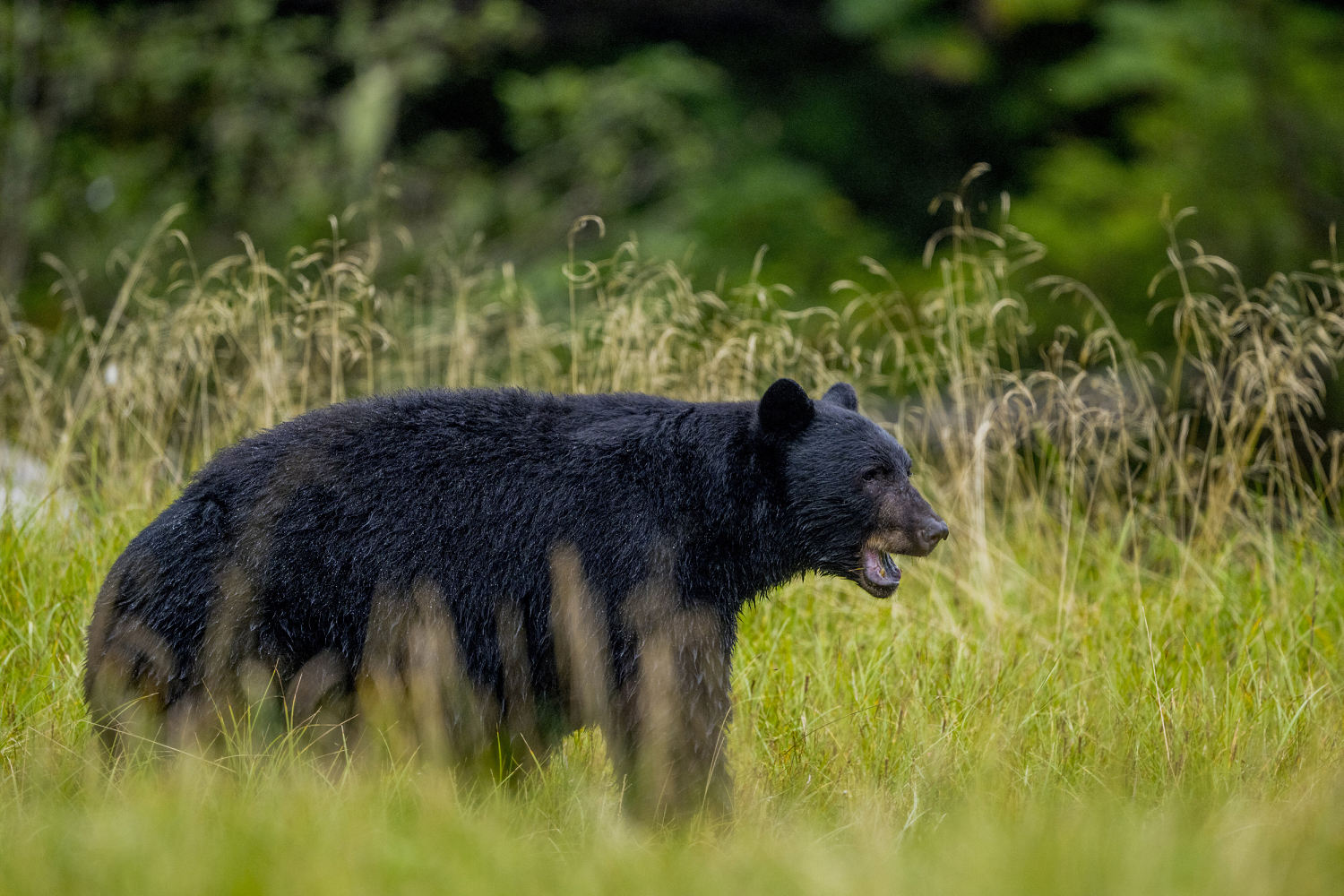
The probability of surviving a close-quarters apex predator confrontation in a montane ecosystem is governed by an immediate, high-stakes optimization problem. When a human encounters a black bear (Ursus americanus) or a grizzly bear (Ursus arctos) in the California wilderness, the window for decision-making spans milliseconds. Survival ceases to be a matter of luck; it becomes a function of resource deployment, biomechanical leverage, and threat classification accuracy.
Mainstream reporting routinely treats these incidents as chaotic anomalies. By analyzing a recent encounter in the California mountains—where an individual successfully repelled a bear using a hatchet—we can extract a repeatable framework for wilderness risk mitigation. The objective reality of wilderness survival rests on a three-part matrix: spatial awareness failure modes, tool-use efficiency under acute stress, and the physiological realities of counter-offensive trauma.
The Three Pillars of Apex Encounter Dynamics
To systematically analyze an attack, the event must be broken down into its core operational variables. Every encounter moves through distinct phases that dictate which defensive strategies remain viable.
[Threat Identification] ➔ [Spatial Compression] ➔ [Tool Deployment] ➔ [Trauma Management]
1. Spatial Compression and Reaction Windows
The primary bottleneck in wilderness defense is the rapid decay of distance. A mature bear can charge at speeds exceeding 11 meters per second ($40\text{ mph}$). In dense montane brush, visibility is frequently restricted to fewer than 15 meters.
This creates a severe compressed timeline: the human subject possesses roughly 1.36 seconds to recognize the threat, select a strategy, and execute a motor response. Spatial awareness failures occur when environmental noise (such as rushing water or wind) masks auditory cues, or when topographical features block lines of sight, reducing the reaction window to sub-second levels.
2. Force Multiplier Efficiency
When spatial compression reaches zero, survival depends entirely on the mechanical efficiency of the tools at hand. Force multipliers generally fall into two categories: chemical deterrents (bear spray) and mechanical deterrents (firearms or bladed tools).
The efficacy of a tool like a hatchet relies on localized pressure. Because pressure equals force divided by area ($P = F / A$), a sharp blade concentrates the kinetic energy of a human swing into a fraction of a square millimeter. This allows a physically outmatched defender to penetrate the thick hide, dense subcutaneous fat, and heavy musculature of an attacking carnivore, disrupting its central nervous system or inducing a pain-compliance retreat.
3. Anatomical Vulnerability Mapping
An untrained counter-offensive is highly inefficient. To successfully repel an apex predator, defensive force must target high-impact anatomical zones.
- The Nasal Cavity and Olfactory Bulb: A bear's snout is highly vascularized and packed with nerve endings, making it an ideal target for pain-compliance strikes.
- The Ocular Region: Soft tissue targets provide a direct pathway to disable visual tracking and cause immediate retreat.
- The Cranial Structure: A critical limitation of bladed tools or small-caliber firearms is the density of the bear's skull. Sloping frontal bones routinely deflect non-perpendicular strikes, rendering head shots ineffective unless delivered with precise geometry.
The Cost Function of Defensive Tool Selection
Every defensive asset carried into the backcountry involves a clear trade-off between deployment speed, environmental constraints, and stopping power. No single tool solves for every variable in the survival equation.
Chemical Deterrents (Bear Spray)
Bear spray operates on the principle of respiratory and ocular incapacitation via highly concentrated capsaicinoids. Its primary advantage is its area-of-effect delivery, which mitigates the need for precise aiming during a compressed timeline.
The tool has distinct operational boundaries. High crosswinds can blow the chemical cloud off-target or blow it back into the defender’s face, causing self-incapacitation. Furthermore, bear spray lacks immediate mechanical stopping power; it relies on the bear’s psychological or physiological aversion to the irritant, which may be ignored by a starving, predatory, or fiercely protective animal.
Mechanical Projectiles (Firearms)
Firearms introduce long-range kinetic energy transfer. The primary limiting factors are legal restrictions in specific jurisdictions, the high degree of marksmanship required under acute sympathetic nervous system arousal (the "fight-or-flight" response), and the risk of mechanical failure or clearing jams. Small-caliber handguns frequently fail to penetrate vital organs through dense fat and bone, sometimes escalating the animal's aggression instead of neutralizing it.
Close-Quarter Implements (Hatchets and Fixed Blades)
The hatchet utilized in the California mountain encounter represents an ultra-low-range, high-reliability mechanical tool. It does not suffer from wind deflection, rarely experiences mechanical failure, and functions as a dual-purpose tool for backcountry utility.
The structural bottleneck of a hatchet is its range. To use a bladed tool, the defender must already be within the animal’s primary strike zone, exposing themselves to catastrophic claw and bite trauma. The tool's success depends entirely on the user's upper-body physical leverage and their ability to maintain a grip while sustaining impact.
| Defensive Tool | Effective Range | Environmental Vulnerability | Required Precision | Primary Failure Mechanism |
|---|---|---|---|---|
| Bear Spray | 4 – 9 meters | High (Wind, Rain) | Low (Area Effect) | Dissipation / Wind Drift |
| Firearm | 0 – 30+ meters | Low | High (Fine Motor Control) | Marksmanship Degradation / Non-Penetration |
| Hatchet / Blade | < 1 meter | Zero | Medium (Target Selection) | Distance Closure / Grip Loss |
Biomechanical Realities of the Counter-Attack
Understanding the physical dynamics of the struggle clarifies why a hatchet can successfully alter the outcome of an attack. A mature black bear can weigh anywhere from 90 to 270 kilograms ($200 - 600\text{ lbs}$) and possesses muscle fibers capable of generating immense explosive force. A human cannot win a battle of pure attrition or wrestling.
The survival strategy must shift from a framework of physical containment to a framework of structural disruption. The swing of a hatchet utilizes the lever arm of the human torso and shoulder, maximizing torque. When the tool impacts the bear's face or forelimbs, it disrupts the animal's momentum.
Most wild animal attacks are governed by a cost-benefit analysis embedded in predator psychology. Unlike humans, wild animals view injuries through the lens of long-term survival; a broken bone or a deep infection-prone wound can lead to starvation. When a human inflicts deep mechanical trauma with a force multiplier, they alter the bear's internal economic calculation. The prey is no longer deemed an easy meal or an easily cleared nuisance; it becomes an active threat to the bear's own survival, triggering a retreat.
Operational Protocol for High-Risk Montane Traversal
To minimize the probability of an encounter reaching the point of physical combat, backcountry travelers must implement strict operational protocols. Relying on close-quarters combat tools is a last-resort failure mode, not a primary strategy.
Acoustic Footprinting
Preventing spatial compression requires active acoustic footprinting. This means generating non-rhythmic, high-frequency sounds that contrast sharply with natural background noise. Human speech, metal-on-metal clicks, or periodic shouting give wildlife ample warning to vacate the trail. Rhythmic sounds, like the steady click of trekking poles, can easily blend into background noise or mimic four-legged prey movements, failing to alert nearby animals.
Scent Line Management
Bears possess an olfactory capability that far exceeds that of a bloodhound. When operating in wilderness areas, all attractants—including food, trash, toiletries, and even the clothes worn while cooking—must be isolated from the sleeping area. The use of certified bear-resistant canisters or a proper bear hang (hanging items four meters above the ground and two meters away from the trunk of a tree) is non-negotiable. Odor management prevents the animal from entering a foraging mindset, which significantly reduces the likelihood of a defensive or predatory confrontation.
Post-Attack Tactical Evacuation
If an encounter escalates to a physical fight and the predator is successfully repelled, the survival process enters its tactical evacuation phase. The defender must assume the animal remains in the immediate vicinity and may return if it assesses the threat has passed.
- Immediate Self-Triage: Inspect for major arterial bleeding, particularly around the femoral, brachial, and carotid arteries. Apply direct pressure or tourniquets immediately, as hemorrhagic shock can cause unconsciousness within minutes.
- Backtracking along the Established Vector: Retreat along the exact route used to enter the area. This ensures movement through known terrain and reduces the risk of getting lost or stumbling into a secondary hazard.
- Deploying Secondary Deterrents: If bear spray is available and unused, it should be held ready in the hand during the retreat to manage the perimeter in case the animal follows.
- Emergency Communication: Activate a Personal Locator Beacon (PLB) or satellite communicator as soon as a safe distance is established. Do not delay evacuation to send text descriptions; initiate a hard SOS to mobilize search and rescue assets immediately.
The survival of the individual in the California mountains underscores a fundamental law of nature: readiness is a product of tool availability, psychological preparation, and decisive action. When faced with an apex predator, survival hinges on transitioning from a victim to an active, lethal threat before the animal can inflict incapacitating trauma.