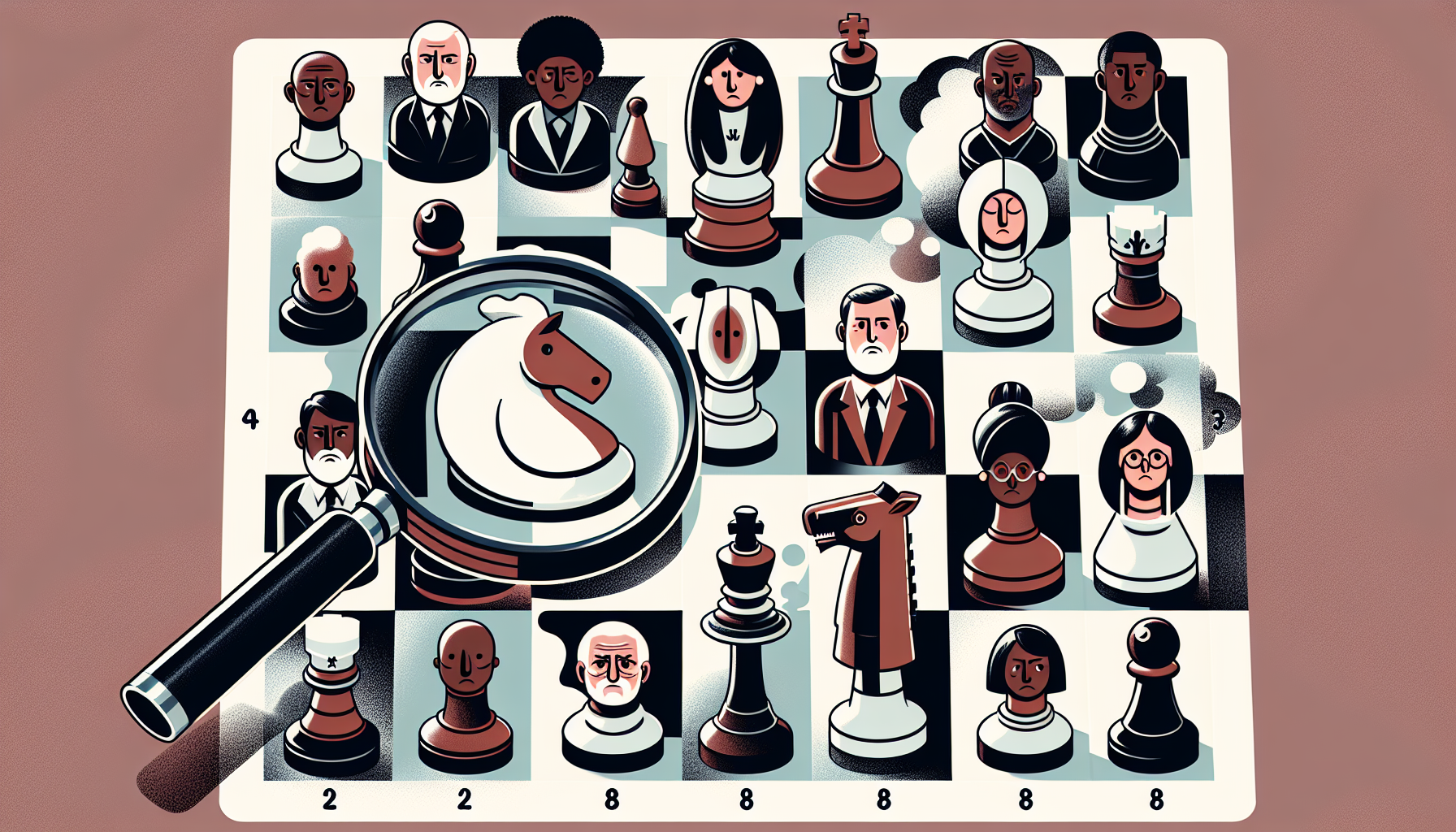
Mass arrests of alleged intelligence assets within the Iranian domestic infrastructure signal a shift from passive monitoring to active systematic purging. This kinetic response to a series of high-profile security breaches—ranging from the assassination of political figures to the sabotage of nuclear facilities—reveals a fundamental breakdown in the Iranian security apparatus's ability to maintain "internal hygiene." The current wave of detentions acts as a diagnostic tool for understanding how modern espionage leverages the intersection of economic desperation, digital signaling, and the failure of traditional counter-surveillance protocols.
The Triad of Operational Vulnerability
Espionage in the 21st century operates through three primary vectors that Iranian intelligence is currently attempting to seal. To understand why dozens of individuals are being processed simultaneously, one must analyze the structural weaknesses that allowed these networks to form.
Economic Asymmetry and Recruitment Incentives
The Iranian Rial’s volatility and the impact of international sanctions have created a "low-cost entry" for foreign intelligence services. When the local currency devalues, the relative purchasing power of hard currency (USD or Euro) or cryptocurrency increases exponentially. This creates a high-incentive environment for low-level bureaucrats, technical staff, and logistics personnel to trade granular data for financial stability. This is not ideological defection; it is a market-driven commodity exchange where information is the only liquid asset available to the individual.Digital Exhaust and Signal Intelligence (SIGINT)
Modern counterintelligence often fails because of the "Digital Exhaust" problem. Every operative, regardless of their level of training, leaves a breadcrumb trail of metadata. The recent arrests suggest that Iranian authorities have likely deployed advanced data-mining tools—potentially sourced from non-Western partners—to retroactively analyze movement patterns, communication pings, and financial anomalies. If a technician at a sensitive site exhibits a behavioral pattern that correlates with specific Israeli military operations, that individual moves from a "trusted" status to a "person of interest" within seconds of an algorithmic check.Human Intelligence (HUMINT) Layering
The most damaging form of espionage is the "nesting" of assets. In this model, one primary handler manages multiple "cells" that are unaware of each other’s existence. The scale of the recent arrests indicates that Iranian counterintelligence has likely "flipped" a mid-level coordinator or intercepted a communication hub. This allows the state to map the entire network before striking, ensuring that the purge is comprehensive rather than piecemeal.
The Anatomy of an Iranian Security Breach
When a high-value target is neutralized within Iranian borders, the failure occurs at the intersection of physical security and information compartmentalization. The recent arrests target the personnel responsible for these specific failure points.
The Logistics of Assassination
Executing a strike in a high-security environment requires more than just a weapon; it requires real-time telemetry. This includes:
- Gate-to-Gate Tracking: Knowing exactly when a target leaves a secure compound.
- Communication Jamming: Disabling the target's ability to call for reinforcements.
- Safe Passage Corridors: Ensuring the strike team can exit the "kill zone" without encountering police checkpoints.
The individuals recently detained likely occupied roles within these logistical chains. A traffic camera operator who "accidentally" experiences a system glitch at the exact moment of an operation is just as critical to the mission as the individual pulling the trigger. By arresting dozens, the Iranian state is attempting to identify which specific nodes in their municipal and military infrastructure have been compromised.
The Role of Technology in Modern Sabotage
The narrative of "informants" often conjures images of clandestine meetings in dark alleys, but the reality is increasingly technical. The Iranian Ministry of Intelligence is currently battling "Remote-Access Human Assets."
In this framework, the informant does not pass secrets via microfilm. Instead, they provide physical access to "air-gapped" systems. An employee at a facility like Natanz or Fordow might be instructed to simply plug a USB device into a terminal or leave a specific server room door unlocked for a five-minute window. These "micro-betrayals" are difficult to detect via traditional surveillance because they occupy the realm of "human error" rather than "criminal intent" until a pattern is established.
The current crackdown suggests that Iran is moving toward a zero-trust architecture in its physical security. This means that access to sensitive areas is no longer granted based on rank or tenure, but is constantly validated through biometric tracking and real-time behavioral monitoring. The mass arrests serve as a "system reset," removing any potential dormant threats (sleeper cells) before new security protocols are implemented.
The Cost Function of Counterintelligence
Every arrest carries a strategic cost. While the Iranian state aims to project strength and competence, mass detentions also signal a high level of paranoia and internal instability.
- Brain Drain and Paranoia: When the state arrests dozens of technical experts, it creates a "chilling effect" within its own scientific and military community. High-performers may become hesitant to take on sensitive projects for fear that any failure—even a legitimate technical error—will be interpreted as sabotage or collaboration with Israel.
- Intelligence "Noise": During a mass purge, the volume of raw data increases. Interrogations produce leads, but many of these leads are "noise"—false accusations made by detainees to deflect pressure or settle personal scores. Sifting through this noise requires immense cognitive resources, potentially distracting the intelligence services from actual, ongoing threats.
- Diplomatic and Information Warfare: These arrests are rarely just about security; they are about narrative control. By publicizing the capture of "Israeli agents," Tehran attempts to shift the internal conversation from "why are we vulnerable?" to "we are successfully defending the nation."
Quantifying the Israel-Iran Shadow War
The frequency and sophistication of these operations suggest a significant technological gap. Israel’s use of AI-driven targeting and remote-operated weaponry (such as the satellite-controlled machine gun reportedly used in the 2020 assassination of Mohsen Fakhrizadeh) forces Iran to over-rely on human arrests.
If a threat is purely technological, it can be patched with software. If the threat is human, the "patch" is a prison cell. The sheer number of arrests is a direct admission that Iran cannot yet match the technological sophistication of its adversary, so it must use the blunt force of the state to compensate.
Strategic Trajectory
The immediate future of Iranian domestic security will be defined by a shift toward Algorithmic Loyalty. We are seeing the beginning of a transition where the Iranian state will likely implement:
- Continuous Vetting: Moving away from periodic security clearances to real-time monitoring of financial transactions and social connections for all employees in sensitive sectors.
- Hardware Sovereignty: An aggressive push to replace any Western-made or even Chinese-made hardware that could contain "backdoors," opting instead for domestically produced (or heavily modified) components.
- Information Siloing: Decreasing the number of individuals who have a "top-down" view of any single project. While this increases security, it significantly slows down scientific and military progress by preventing cross-departmental collaboration.
The Iranian security apparatus is currently in a state of reactive evolution. Each arrest is a data point in a larger map of Mossad’s penetration strategies. However, as long as the underlying economic and technological disparities remain, the recruitment pool for foreign intelligence will continue to replenish itself. The state can remove the actors, but without addressing the structural vulnerabilities of its digital and economic systems, the stage remains open for the next cycle of infiltration.
The next phase of this conflict will move beyond the arrest of individuals and toward the deployment of "Autonomous Counter-Intelligence"—AI systems designed to predict defection or sabotage before the actor even makes contact with a foreign handler. Until that infrastructure is in place, the mass arrest remains the only viable, albeit primitive, tool in Tehran’s arsenal.
Would you like me to analyze the specific cyber-security protocols Iran is likely adopting to counter the hardware backdoors mentioned?
.jpg)