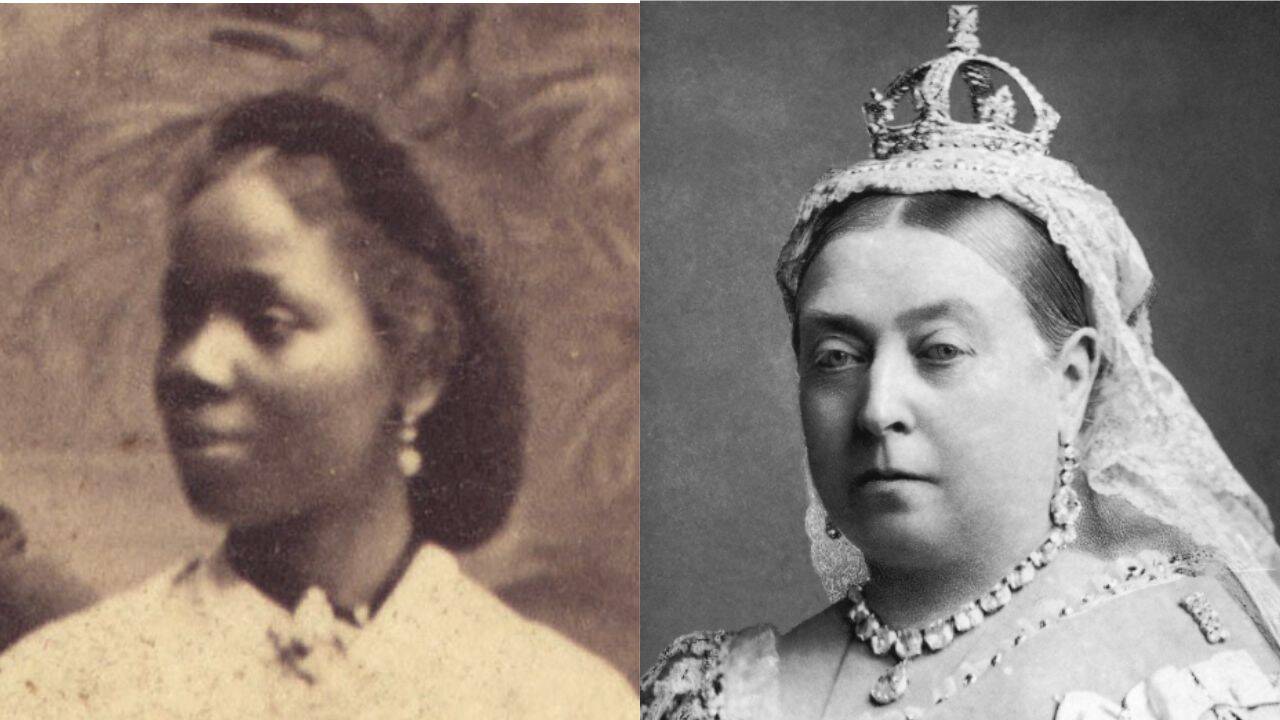
Turning a human child into a diplomatic gift exposes the structural violence hidden inside polite nineteenth-century patronage. When a young Yoruba girl—known to history as Sarah Forbes Bonetta—entered the orbit of Queen Victoria in 1850, her survival and social mobility depended on a delicate negotiation between West African warfare, British naval abolitionism, and royal curiosity. Examining this biography nearly two centuries later through a descendant's lens requires more than sentimental storytelling; it demands a rigorous audit of power asymmetries, status transfers, and archival gaps. This analysis establishes a structural framework for understanding how coerced displacement becomes dynastic memory, why conventional human-interest coverage flattens historical causality, and how descendants and researchers can audit fragmented records without fabricating certainty.
Deconstructing the Competitor Narrative and Its Analytical Blind Spots
Conventional media treatment of Sarah Forbes Bonetta relies on a high-contrast emotional hook: a seven-year-old captive given to a monarch, followed by a generational return to the story. That framing generates immediate reader curiosity, yet it treats history as a sequence of dramatic coincidences rather than an interlocking system of incentives. When an article frames royal favor purely as rescue or romance, it obscures the political bargaining that made the child valuable in the first place.
The first blind spot in sentimental coverage is causal compression. Captivity in West African regional conflict, transfer through British naval officers, renaming, Anglican baptism, schooling, and eventual marriage to James Pinson Labulo Davies did not happen in a vacuum. Each step shifted her legal, economic, and symbolic standing. Treating "gifted to Queen Victoria" as a standalone origin point skips the intermediary brokers whose careers, reputations, and diplomatic strategies shaped her trajectory.
The second blind spot is agency flattening. Historical subjects caught inside imperial households rarely possess symmetrical bargaining power, yet complete passivity is an inaccurate model. Navigating court etiquette, cultivating elite patrons, marrying into a prominent Lagos merchant and civil family, and maintaining ties across Britain and West Africa involved strategic adaptation within tight constraints. A serious analysis separates what the system forced upon her from the choices she executed within those boundaries.
The third blind spot is temporal conflation. A span of roughly 176 years from 1850 to 2026 bridges multiple political eras: mid-Victorian empire, late-colonial administration, post-independence nationhood, and modern memory culture. Descendants today do not inherit a frozen Victorian moment; they inherit layers of interpretation, family oral tradition, and institutional archives that were assembled unevenly across generations.
The Architecture of Imperial Wardship
To understand how a captive child became a royal goddaughter and an educated transatlantic figure, it helps to examine The Three Pillars of Imperial Wardship: diplomatic signaling, cultural assimilation, and patron dependency. Each pillar operated as a mechanism that converted a vulnerable outsider into a legible symbol for British elites while limiting independent autonomy.
Diplomatic Signaling and Symbolic Capital
In mid-nineteenth-century West Africa, rulers and naval powers operated in a volatile environment of trade treaties, military rivalries, and anti-slavery patrols. A child connected to royal or noble lineage carried high symbolic weight. For a British officer or envoy, presenting an intelligent, well-mannered child to the monarch served as proof of civilized contact and moral reach. For the crown, taking interest in such a ward projected benevolent authority without requiring formal annexation on the spot.
This mechanism turned personal biography into public messaging. Victoria's patronage gave Bonetta visibility that ordinary African migrants or laborers never received. Yet symbolic elevation is conditional: the ward remains an object of interest so long as she fits the observers' expectations of refinement, gratitude, and respectability.
Cultural Assimilation as a Survival Mechanism
Assimilation in imperial settings functions as a dual-edged asset. Learning English, adopting Western dress, receiving formal education, and participating in Christian institutions opened doors to elite circles, correspondence, and marriageable peers within the educated Atlantic world. Those competencies gave her tools to navigate complex social spaces and secure a standing far removed from chattel enslavement.
At the same time, cultural assimilation carries an erasure cost. New names, new languages, and imperial social codes distance an individual from natal kinship networks and indigenous frameworks of identity. When a person is reshaped to fit a foreign court or colonial society, later generations often find that the cultural bridge built for survival makes recovering pre-displacement roots harder.
Patron Dependency and Structural Fragility
Patronage provides protection, access, and resources, but it concentrates risk in the patron's goodwill, health, and financial priorities. A ward supported through royal interest, philanthropic networks, or state stipends faces vulnerability whenever priorities shift or key benefactors withdraw. Even marriage into a prosperous merchant and administrative household in Lagos—where Davies built substantial commercial and civic standing—operated inside colonial trade structures and tropical health hazards that cut short many lives in the nineteenth century.
Understanding patron dependency clarifies why upward social mobility in imperial history rarely equaled sovereign independence. Security came through alignment with powerful institutions and wealthy families, which buffered immediate hardship while embedding the family inside imperial spheres of influence.
Cause and Effect in Transatlantic Mobility
Popular retellings often jump straight from "royal goddaughter" to "remarkable life" without tracing the operational links between events. Mapping the cause-and-effect chain reveals how specific choices and constraints produced downstream outcomes.
When British naval personnel encountered her following conflict in Dahomey and brought her into contact with Captain Frederick E. Forbes, her fate shifted from anonymous captivity to high-profile guardianship. That initial transfer created the precondition for royal attention; without elite sponsorship, a child in her position would have faced a vastly different path.
Royal interest then triggered educational and social investment. Being placed under capable guardians and exposed to British society accelerated her fluency and poise, which in turn made her a compelling figure to Victorian observers and a suitable match for James Pinson Labulo Davies, a prominent Sierra Leonean-born Yoruba businessman and colonial official. That marriage anchored the family in West African commercial and civic life rather than keeping her permanently tethered to a British household.
Each link in this chain created a secondary effect:
- Elite education increased social mobility across Atlantic port cities, while widening distance from traditional rural life.
- Royal association generated enduring public curiosity and archival preservation, while inviting romanticized myths that obscure everyday family realities.
- Relocation and family formation in West Africa established a living lineage with roots in Lagos and Sierra Leone, while dispersing physical artifacts and letters across multiple continents and climates.
The Cost Function of Generational Memory
Every family and public history that stretches across nearly two centuries pays an information cost. Call this The Cost Function of Generational Memory: as time increases, raw primary evidence decays while interpretive narratives multiply. To keep analytical rigor intact, researchers and descendants must weigh three rising costs over time.
First is archival attrition. Paper degrades, private letters get lost during moves or political transitions, and institutional repositories prioritize records belonging to states, monarchs, or major corporations over intimate family details. When exact dates, unrecorded conversations, or private emotions are missing from surviving documents, guessing fills the vacuum unless disciplined boundaries are enforced.
Second is retrospective projection. Later generations naturally view past events through contemporary values—such as modern ideas of human rights, anti-colonial critique, or personal identity. While modern values help expose historical injustices that nineteenth-century writers normalized, projecting present-day motives onto historical actors without textual proof crosses from analysis into speculation.
Third is narrative simplification. Over decades, complex family histories get compressed into a single headline phrase so relatives can repeat them easily at gatherings or in interviews. Over time, the headline replaces the texture. A nuanced life involving grief, health struggles, financial calculations, diplomatic etiquette, and cross-cultural adaptation shrinks into a neat one-line summary.
Fact Versus Educated Hypothesis in Historical Reconstruction
Rigorous analysis requires separating verified historical record from reasoned inference. Confusing the two weakens credibility, especially when public stories attract intense emotional investment.
Established Historical Grounding
What can be treated as well-established historical grounding includes the broad arc of her capture during regional conflict in West Africa around age seven, her transfer into British naval custody and association with Captain Forbes, her introduction to Queen Victoria around 1850, her Western education and Christian upbringing, her marriage to James Pinson Labulo Davies in 1862, and her relatively short life—she died in 1880 at age thirty-seven. The existence of a surviving family lineage and contemporary descendants revisiting this history over a century and a half later is likewise grounded in real-world continuity.
Educated Hypotheses and Open Questions
Where records are thin or fragmented, disciplined analysts state hypotheses explicitly rather than presenting them as settled facts. For example, one educated hypothesis is that royal patronage both protected her materially and constrained her ability to speak or act outside respectable Victorian norms—a plausible dynamic given nineteenth-century class and gender expectations, though one that requires careful reading of surviving letters rather than assumption. Another hypothesis is that descendants today experience a tension between pride in a remarkable ancestor and discomfort with the coercive origin of her entry into imperial circles. Treating these as testable interpretations rather than fixed truths keeps the inquiry honest.
Whenever exact figures or granular personal details are absent from the record, the soundest method is to examine the mechanisms at work: how guardianship allowances operated, how colonial shipping and trade connected Britain, Sierra Leone, and Lagos, and how family oral memory was passed down across generations.
A Tactical Audit Framework for Descendants and Researchers
Anyone investigating a lineage tied to imperial history—whether a direct descendant, a biographer, or a cultural strategist—can apply a structured four-step audit to separate signal from noise before publishing or speaking publicly.
- Map the Transfer Chain. List every known transition in the subject's life—place, legal status, guardian or spouse, and economic support—and note which links have primary documentation versus oral memory alone.
- Audit the Observer's Lens. Identify who wrote each surviving account (naval officer, court observer, missionary, journalist, or family member) and what incentives shaped their portrayal. Praise from an imperial observer often reflects alignment with British norms rather than unfiltered inner truth.
- Separate Lineage from Legacy. Distinguish biological or family descent (who came from whom) from public legacy (how society uses the story today). A descendant owns their family connection; no single party controls how public history interprets the era.
- Calibrate Modern Framing. Decide what the story is meant to accomplish in the present—memorializing an ancestor, educating the public on transatlantic history, or interrogating empire—and make sure the evidence supports that goal without overclaiming certainty where gaps remain.
Operational Limits and Where This Framework Falls Short
No analytical framework solves every problem in historical recovery. Archival bias is structural: many records from the nineteenth century were written by colonizers, administrators, or wealthy elites, meaning the inner voice of an African woman navigating two worlds is often mediated or silent. Even when letters survive, formal etiquette often conceals private distress or ambivalence.
Oral history has its own limits. Family stories carry emotional truth and cultural continuity, yet details like exact sequences, names, or motives can shift after three or four retellings. Treating oral tradition as infallible creates false certainty, while dismissing it as worthless ignores valuable clues that can guide archival searches.
Finally, applying crisp analytical categories can feel detached when a story involves a child taken from her homeland. Rigor should sharpen empathy, not replace it; clear structure helps honor real human stakes by refusing easy clichés.
Strategic Recommendation for Telling High-Stakes Ancestral Stories
When a descendant or media outlet revisits a story like Sarah Forbes Bonetta's today, the winning strategic play is to anchor the narrative in dual accountability: honor the human resilience of the ancestor while naming the coercive machinery of the empire that framed her life. Audiences in 2026 are skeptical of sanitized royal fairy tales and equally fatigued by flat, formulaic outrage; they respond to clear-eyed realism that respects complexity. Build every piece around verified turning points, mark where evidence ends and interpretation begins, and let the enduring human reality of survival, adaptation, and generational return carry the weight without needing manufactured drama.