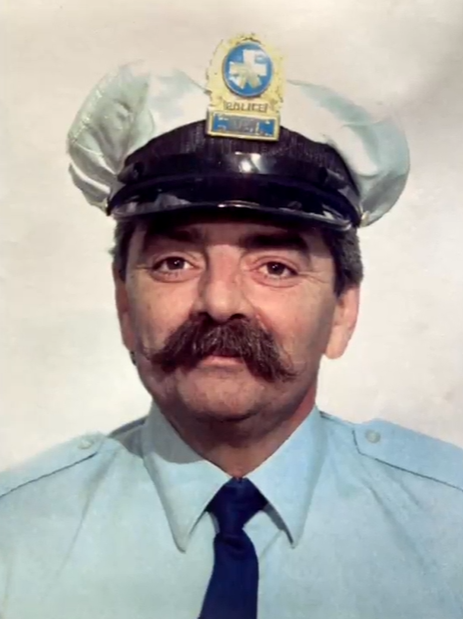
The unsolved assassination of Montreal police officer André Lalonde on April 14, 1993, serves as a primary case study in the rapid degradation of investigative efficacy when high-stakes political pressure meets a vacuum of forensic evidence. When a state actor—specifically a sergeant-detall with the Service de police de la Ville de Montréal (SPVM)—is executed in public, the standard investigative lifecycle is compressed. This creates a paradox: the initial surge of resources is massive, yet the failure to secure a conviction within the first 72 hours leads to a logarithmic decay in the probability of resolution. Thirty years later, the Lalonde file represents not just a "cold case," but a failure of institutional continuity and the limitations of 1990s-era signal intelligence.
The Anatomy of the Execution: Professionalism as a Variable
To analyze the failure to solve the Lalonde case, one must first deconstruct the mechanics of the event itself. Lalonde was targeted while seated in his vehicle at the intersection of Henri-Bourassa and de l’Acadie. The tactical profile of the hit suggests a high degree of operational security (OPSEC). Unlike crimes of passion or opportunistic violence, this was a disciplined execution.
- Selection of the Kill Zone: The choice of a major intersection during transit indicates the perpetrators had conducted extensive surveillance of Lalonde’s routines. This implies a pre-existing intelligence gathering phase that spanned weeks, if not months.
- Weaponry and Ballistics: The use of a high-caliber firearm and the precision of the shots suggest a shooter with professional training.
- The Extraction Path: The ability of the suspects to vanish in an urban environment immediately following the discharge of a firearm in public points to a pre-planned egress route that avoided the SPVM’s rapid-response cordons.
The absence of shell casings or recoverable forensic material at the scene in 1993 suggests a level of forensic awareness that was rare among street-level criminals of the era. This shifts the hypothesis toward organized crime or internal interference, as both groups possess the technical knowledge required to sanitize a kill site.
The Three Pillars of Investigative Stagnation
The failure to move the Lalonde case from "open" to "resolved" can be categorized through three structural bottlenecks that plague long-term homicide investigations.
1. The Erosion of Human Intelligence (HUMINT)
In 1993, the SPVM relied heavily on informants. The "code of silence" in Montreal’s underworld—comprising the Rizzuto crime family, the Hells Angels, and the West End Gang—created a high cost for cooperation. As the years progress, the value of HUMINT decreases. Potential witnesses die, informants lose their relevance to current criminal structures, and the leverage police hold over aging criminals dissipates. In the Lalonde case, any individual with direct knowledge of the hit in 1993 is now likely deceased or deeply insulated.
2. Technological Lag and Retrospective Analysis
Forensic science in the early 90s lacked the sensitivity of modern DNA profiling and digital forensics. There was no widespread CCTV network, no GPS tracking of civilian vehicles, and no cellular triangulation. The SPVM is currently trapped in a cycle of retrospective analysis: attempting to apply 21st-century technology to 20th-century physical evidence that has likely suffered from biological degradation. If the original crime scene was not processed for touch-DNA—a concept non-existent in 1993—the physical evidence remains stagnant.
3. Institutional Knowledge Leakage
The "Cold Case Unit" model suffers from a lack of "continuity of consciousness." When the original lead investigators retired, the nuances of the case—the gut feelings, the unfiled observations, and the specific tones of interviews—were lost. Information was digitized, but the context was not. This creates a "data silo" where new investigators see the facts but cannot interpret the original atmosphere of the Montreal underworld during the turbulent 1990s.
The Conflict of Interest Hypothesis
A significant variable in the Lalonde case is the potential for internal compromise. Lalonde was an investigator in a period of intense corruption and inter-departmental friction. When an officer is killed, the investigation typically looks outward at those the officer was pursuing. However, if the investigation remains stalled despite a "unite de crise" (crisis unit) approach, the strategist must consider the possibility of internal sabotage or a conflict of interest.
If Lalonde had uncovered corruption within the force or within the provincial government, the investigation would face a "structural ceiling." Resources are allocated to provide the appearance of movement, but the path toward a specific suspect is subtly redirected. This is not necessarily a grand conspiracy but can be a series of small, bureaucratic hurdles—lost files, reassigned detectives, or denied wiretap requests—that aggregate into a permanent stall.
Quantifying the Probability of Resolution
In criminal justice analytics, the "Solve Rate" of a case follows a predictable curve. For a standard homicide, the probability of an arrest drops by 50% after the first week. For a targeted execution of a police officer, if an arrest is not made within the first 365 days, the probability of a conviction based on physical evidence drops to near zero.
Resolution thereafter depends almost entirely on "External Shocks":
- Deathbed Confessions: A perpetrator or witness, facing their own mortality, seeks to clear their conscience.
- Technological Breakthroughs: New methods for extracting DNA from previously "clean" surfaces.
- Organizational Collapse: A criminal organization dissolves, and former members flip for immunity in unrelated cases.
In the case of André Lalonde, the external shocks have not materialized. The Montreal Mafia and the Hells Angels, despite various "crackdowns" like Operation Springtime 2001, maintained a high level of discipline regarding the killing of police officers.
The Cost of Symbolic Justice
The SPVM continues to commemorate Lalonde, as seen in the 30th-anniversary tributes. From a strategic management perspective, these commemorations serve two purposes. First, they reinforce internal morale, signaling to current officers that the department "never forgets." Second, they act as a psychological operations (PSYOP) tool, reminding the perpetrators that the file remains open.
However, there is a divergence between symbolic justice (memorials) and procedural justice (convictions). The resources spent on annual commemorations do not translate to investigative breakthroughs. The department faces a diminishing return on investment. Every hour spent re-reading the 1993 files is an hour taken away from solving a 2026 homicide where the evidence is still fresh and the witnesses are still alive.
Operational Bottlenecks in the Cold Case Unit
The Montreal Cold Case Unit operates under a "triage" system. Cases are ranked based on the availability of DNA and the likelihood of a "quick win." The Lalonde case, due to its age and the sophisticated nature of the crime, likely ranks low on the "solvability scale" despite its high "symbolic value."
The primary bottleneck is the lack of a "Trigger Event." Without a new piece of evidence, investigators are simply shuffling old papers. This leads to "Confirmation Bias," where new detectives look at the same three suspects identified in 1994 and try to find a new way to link them, rather than expanding the search parameters to include external actors who may have been overlooked during the initial, high-pressure phase.
The Geopolitical Context of 1990s Montreal
To understand why the case is cold, one must understand the environment of 1993. Montreal was the heroin capital of North America and was entering the preliminary stages of the Quebec Biker War. The police force was under-resourced and politically divided. The provincial government was focused on the upcoming 1995 referendum. In this climate, a single officer’s death—while tragic—was competing for resources against a massive surge in organized crime violence. The "noise" of the era drowned out the "signal" of the Lalonde investigation.
Strategic Recommendation for Cold Case Management
The SPVM must move beyond the "Memorial Model" and adopt a "Decentralized Review" strategy. The Lalonde file should be handed to an external agency or a specialized private investigative firm with no historical ties to the Montreal police culture of the 90s.
- Blind Review: Provide the evidence files to a new team without revealing the previous investigators' conclusions. This eliminates "Inherited Bias."
- Universal DNA Sweep: Re-test every physical item from the 1993 scene using M-Vac systems or other high-sensitivity collection methods that were unavailable even five years ago.
- Digital Reconstruction: Use 3D mapping and traffic flow simulations to re-analyze the "Kill Zone" and "Escape Route" based on modern urban planning data.
The resolution of the André Lalonde case will not come from a sudden flash of insight or a standard tip. It requires a cold, calculated re-application of forensic science that ignores the emotional weight of the "fallen officer" narrative in favor of raw data points. If the SPVM cannot secure a DNA match or a corroborated confession within the next 24 months, the institutional memory of the event will have decayed to the point where the case is effectively a historical artifact rather than a legal proceeding. The window for justice is not just closing; it is structurally disintegrating.