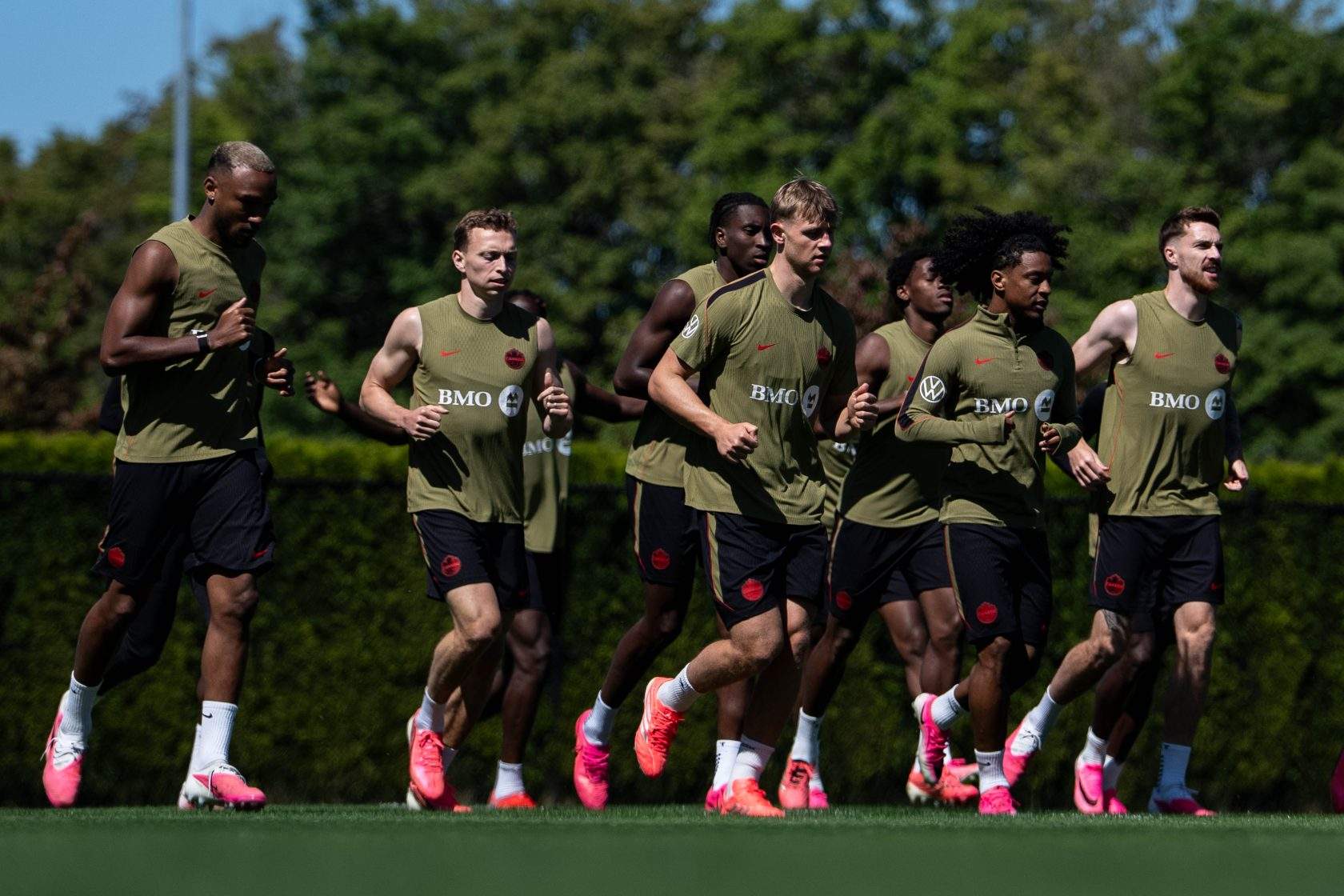
The modern FIFA World Cup is no longer a tournament contested purely by homegrown domestic talent. It has evolved into a global market for athletic labor, where national associations aggressively compete for players who possess dual or multi-nationality. This phenomenon—where a player born, raised, and trained in Nation A elects to represent Nation B at the senior international level—is driven by systemic talent surpluses in elite footballing nations and strict talent deficits in developing federations.
This structural shift operates through national team selection arbitrage: the strategic exploitation of eligibility rules by players and national associations to maximize playing time, tournament exposure, and commercial value. Understanding this landscape requires moving past emotional narratives of "blood ties" and analyzing the specific regulatory, economic, and sporting mechanisms that dictate international football recruitment. You might also find this related story insightful: The Patience of a Nomad (How Colombia Unlocked the African Fortress).
The Regulatory Framework of Eligibility Arbitrage
The baseline mechanism governing this talent market is the FIFA Eligibility Regulations. Historically, representing a nation at any level locked a player into that federation for life. The modern regulatory framework introduces a fluid market by allowing a one-time change of association under a specific set of constraints.
A player holds a portfolio of potential international identities based on three primary vectors: birth country, parental citizenship, and grandparental citizenship. FIFA regulations dictate that a player may switch federations if they meet the following criteria: As reported in recent articles by Yahoo Sports, the results are notable.
- The Cap Limit: The player has played no more than three competitive senior international matches for their initial association before the age of 21.
- The Tournament Restriction: The player has never appeared in a final tournament of a major confederation championship (such as the UEFA European Championship or Copa América) or the FIFA World Cup for their initial association.
- The Time Buffer: At least three years have passed since the player's last appearance for their initial association.
This legal framework creates a highly predictable talent lifecycle. Elite academies in nations like France, Spain, Germany, and England consistently produce a structural surplus of Tier 1 talent. Because a national team roster is hard-capped at 23 to 26 players for major tournaments, a bottleneck forms. Highly capable players who fall just below the threshold of their birth nation's starting eleven face a steep decline in international career velocity.
Federations targeting dual-nationals look for this bottleneck. By offering immediate, guaranteed placement in senior international squads—often including direct paths to the World Cup—secondary and tertiary federations successfully execute talent arbitrage, acquiring world-class development assets without incurring the multi-million dollar costs of youth academy infrastructure.
The Talent Portfolio Model: Supply and Demand Vectors
The international recruitment market can be mapped using a standard supply and demand framework. The market splits into two distinct participant types, each operating under a clear cost-benefit function.
The Exporting Federations (High-Density Supply)
Nations with highly centralized, state-supported, or heavily commercialized youth development systems (e.g., France's Clairefontaine or Spain's club academies) generate more professional players than their domestic national teams can absorb. For these federations, the marginal utility of a Tier 2 international player is low. The structural surplus is exported. France, for instance, routinely provides dozens of players born within its borders to African, Caribbean, and secondary European national teams.
The Importing Federations (High-Deficit Demand)
Federations with weak domestic youth infrastructure but high political or economic incentives to qualify for major tournaments face a talent deficit. To close the competitive gap, they look to external talent pools. This strategy minimizes the multi-decade time lag required to build domestic academies by instantly importing fully formed tactical assets trained in elite foreign environments.
The Player Decision Function
For the individual athlete, the choice to switch associations is guided by a calculation of career equity maximization. The decision factors are heavily weighted by three variables:
$$Career\ Equity = \alpha(Tournament\ Exposure) + \beta(Commercial\ Valuation) - \gamma(Competitive\ Risk)$$
- Tournament Exposure: The probability of appearing in a FIFA World Cup. A player may rank as the eighth-choice winger in France, yielding a 0% chance of World Cup minutes. By switching to a nation where they instantly become the first-choice winger, that probability climbs dramatically.
- Commercial Valuation: International visibility directly correlates with club transfer fees and personal endorsement portfolios. Representing a national team that regularly qualifies for continental tournaments yields higher global visibility than sitting on the bench of a top-tier nation.
- Competitive Risk: The trade-off is the drop-off in systemic team quality. A player leaving a Tier 1 federation must weigh whether the increase in personal minutes compensates for playing within a less cohesive, lower-ranked tactical system.
The Three Pillars of Modern Federation Recruitment
Federations that excel at talent acquisition do not rely on passive discovery. They operate like corporate recruitment departments, built on three operational pillars.
1. Data-Driven Scouting Networks
Advanced federations maintain comprehensive global databases tracking every eligible player in foreign leagues. This extends far beyond top-tier divisions. Scouts track academy setups in England, France, and Spain, filtering for players who possess secondary passports or qualify via heritage lines. When a dual-national player debuts in a top-five European league or an elite under-19 academy, recruitment protocols trigger instantly.
2. The Early-Intervention Framework
The competitive bottleneck usually tightens between the ages of 19 and 22, when players transition from youth academies to senior football. Advanced recruiters intervene before this point. By introducing a player to the secondary national team infrastructure at the Under-17 or Under-20 level, the federation builds early institutional loyalty, reducing the friction of an eventual senior switch.
3. Integrated Commercial and Sporting Packages
Recruitment pitches are formalized business propositions. Federations pitch the player's agency team, outlining guaranteed starting roles, tactical setups designed around the player's strengths, and domestic marketing campaigns. In many instances, the arrival of a high-profile dual-national from a European academy serves as the marketing anchor for the federation's domestic sponsorships.
Operational Bottlenecks and Tactical Liabilities
While national team selection arbitrage offers a fast track to international competitiveness, the strategy contains deep structural limitations. Federations that over-index on imported talent frequently encounter friction that undermines on-pitch performance.
The Cohesion Deficit
Football at the international level suffers from a chronic lack of preparation time. Tactical cohesion is typically built on shared developmental backgrounds or high concentrations of players from the same domestic club core. When a federation patches together a roster of individuals who grew up in entirely different tactical cultures (e.g., combining a French-trained defensive block with Dutch-trained wingers), the team struggles to develop a coherent playing identity under tight tournament timelines.
Cultural Disconnect and Institutional Friction
A roster split between homegrown players and foreign-born dual-nationals often develops internal fault lines. Differences in language, upbringing, and economic status can compromise dressing-room chemistry. Homegrown players who grind through underfunded domestic leagues may resent foreign-born stars who walk directly into starting roles for major tournaments without ever engaging with the local football ecosystem.
The Asymmetric Commitment Vulnerability
An inherent risk of talent arbitrage is the "mercenary" dynamic. If a player’s choice of country is purely a calculated optimization of their commercial portfolio, their psychological buy-in during high-friction tournament moments may differ fundamentally from players driven by lifelong national identification. When adversity hits, teams lacking a unified institutional culture frequently collapse into tactical anarchy.
The Algorithmic Future of International Roster Construction
The expansion of the FIFA World Cup to a 48-team format fundamentally shifts the economic realities of international football. The inflation of available tournament slots lowers the qualification threshold, raising the ROI of talent acquisition for mid-tier nations.
As a direct consequence, the market for dual-national talent will undergo rapid institutionalization. Federations can no longer rely on ad-hoc phone calls from national team managers. They are shifting toward continuous, algorithmic tracking systems that cross-reference global immigration data with youth academy registers.
The competitive edge in international football belongs to federations that treat eligibility rules as a fluid global marketplace. The nations that dominate the next decade of international sport will not necessarily be those that build the best academies, but those that design the most efficient systems to identify, recruit, and integrate the surplus talent developed by others. This clear operational strategy turns international football into an exercise of global supply-chain optimization. Code-driven scouting models will map heritage lines faster than ever, transforming national teams into curated portfolios of global athletic assets.