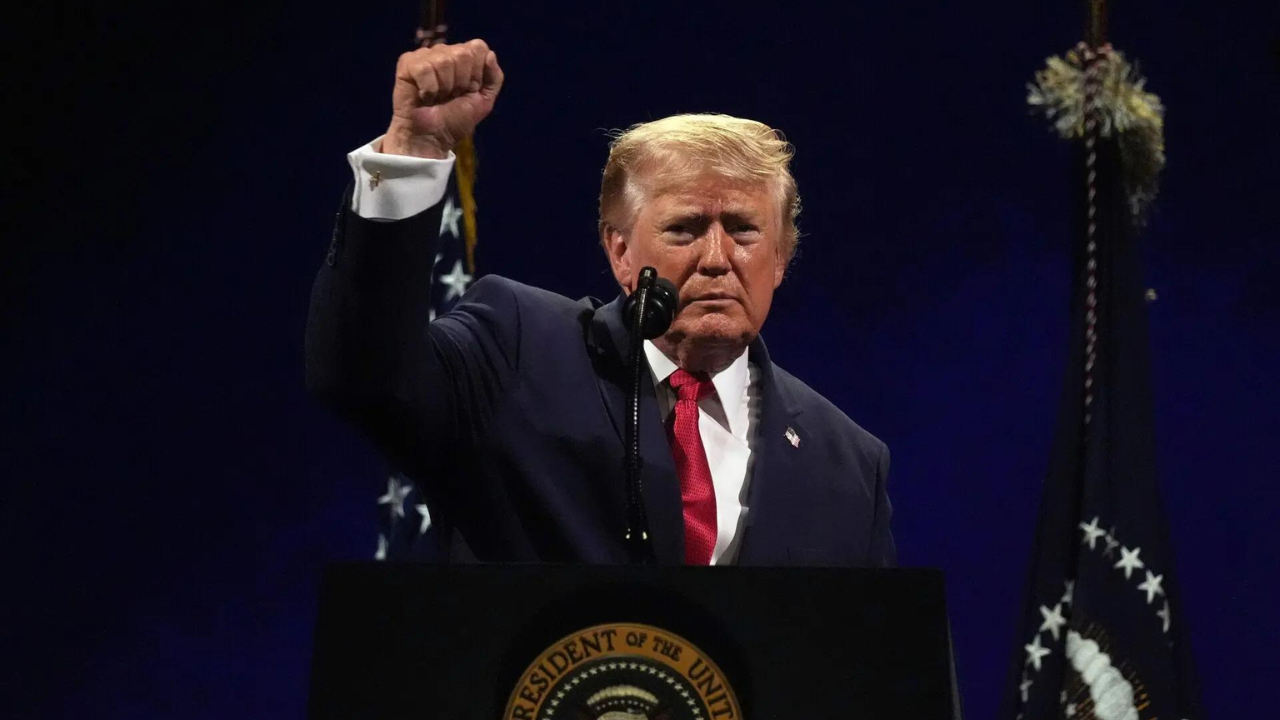
Political rhetoric during monumental civic milestones serves a dual function: it acts as a mechanism for historical consolidation and as a framework for current political mobilization. The address delivered on the National Mall in Washington, D.C., marking the 250th anniversary of American independence, illustrates how a nonpartisan civic milestone can be systematically converted into a strategic political asset. By examining the underlying logic, thematic choices, and structural orchestration of this address, we can isolate the core operational pillars that drive contemporary nationalist political communication.
The primary objective of this analysis is to deconstruct the address into its component strategic parts. Rather than evaluating the speech through a purely narrative lens, this breakdown maps the underlying cause-and-effect models, structural diversions, and targeted messaging mechanisms used to engage a polarized electorate under the guise of national unity. You might also find this related story useful: Inside the International Institution Crisis Nobody Is Talking About.
The Architecture of Identity: The Three Pillars of Exceptionalism
The address relies on a triad of conceptual frameworks to define the American character, transforming historical events into an ongoing, exclusive lineage of achievement. This structure bypasses nuanced historical analysis in favor of a binary framework: winners versus losers.
                  [ Civic Milestone: America 250 ]
                                 │
         ┌───────────────────────┼───────────────────────┐
         ▼                       ▼                       ▼
┌─────────────────┐     ┌─────────────────┐     ┌─────────────────┐
│ Linear Lineage  │     │ Ideological Core│     │ Rhetorical Pivot│
│  of Excellence  │     │  Asymmetry      │     │  to Mobilization│
└─────────────────┘     └─────────────────┘     └─────────────────┘
         │                       │                       │
         ▼                       ▼                       ▼
  Historical Feats        Externalization of      Legislative &
  & Military Icons        Domestic Threats        Electoral Agenda
1. The Linear Lineage of Excellence
The rhetoric establishes an unbroken operational continuum from the founding figures of the republic to modern technological and military pioneers. By grouping historical actors like George Washington, Abraham Lincoln, the Wright brothers, and the Artemis II lunar flyby crew into a single category of "American giants," the speech creates a direct inheritance of achievement. As highlighted in latest reports by Reuters, the effects are significant.
The strategic utility of this mechanism is clear: it frames current citizens as the automatic beneficiaries of this historical momentum. This alignment requires no active civic participation beyond identifying with the national brand.
2. Ideological Core Asymmetry
National identity is defined primarily by what it opposes. The address anchors this opposition by framing "communism" as an active, existential threat to the domestic system. By positioning this ideological system as the absolute antithesis of American exceptionalism, the rhetoric constructs a rigid binary.
- The Internal Dynamic: Domestic political opponents are structurally linked to this externalized ideological threat.
- The Strategic Outcome: Policy debates are elevated from standard governance disagreements to fundamental fights for national survival.
3. The Rhetorical Pivot to Mobilization
The speech regularly transitions from broad historical praise to immediate political objectives. Civic pride is systematically directed toward specific legislative and electoral goals, such as calling for stricter voter registration rules and restrictions on mail-in ballots. The underlying logic operates as a direct cause-and-effect sequence: if the listener accepts the greatness of the historical legacy, they must also accept the immediate policy proposals framed as necessary to protect it.
Weather Disruption as a Proof of Concept
The environmental conditions surrounding the event—a severe East Coast heatwave followed by a sudden violent thunderstorm that forced a temporary evacuation of the National Mall—offered an unexpected tactical variable. In standard political communications, an extended delay and partial crowd dispersal represent an operational failure. Here, the disruption was integrated directly into the core thesis of the speech.
By remaining on site and appearing at 11:15 PM, the speaker turned the logistical delay into a live demonstration of the resilience being praised in the text. The physical endurance of the remaining crowd was explicitly linked to the historical perseverance of the military veterans highlighted on stage, such as D-Day and Chosin Reservoir survivors. This tactical move transformed an unpredictable weather event into empirical proof of the speech's primary assertion: that the national character is uniquely unyielding.
Structural Conflict and the Absence of Institutional Continuity
A distinct feature of the semiquincentennial address was its departure from traditional civic presentation formats. Historically, milestone anniversaries like the 1976 Bicentennial are structured around cross-party symbolism, featuring living former presidents to signal institutional continuity.
The complete absence of living predecessors on the National Mall highlights a deliberate strategy of institutional decoupling. The current executive branch positioned itself not as a continuation of a collective administrative tradition, but as a distinct break from a failed recent past.
This creates a clear structural bottleneck for national unity:
[Traditional Model]   Past Presidents ──► Institutional Continuity ──► Broad Unity
[Alternative Model]   Current Executive ─► Radical Break from Past ──► Polarized Mobilization
By presenting the immediate past as a period of decline and fraudulent elections, the speech limits the definition of the "nation" to those aligned with the current executive's platform. The state blue renovation of the Washington Monument reflecting pool, obscured by an untimely algae bloom, serves as an unintended metaphor for the friction that occurs when top-down symbolic mandates clash with complex structural realities.
The Strategic Function of Threat Escalation
To maintain high levels of political mobilization during a celebratory event, the speech uses a calculated framework of threat escalation. The rhetoric explicitly matches the threat of domestic ideological subversion against major historical conflicts, declaring it equal to or greater than the challenges of World War II or geopolitical flashpoints.
This extreme scale serves a distinct operational purpose: it lowers the threshold for aggressive political action at home. If the domestic political opposition is framed as an existential threat on par with past military adversaries, standard cross-party compromise becomes logically impossible. The framework demands total victory rather than democratic negotiation, turning the civic anniversary into an active staging ground for upcoming electoral campaigns.
Optimizing a national milestone for targeted political mobilization requires a precise mix of historical symbolism, clear out-group identification, and immediate policy demands. While this approach effectively maximizes the enthusiasm of a core political base, its clear limitation is the deep fragmentation of the broader public fabric. It trades long-term institutional stability for immediate rhetorical impact.
The Washington DC July 4th Freedom 250 celebration broadcast shows the direct delivery, timing, and atmospheric conditions of the address, offering a clear look at how these nationalist rhetorical frameworks are deployed in real time.