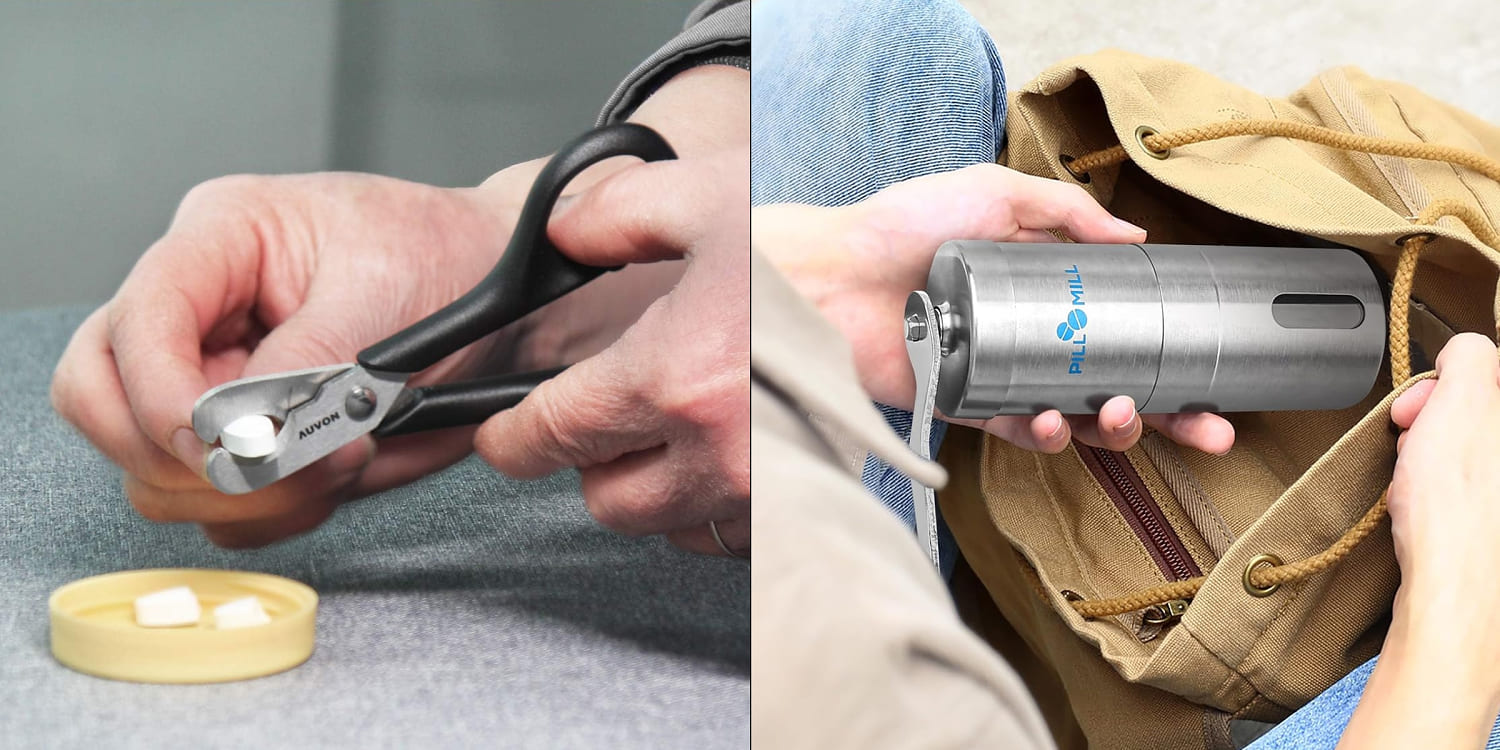
Modifying solid oral medications is a precise mechanical intervention with immediate pharmacological consequences, yet it is routinely treated as a casual lifestyle adjustment. Splitting or crushing a tablet fundamentally alters its surface-area-to-volume ratio, structural integrity, and dissolution kinetics. When an individual uses a commercial pill cutter or crusher, they are not merely resizing a physical object; they are altering a calibrated drug delivery vehicle. Improper execution transforms a predictable therapeutic regimen into an erratic dosing sequence characterized by sub-therapeutic troughs or toxic peaks.
Navigating this physical intervention requires an understanding of material science, pharmacokinetics, and mechanical engineering. Consumers and care providers frequently rely on poorly manufactured plastic tools that introduce massive variances in dosage accuracy. Optimizing this process demands a systematic evaluation of how oral solid dosages respond to mechanical stress and how specific tool architectures mitigate or exacerbate dosing errors. Meanwhile, you can read related events here: Navigating Foreign Healthcare Crises Expatriate Survival Mechanics.
The Pharmacokinetic Boundaries of Tablet Alteration
The structural design of a tablet dictates its eligibility for mechanical modification. Solid oral dosages are engineered to release active pharmaceutical ingredients (APIs) at specific rates and within targeted anatomical compartments. Altering this structure without analyzing the formulation matrix introduces severe clinical risks.
The primary constraint on modification is the distinction between immediate-release (IR) formulations and modified-release systems. Immediate-release tablets rely on the uniform dispersion of the API throughout an excipient matrix designed to disintegrate rapidly in gastric fluid. These tablets are often candidates for mechanical splitting, provided they possess a functional score line. To see the complete picture, we recommend the recent analysis by Medical News Today.
Modified-release systems utilize physical barriers to control drug dissolution. These systems fall into two primary categories:
- Extended-Release Matrices ($ER$, $XR$, $XL$): These formulations use specialized polymers, erodible matrices, or osmotic pumps to release the API over an extended duration, typically 12 to 24 hours. Compressive or shearing forces applied to these systems destroy the rate-controlling mechanism. The immediate release of the entire multi-hour payload—a phenomenon known as dose dumping—exposes the patient to acute toxicity followed by a prolonged period without therapeutic coverage.
- Enteric-Coated Tablets ($EC$): Enteric coatings utilize pH-sensitive polymers, such as cellulose acetate phthalate, that remain intact within the highly acidic environment of the stomach ($pH\ 1.5 - 3.5$) but dissolve rapidly in the higher pH of the small intestine ($pH > 5.5$). This mechanism protects acid-labile APIs from degradation and shields the gastric mucosa from irritating compounds. Fracturing an enteric coating exposes the unprotected API to gastric acid, rendering the medication inert before absorption can occur.
The structural stability of the tablet matrix itself introduces another failure point known as friability. Friability measures the tendency of a tablet to crumble, chip, or fragment under mechanical shock. High-friability tablets possess weak interparticulate bonds within their excipient compressed matrix. When subjected to a blade or a crushing plate, these tablets do not fracture cleanly; instead, they undergo catastrophic structural failure, generating an unpredictable mix of large fragments and unrecoverable fine powder.
The Physics of Shearing Force and Blade Dynamics
Pill splitting relies on the application of localized shearing stress to overcome the tensile strength of a compressed tablet. The objective is a clean, symmetrical fracture along a predetermined axis, minimized mass loss, and equal distribution of the API between the resulting segments.
The standard mechanical pill cutter utilizes a wedge-shaped blade secured within a hinged plastic housing. This design suffers from an inherent mechanical flaw: asymmetric force propagation. As the hinge closes, the blade travels along an arc rather than a purely vertical plane. The point of the blade closest to the hinge contacts the tablet first, creating a lateral force vector that pushes the tablet away from the apex. This displacement induces an off-center fracture, yielding unequal fragments.
Blade geometry further complicates this mechanical equation. A thick, blunt blade functions as a wedge rather than a cutting edge. As a thick blade penetrates the upper surface of a tablet, it exerts lateral compressive forces against the walls of the indentation. If the internal tensile strength of the tablet excipient matrix is unevenly distributed, the tablet will fracture along lines of least resistance rather than following the trajectory of the blade. This results in crumbling and significant mass loss.
An optimal shearing system requires a dual-blade alignment or a true vertical plunger mechanism that eliminates the arc of motion. High-grade stainless steel blades with a minimal wedge angle reduce the lateral compressive forces, ensuring that the energy applied is converted entirely into a clean tensile fracture.
The presence of a score line—a debossed groove embedded during compression—alters the fracture mechanics. The score line acts as a stress concentrator, reducing the amount of force required to initiate a split. However, the presence of a score line does not guarantee dose uniformity. Industrial manufacturing tolerances permit variations in API distribution throughout the tablet matrix. Even if a tablet is split into two physically identical halves, the chemical distribution of the active ingredient between those halves can vary by more than 10%, a margin that can be clinically significant for narrow therapeutic index drugs such as warfarin or digoxin.
Compressive Deformation and Mass Loss Mechanics
Pill crushing shifts the mechanical objective from clean fracturing to complete particle size reduction. This process is required for patients suffering from dysphagia or those requiring enteral tube administration. The goal is to transform a solid matrix into a fine, homogeneous powder that can be completely suspended in a liquid medium.
The mechanical process of crushing relies on two distinct physical actions: compression and attrition. Compression applies a direct, downward force that exceeds the compressive strength of the tablet, shattering its macro-structure. Attrition applies a shearing, grinding motion that rubs particles against each other and against the walls of the crushing chamber, reducing micro-fragments into a fine powder.
The standard twist-action or screw-down plastic pill crusher relies almost exclusively on compression. As the threaded cap is tightened, it compresses the tablet against the floor of the well. This design exhibits a rapid point of diminishing returns. Once the tablet breaks into small fragments, the compressive force merely packs the fragments tighter together, forming a compacted cake rather than a fine powder. Without a secondary grinding action, the particle size remains highly variable, increasing the risk of clogging enteral feeding tubes.
The classic mortar and pestle architecture provides both compression and attrition. The pestle is used to crack the tablet, while a circular grinding motion utilizes the textured surface of the mortar to achieve uniform particle size reduction.
Regardless of the mechanism used, the crushing process introduces a critical source of dosing error: the residue tax. Mass loss occurs when fine powder adheres to the surfaces of the crushing device via electrostatic forces, mechanical entrapment in surface microscopic pits, or simple physical retention. In cheap, porous plastic crushers, this residue tax can account for up to 15% of the total tablet mass. For low-dose medications, this loss significantly dilutes the delivered therapeutic dose.
To quantify the efficiency of a crushing system, one must evaluate the total mass recovery ($R_m$), defined as:
$$R_m = \frac{M_{delivered}}{M_{initial}} \times 100$$
Where $M_{initial}$ is the baseline mass of the uncrushed tablet and $M_{delivered}$ is the mass successfully transferred to the delivery medium. Mechanical systems that utilize smooth, non-porous materials such as heavy-gauge anodized aluminum, polished stainless steel, or specialized fluoropolymer pouches minimize surface adhesion, pushing $R_m$ closer to 100%.
A Structural Framework for Device Evaluation
Selecting or designing a pill modification device requires moving away from subjective consumer comfort metrics and focusing on quantifiable mechanical attributes. A device must be evaluated across three distinct vectors: mechanical leverage, material degradation resistance, and containment architecture.
The following framework categorizes the mechanical profiles of the primary device archetypes:
Hinged Wedge Splitters
- Mechanical Action: Single-plane arc compression and shearing.
- Material Composition: Styrene or polycarbonate housing; carbon steel blade.
- Failure Modes: Blade dulling, hinge misalignment, lateral tablet slippage.
- Mass Loss Risk: Moderate; prone to crumbling at the fracture site.
Vertical Plunger Splitters
- Mechanical Action: Linear vertical shearing force.
- Material Composition: Die-cast zinc or reinforced polymers; surgical stainless steel blade.
- Failure Modes: Rail friction, guide track wear over extended use.
- Mass Loss Risk: Low; minimizes lateral crumbling through uniform force.
Threaded Screw Crushers
- Mechanical Action: Rotational compression.
- Material Composition: High-density polyethylene or polystyrene.
- Failure Modes: Thread stripping, material stress cracking, powder compaction.
- Mass Loss Risk: High; significant electrostatic retention on plastic surfaces.
Heavy Mechanical Lever Crushers
- Mechanical Action: High-leverage linear compression.
- Material Composition: Aircraft-grade aluminum or stainless steel hardware.
- Failure Modes: Linkage wear, mechanical fatigue at pivot points.
- Mass Loss Risk: Minimal when paired with single-use, non-porous barrier pouches.
The material composition of the tool directly influences its long-term performance. Plastic blades or low-grade carbon steel edges degrade rapidly when exposed to the highly abrasive crystalline excipients found in modern tablets, such as calcium phosphate or microcrystalline cellulose. As the edge dulls, the mechanism shifts from clean cutting to blunt crushing, destroying accuracy.
Operational Protocol for Dosing Risk Mitigation
Minimizing the clinical risks of pill modification requires the execution of a strict operational protocol. Haphazardly cracking a pill on a kitchen counter introduces unacceptable therapeutic variance. The process must be standardized to preserve dosage accuracy and patient safety.
The first step is a formal compatibility verification. Before any mechanical force is applied, the medication's formulation must be cross-referenced against established "Do Not Crush" registries maintained by pharmacy authorities. Any tablet exhibiting an enteric coating, an extended-release suffix, or containing sub-milligram potent active ingredients must be excluded from modification.
The second step is the mechanical stabilization of the tablet within the device. For splitting, the tablet must be centered precisely within the alignment guides, ensuring the score line sits perfectly parallel to the blade edge. For crushing, the tablet must be placed in the geometric center of the crushing zone to maximize the transfer of downward vertical force.
The third step is the application of continuous, uniform force. Sudden, jerky impacts trigger unpredictable stress fractures in the tablet matrix, leading to shattering. When using a splitter, the blade housing should be brought down smoothly until it rests against the upper surface of the tablet, followed by a swift, firm downward press. When using a crusher, initial compression must be followed by a deliberate rotational or grinding movement to break down micro-granules into a homogeneous state.
The final step is complete mass transfer verification. The modified medication must be cleared from the device using a non-reactive, clean implement or completely rinsed if the device architecture allows for liquid-phase recovery. If a pouch system is used, the pouch must be manipulated to ensure all micro-particulates are discharged into the vehicle (e.g., applesauce or water) used for administration.
The Future of Dosage Customization
The reliance on manual pill cutters and crushers is a symptom of a broader limitation in industrial pharmaceutical manufacturing: the standardization of fixed-dose tablets. This approach fails to account for the physiological diversity of patients, forcing individuals to use imprecise mechanical tools to achieve necessary dosing adjustments.
The long-term resolution of this issue lies in the adoption of point-of-care digital manufacturing technologies, specifically pharmaceutical 3D printing (selective laser sintering or fused deposition modeling). Instead of modifying a mass-produced, high-density tablet, pharmacies and clinical environments will transition to printing bespoke solid oral dosages tailored to the exact milligram requirements of the individual. These systems control the internal geometry and polymer composition of the tablet matrix, allowing for precise modifications to the dissolution profile without compromising structural integrity.
Until point-of-care manufacturing scales globally, safe medication management requires a shift in how we view current modification tools. These devices must be treated with the same precision as laboratory measurement apparatus. Upgrading from cheap plastic hinge splitters to heavy mechanical lever systems and vertical plunger units is a mandatory step for any care paradigm relying on modified solid oral dosages.