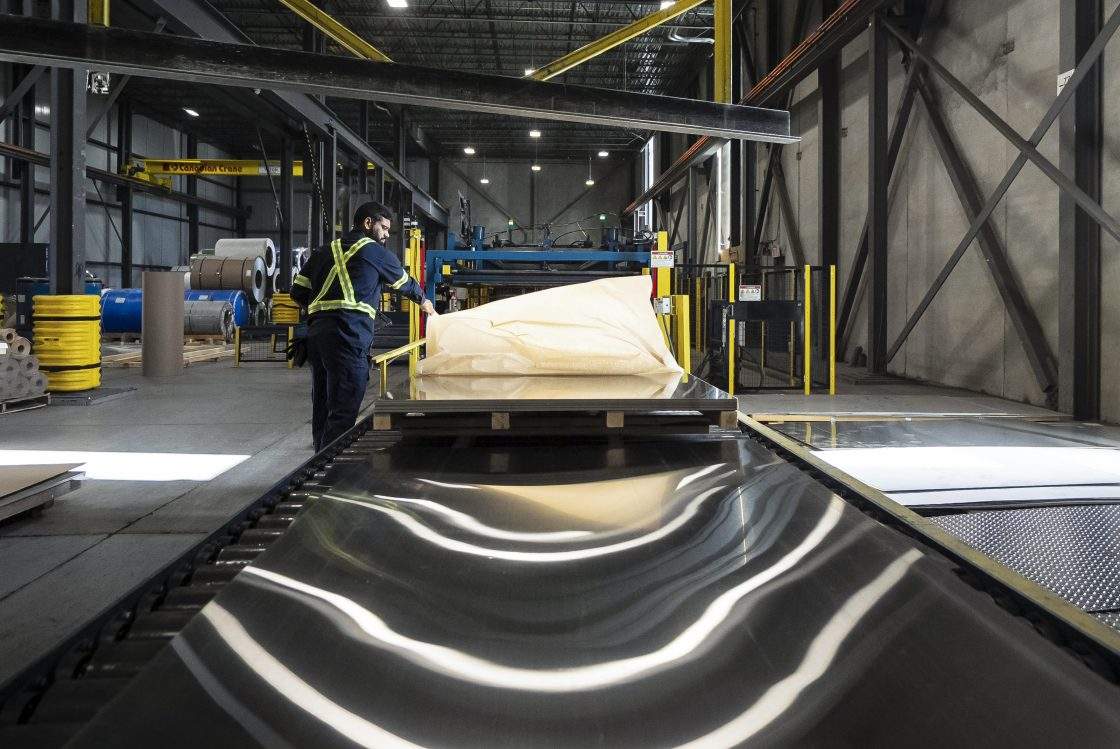
The reduction of import tariffs on steel, aluminum, and copper represents a calculated reallocation of economic friction rather than a simple retreat from protectionism. When an administration alters tariff rates on core industrial inputs, it alters the cost structures of entire manufacturing supply chains, shifting the economic burden from downstream consumers to domestic primary producers. To evaluate the true impact of these targeted tariff reductions, analysts must look past political rhetoric and isolate the underlying microeconomic drivers, supply chain linkages, and structural bottlenecks that dictate how global trade interventions function in practice.
The baseline reality of industrial metals trade is governed by a strict cost-transfer mechanism. Tariffs function as a consumption tax on domestic industries that rely on foreign raw materials. When an administration lowers these trade barriers, it triggers a sequence of adjustments across three distinct operational layers: the immediate price transmission at the port of entry, the reallocation of capital within downstream manufacturing, and the structural response of domestic primary producers who lose a government-mandated pricing premium. Understanding this interplay requires breaking down the intervention into its component economic frameworks. Meanwhile, you can read similar stories here: The Sky is Running Out of Silver Bullets.
The Cost Function of Downstream Manufacturing
The primary justification for reducing tariffs on industrial metals rests on relieving margin compression for domestic downstream manufacturers. Industries such as automotive, aerospace, industrial equipment, and construction utilize steel, aluminum, and copper as fundamental capital inputs. The total cost function of these manufacturers is heavily skewed by raw material pricing, which dictates their global competitiveness.
When import tariffs are high, domestic metal producers are insulated from foreign competition. This allows them to raise their domestic prices up to the marginal cost of the imported good plus the tariff penalty. Downstream manufacturers consequently face artificially inflated input costs compared to their international competitors. To understand the bigger picture, check out the detailed analysis by NPR.
- The Margin Compression Effect: Industrial manufacturers operating on tight net margins cannot fully pass input price increases along to end consumers without triggering demand destruction. This forces them to absorb the tariff cost, resulting in reduced capital expenditure, frozen hiring, and delayed factory modernization.
- The Substitution Distortions: Artificially high metal prices force engineers to search for alternative materials, such as plastics or composites, which may compromise structural specifications or require expensive re-tooling of manufacturing lines.
- The Finished-Good Loophole: While raw metals face high tariffs, finished goods made from those same metals often enter the country under different customs classifications with lower or zero tariff rates. This creates a structural disadvantage where importing raw steel is penalized, but importing a pre-fabricated steel component is incentivized, hollowed out domestic manufacturing capacity.
Lowering the tariff on these three critical metals effectively flattens the input cost curve. By introducing lower-priced foreign supply back into the domestic market, the domestic benchmark prices for steel, aluminum, and copper drop toward global parity. This shift expands gross margins for downstream fabricators, unlocking cash flow that can be reallocated toward capacity utilization and workforce expansion.
Supply Chain Interdependencies and Cross-Metal Dynamics
Evaluating trade policy requires assessing steel, aluminum, and copper not as isolated commodities, but as interconnected variables within global production networks. Each metal possesses distinct supply chain vulnerabilities and geographic dependencies that dictate how markets react to tariff relief.
Steel Supply Architecture
The domestic steel market is divided between integrated mills using blast furnaces to process iron ore and mini-mills utilizing electric arc furnaces (EAF) to recycle scrap steel. Import tariffs heavily protect integrated mills, which face higher structural operating costs. When steel tariffs are lowered, the immediate influx of foreign hot-rolled coil and structural steel forces domestic producers to optimize their product mix.
The primary structural bottleneck in steel trade is shipping logistics. Because steel is exceptionally dense and costly to transport over land, the price relief from lowered tariffs is felt most acutely by manufacturers located near deep-water ports. Inland manufacturers continue to face a premium driven by domestic freight rates, meaning the economic benefit of the tariff reduction is geographically asymmetric.
Aluminum Smelting Realities
Aluminum production is fundamentally an energy arbitrage game. Converting bauxite into alumina and then into primary aluminum via smelting requires massive, continuous amounts of electricity. Domestic aluminum smelters often operate at a disadvantage compared to foreign competitors backed by subsidized state energy grids or abundant, cheap hydroelectric power.
Lowering aluminum tariffs exposes domestic smelters to immediate price pressure from global regions with structural energy advantages. However, for downstream industries like automotive and packaging, which rely on specific high-grade aluminum alloys, tariff relief eliminates a significant cost penalty. The analytical takeaway is clear: lowering aluminum tariffs sacrifices high-cost, energy-intensive domestic primary smelting to preserve high-value, high-employment downstream casting and extrusion industries.
Copper and Electrification Networks
Copper occupies a unique position due to its critical role in electrical grid infrastructure, electric vehicle manufacturing, and renewable energy systems. Unlike steel and aluminum, where global capacity is vast, high-grade copper supply is structurally constrained by mining output and refining capacity.
Imposing tariffs on copper imports creates a direct bottleneck for infrastructure projects and high-technology manufacturing. By removing or lowering these tariffs, an administration lowers the capital expenditure requirements for utility companies expanding national grids and auto manufacturers scaling up electric vehicle platforms. The cause-and-effect relationship here is direct: tariff reduction acts as an un-subsidized stimulus for the electrification sector by lowering the cost of its most critical conductive material.
The Three Pillars of Trade Policy Calibration
To understand why an administration would systematically lower tariffs that were previously implemented with significant political emphasis, one must analyze the move through the lens of macroeconomic calibration. Trade policy is never static; it operates as a balancing act between competing economic priorities. The decision to lower metals tariffs typically rests on three structural pillars.
1. Inflation Mitigation
Industrial metals are leading indicators of inflationary pressure. When the cost of steel, copper, and aluminum rises, those increases eventually cascade through the economy, showing up months later in the consumer price index (CPI) via higher prices for vehicles, appliances, and housing. By reducing tariffs, policymakers can introduce an immediate deflationary shock into the industrial supply chain, cooling producer price indexes (PPI) before those costs are permanently baked into consumer-facing goods.
2. Reciprocal Trade Levers and Retaliation Avoidance
Tariffs are rarely one-sided. The imposition of import penalties frequently provokes retaliatory tariffs from trading partners, which typically target unrelated but politically sensitive domestic export sectors, such as agriculture or advanced aerospace components. Lowering select metals tariffs can serve as a strategic concession to defuse escalating trade tensions, securing market access for domestic exporters without requiring broad legislative overhauls.
3. Domestic Capacity Constraints
Protectionist tariffs are designed to give domestic producers breathing room to build out local capacity. However, if domestic producers fail to scale production due to labor shortages, regulatory hurdles, or capital constraints, the tariff ceases to protect industry growth and instead acts purely as a structural constraint on supply. When domestic demand consistently outstrips domestic production capacity, maintaining high tariffs creates severe market shortages. Lowering the trade barriers becomes necessary to fill the supply deficit with foreign material.
Strategic Realities and Systemic Limitations
While lowering tariffs provides immediate relief to downstream procurement teams, it is not a flawless economic remedy. The strategic consultant must look at the secondary effects and structural friction that prevent tariff changes from yielding immediate, perfect market corrections.
The first limitation is the presence of long-term supply contracts. Large-scale manufacturing operations rarely buy metals on the spot market. They operate via multi-year procurement agreements with locked-in pricing structures or complex hedging mechanisms executed on commodity exchanges like the London Metal Exchange (LME) or the Chicago Mercantile Exchange (CME). Consequently, a drop in tariff rates will not reflect on corporate balance sheets instantly; the cost savings materialize gradually as old contracts expire and are renegotiated under the new regulatory framework.
The second bottleneck is currency fluctuation. Tariffs are priced in percentages or fixed dollar amounts relative to import values, but global metals trading is denominated in US dollars. If the domestic currency strengthens or weakens significantly against the currencies of major exporting nations, the currency movement can completely wipe out or double the intended impact of the tariff adjustment.
Finally, the risk of structural dependence remains. Continuous protectionism breeds industrial inefficiency, but sudden exposure to unmitigated foreign competition can lead to the permanent closure of domestic primary mills and smelters. Once a blast furnace is snuffed out or an aluminum potline is frozen due to financial insolvency, restarting those facilities requires immense capital and months of technical calibration. Policymakers must calculate whether the short-term margin relief for manufacturers is worth the long-term vulnerability of losing domestic primary production capabilities entirely.
Portfolio Allocation and Supply Chain Re-Engineering
The optimal strategic response to a reduction in metals tariffs requires corporate leadership to move away from speculative spot-market purchasing and toward structured supply chain re-engineering. Companies must execute a two-part operational playbook to capture the financial upside while insulating themselves from future policy reversals.
First, procurement divisions must re-index their sourcing portfolios. The reduction of tariffs alters the total landed cost equation for foreign versus domestic metals. Organizations should utilize a mixed-sourcing model, locking in a baseline percentage of domestic supply to maintain strategic operational security while utilizing the newly opened foreign channels to capture lower-cost material for variable production surges. This prevents over-exposure to a single geographic region or regulatory regime.
Second, legal and logistics teams must institutionalize flexibility by embedding "tariff-shift clauses" into all future supply contracts. Trade policy in the modern era is highly cyclical and prone to sudden shifts based on executive actions. Contracts must explicitly define which party bears the financial liability if tariffs are abruptly reinstated or altered. By clear-cutting these risk parameters in advance, organizations can ensure that their supply chains remain resilient, highly adaptable, and optimized for maximum margin capture regardless of changing political tides.