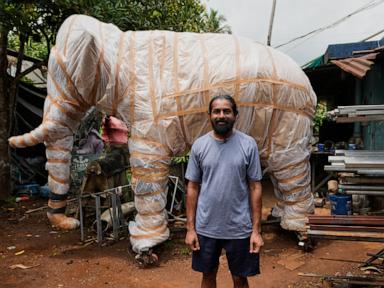
Animal welfare activists thought they had secured a historic victory when a life-sized robotic elephant named Irinjadappilly Raman was gifted to a temple in Kerala. The machine could twitch its ears, wag its tail, and bear the weight of a priest during ritual ceremonies, offering a bloodless alternative to the centuries-old practice of using live, often abused captive elephants. Yet, beneath the celebratory global headlines lies a fractures reality. The introduction of animatronic deities has not solved the crisis of captive elephant welfare in India; instead, it has exposed a bitter cultural and economic war over the future of Hindu ritualism, regional identity, and the highly lucrative festival industry.
The premise of the robotic elephant is simple. By substituting a 1,800-pound mechanical rig of iron and rubber for a living pachyderm, temples can fulfill ceremonial needs without subjecting a wild animal to chains, blistering asphalt, and the deafening noise of festival firecrackers.
But this technological solution hits a massive roadblock when it encounters orthodox theology and the raw economics of temple tourism.
The Theological Wall Against Animatronics
To outside observers, a robotic elephant seems like an unmitigated win. For traditionalists and temple administrators, however, it presents a profound spiritual dilemma.
According to ancient texts like the Gaja Sastra (the science of elephants) and specific temple agamas (scriptures governing rituals), the elephant is not a mere prop or a decorative platform for the deity. The living animal is viewed as a sacred conduit, an earthly manifestation of Lord Ganesha, possessing its own spiritual energy.
During major festivals like the Thrissur Pooram, the presence of the elephant is believed to purify the surroundings and please the deities.
A machine cannot do this. Traditional priests argue that an assembly of wires, actuators, and fiberglass lacks prana, the vital life force required to participate in a sacred ritual.
"You cannot offer devotion to a machine, nor can a machine reflect the divine presence back to the devotees," explains a senior scholar of temple rituals based in Kochi. "If we replace the elephant with rubber and steel, what stops us from replacing the deity's idol with a digital screen?"
This resistance is not just stubborn conservatism. It is a fundamental disagreement on what constitutes a ritual. For millions of devotees, the sensory experience of a festival—the smell of the elephant, its massive physical presence, and its rhythmic movements—is inextricably linked to their faith. A robotic substitute, no matter how realistically it wags its tail, feels like an empty simulation.
The Hidden Economy of the Pooram Circuit
To understand why live elephants remain in high demand despite mounting legal restrictions and public pressure, one must look at the ledger books. Captive elephants in Kerala are big business.
During the peak festival season, which runs from November to May, a single high-profile tusker can command rental fees ranging from $2,000 to over $5,000 per day. For a prime animal featured in major festivals, the earnings across a single season can be staggering.
This revenue sustains a complex ecosystem:
- Owners who view the animals as both status symbols and high-yield investments.
- Mahouts (handlers) whose livelihoods depend entirely on their relationship with a specific animal.
- Brokers and agents who manage the bookings and transportation of elephants across the state.
- Local businesses that thrive on the massive crowds drawn by famous tuskers.
+--------------------------+-----------------------------------+
| Live Elephant Revenue    | Robotic Elephant Cost Structure   |
+--------------------------+-----------------------------------+
| Daily Rental: $2k - $5k  | One-time Cost: $6k - $10k         |
| Continuous Maintenance   | Minimal Upkeep (Electricity/Oil)  |
| Generates Tourist Crowds | Novelty Fades Post-Launch         |
+--------------------------+-----------------------------------+
When a temple adopts a robotic elephant, this entire economic chain collapses. The robot is a one-time capital expense, usually costing between $6,000 and $10,000 to build, followed by minimal maintenance costs.
While that looks like an advantage on paper for a small shrine, it strips away the speculative financial allure that drives the larger festival circuit. Major temples do not want to own a static asset; they want to lease the most famous, most majestic living tuskers to compete with rival villages for prestige and tourism revenue.
The Illusion of Automation and the Mahout Crisis
The push for robotic replacements also overlooks a human tragedy developing on the fringes of the debate. The mahouts, the traditional keepers of these elephants, belong to marginalized communities and possess a highly specialized, generational skill set. They know how to read an elephant's body language, how to manage its musth (periods of high testosterone and aggression), and how to care for its massive physical needs.
If robots take over, these men lose their purpose. They do not have the training to become mechanical engineers or software programmers to maintain the animatronics.
Worse, the current transition phase is making their jobs more dangerous. As public scrutiny increases and the pool of legal captive elephants shrinks due to bans on capturing wild individuals, the remaining live elephants are overworked.
They are trucked across longer distances with less rest to meet the demands of a packed festival calendar. This exhaustion leads to sudden bouts of violence. Elephants running amok during festivals have caused numerous deaths over the past two decades, killing both spectators and the mahouts who try to calm them.
The robot does not solve this immediate danger for the animals still trapped in the system. By pulling funding and attention toward high-tech PR campaigns, critics argue that animal welfare organizations are ignoring the grimmer reality of improving conditions for the living, breathing elephants currently in captivity.
A Flawed Compromise
The technology behind these mechanical elephants is also surprisingly rudimentary. Most models currently deployed rely on simple car batteries, pneumatic pumps, and fiberglass casings. They cannot walk independently; they must be wheeled into place on platforms or heavy casters.
In the intense heat and torrential monsoons of southern India, these machines face rapid degradation. A rusted joint or a short-circuited control board mid-ceremony does not inspire religious awe. It disrupts the sanctity of the event.
Furthermore, the environmental argument is more nuanced than it appears. The production of fiberglass, plastics, and electronic components carries its own ecological footprint.
While undeniably preferable to the lifetime imprisonment of a sentient mammal, the mechanical elephant remains a bandage on a deeper cultural fracture rather than a sustainable evolution of tradition.
The Path of Pragmatic Welfare
The total abolition of elephants in Indian temples is a political and cultural impossibility in the near term. Any government that attempts a blanket ban faces immediate electoral backlash from powerful religious trusts and local populations who view the intervention as an assault on their heritage.
Therefore, the fix is not to force every temple to buy a robot. The fix lies in rigorous, uncompromised enforcement of existing welfare laws, coupled with a fundamental shift in how temple wealth is allocated.
Strict Enforcement of the Law
The Wildlife Protection Act must be enforced without the political exemptions that frequently allow illegal transfers of elephants under the guise of "gifts" or "loans."
Standardization of Rest Periods
Elephants must be granted mandatory rest periods between festival appearances, with state-enforced maximum travel distances per week. GPS tracking on every captive elephant could instantly alert authorities to violations of transportation limits.
Financial Restructuring
Temples that insist on using live elephants should be legally required to deposit a significant portion of their festival revenues into a dedicated, audited fund for the animal's healthcare, retirement, and the fair compensation of its mahouts. When an animal becomes too old or infirm to work, these funds should ensure its transfer to a sanctuary, rather than leaving it to rot in a backyard shed.
The mechanical elephant is a fascinating technological novelty, but it is an answer to a question that the core participants of this culture are not asking. Until the economic incentives that make live elephants profitable are dismantled through targeted financial regulation and strict legal accountability, the roar of real tuskers will continue to echo through India's temples, long after the batteries in the robots have run dry.