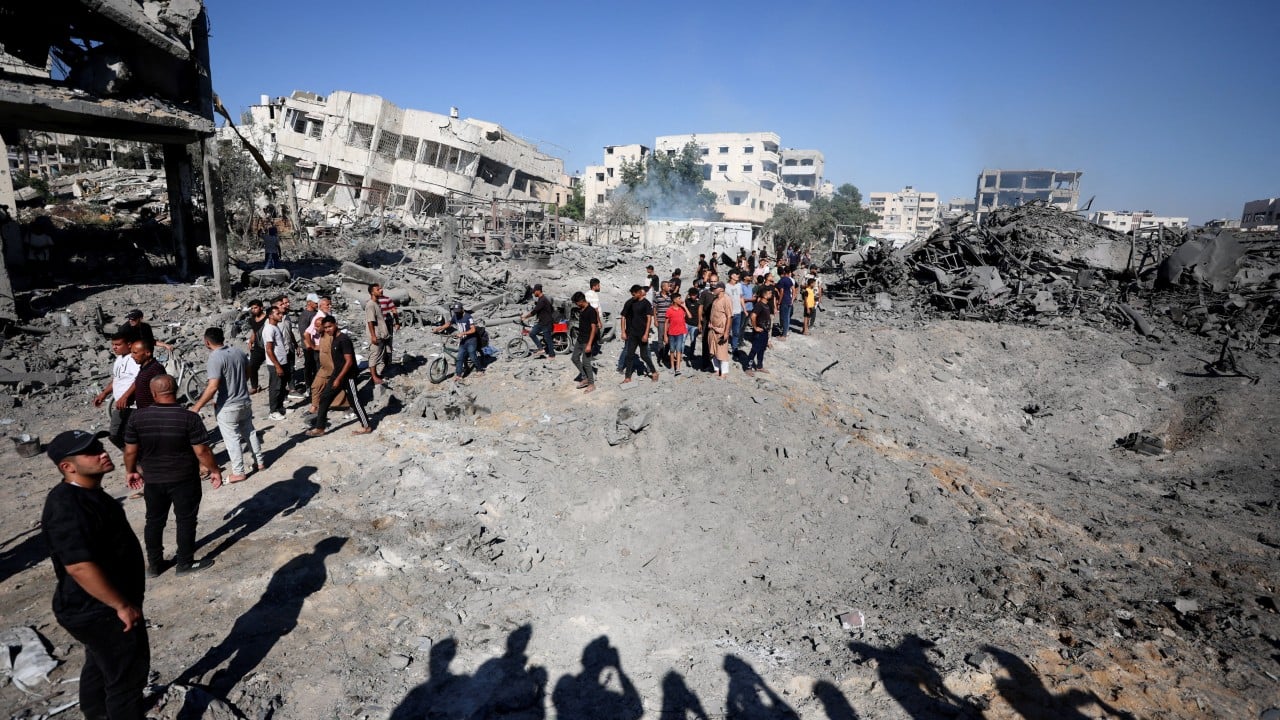
Standard war reporting has a structural flaw. When a tragic flashpoint occurs—like the recent loss of six lives, including a nine-year-old girl, during an operation in a Gaza refugee camp—the coverage immediately defaults to a predictable, paint-by-numbers script. Media outlets count the bodies, describe the rubble, quote an official denial or justification, and move on.
This approach is worse than lazy. It is actively misleading.
By treating dense urban counter-insurgency as a standard battlefield with clear frontlines, mainstream commentary demands a mathematical symmetry that modern warfare fundamentally rejects. Having analyzed military operations and asymmetric conflicts for over a decade, I can tell you the hardest truth to swallow is this: civilian casualties in high-density urban combat are not always proof of a war crime or systemic failure. More often, they are the mathematically certain result of a specific, intentional tactical doctrine chosen by the defending force.
When you judge these operations solely through the lens of short-term casualty counts, you are playing right into the hands of a deliberate strategy designed to weaponize Western legal sensibilities.
The Myth of the Asymmetric Vaccum
The reigning consensus in foreign correspondence is that the side with the superior technology bears 100% of the operational responsibility for every outcome. If a precision-guided missile or a tank round hits a civilian structure, the entity that pulled the trigger is automatically assigned total moral and tactical culpability.
This view assumes military operations happen in a vacuum. It completely ignores how structural geography dictates tactical options.
Consider the layout of a built-up area like a Gaza refugee camp. These are not open fields; they are concrete labyrinths.
- Population Density: Often exceeding 25,000 people per square kilometer.
- Infrastructure: Multistory concrete residential blocks separated by alleys less than two meters wide.
- Subterranean Networks: Multi-layered tunnel systems deliberately dug beneath civilian foundations.
When a conventional military enters this space to neutralize high-value targets or rocket launch sites, the traditional rules of engagement break down. Human rights organizations demand "proportionality," but they define the term incorrectly. Under international humanitarian law—specifically Article 51 of the Additional Protocol I to the Geneva Conventions—proportionality does not mean equal casualties. It means the anticipated civilian harm must not be excessive in relation to the concrete and direct military advantage anticipated.
The media never quantifies the military advantage. They only quantify the tragedy. If an operation neutralizes a commander responsible for hundreds of rocket attacks, but results in collateral casualties, the legal calculation is complex and brutal. The media's calculation is simple and emotional.
The Subterranean Shield Doctrine
Let's dissect the mechanics of modern urban defense. Western military doctrine emphasizes the separation of combatants from civilians. Asymmetric insurgencies do the exact opposite. They utilize a strategy better understood as the Subterranean Shield.
Imagine a scenario where a military force detects an active command center. If that center is located 30 meters beneath a four-story apartment building housing dozens of families, every choice available to the attacking force is compromised.
- Do nothing: Allow the command center to continue directing attacks, resulting in casualties elsewhere.
- Send in ground troops: Force infantry to fight room-to-room through a fatal funnel, drastically increasing the risk of close-quarters crossfire that kills civilians anyway, while sustaining catastrophic military losses.
- Airstrike or heavy artillery: Neutralize the target instantly, but risk structural collapse of the civilian housing above.
When an organization embeds its military assets within the civilian matrix, they are not hiding from the enemy. They are hiding behind the Western press. They know that a dead civilian is a tactical loss but a strategic victory in the court of public opinion.
By focusing exclusively on the kinetic actions of the attacking force, reporting systematically rewards the faction that uses its own population as armor. It creates a perverse incentive structure: the more civilians a group can surround itself with, the more immune its military assets become to conventional attack, or the more political capital it gains when those assets are struck.
The Flawed Premise of Safe Zones
A frequent point of contention in recent coverage is the striking of targets within or near designated humanitarian zones or densely packed camps. The public asks: "Why attack a refugee camp if it is meant to be a sanctuary?"
The question itself is flawed because it assumes both sides respect the sanctuary.
Urban guerrilla forces do not respect sanctuary; they exploit it. When an insurgent force moves weapons, intelligence officers, or hostages into a refugee camp, that camp legally loses its protected status under Article 19 of the Fourth Geneva Convention. The presence of civilians does not render a military target immune from attack. It places the legal and moral burden of those civilian lives squarely on the party that placed military targets there in the first place.
Admitting this truth is incredibly uncomfortable. It forces us to acknowledge that in certain combat environments, clean outcomes are an illusion.
My own analysis of urban campaigns—from the battle of Mosul against ISIS to the assault on Fallujah—shows a consistent baseline. When a military force attempts to clear a dug-in insurgent group from a dense city, civilian casualties hover between 60% to 80% of total fatalities, regardless of how many smart bombs are used.
To expect a lower percentage in one of the most densely populated places on earth isn't just unrealistic; it's a denial of physics and geography.
Dismantling the Press Room Consensus
If you look at the questions asked during state department briefings or printed in major opinion columns, they constantly miss the mark.
"Why couldn't they use sniper fire instead of heavy ordnance?"
"Why wasn't the area evacuated more effectively?"
These questions expose a total lack of understanding regarding small-unit tactics. A sniper rifle cannot breach a reinforced concrete bunker. An evacuation order over a radio or leaflet drop gives civilians a chance to flee, but it also alerts the target, allowing them to escape or force civilians to stay at gunpoint.
The uncomfortable reality is that modern international law was written for state-on-state conflicts fought on European plains. It was never designed for an era where one side wears no uniform, recognizes no laws of war, and views the deaths of its own children as a viable public relations strategy.
Continuing to report on these clashes using the outdated vocabulary of traditional warfare doesn't inform the public. It sanitizes a brutal tactical calculation and turns the news media into an unwilling branch of psychological warfare. Stop looking for a clean narrative in a theater designed from the ground up to be bloody.