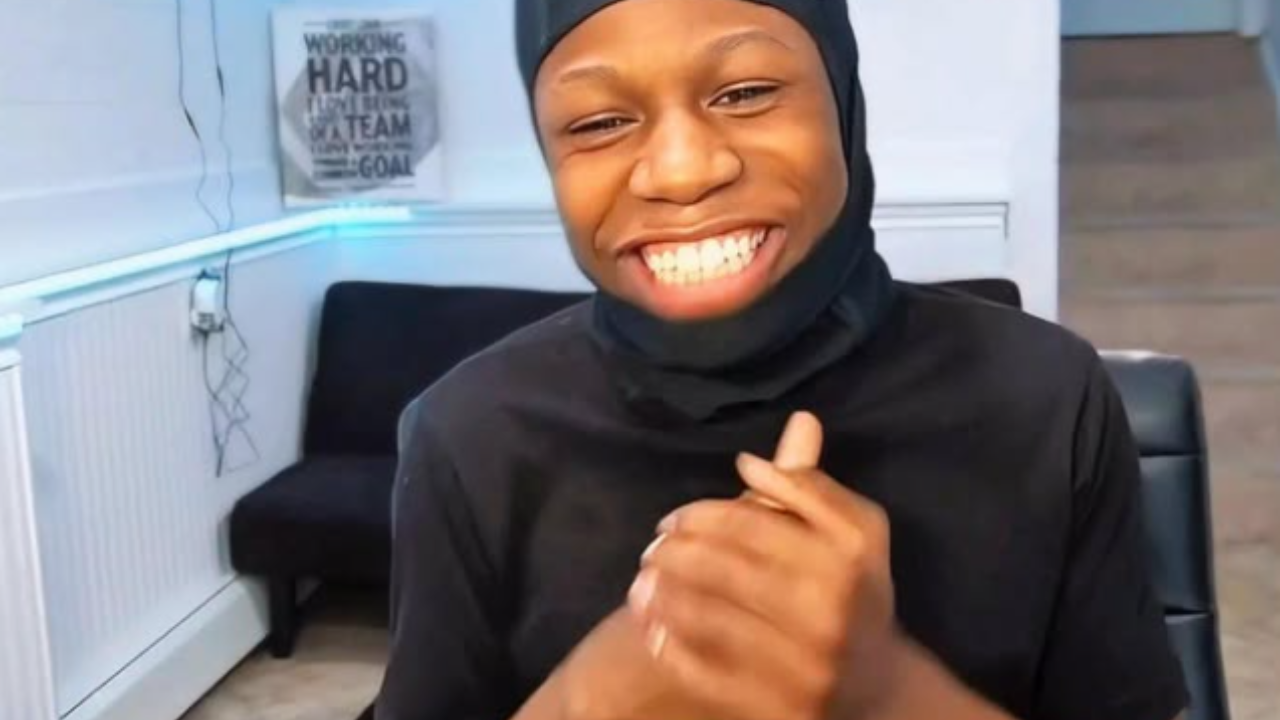
The High-Stakes Circus of Preliminary Forensics
Trial by media has reached a fever pitch, and the sensational coverage surrounding high-profile legal cases—specifically the ongoing headlines regarding bloodstains and forensic evidence in connection with music artist D4vd—is a masterclass in legal illiteracy.
When prosecutors announce that blood stains on items inside a suspect's home are "probably" those of a victim, the public treats it as a slam dunk. The internet erupts. Comments sections turn into self-appointed juries. Case closed, right?
Wrong.
The media feeds on the average reader’s complete misunderstanding of forensic science and court proceedings. What sounds like a smoking gun in a news standard headline is often a carefully constructed piece of narrative maneuvering designed to control the public perception before a defense team even gets a chance to cross-examine a single expert.
If you are evaluating high-profile criminal cases through mainstream news snippets, you are getting duped by preliminary assertions masked as definitive truth.
"Probably" Is Not a Forensic Term
Let's talk about the word "probably." In standard criminal prosecution, probability is a statistical game, but in public reporting, it is a loaded weapon.
I’ve watched media outlets run with preliminary forensic filings for over a decade, treating preliminary field tests as if they carry the same weight as full-panel DNA sequencing presented at trial. They don't.
When a prosecutor claims evidence is "probably" linked to a victim, they are often relying on preliminary presumptive testing rather than confirmatory lab testing.
- Presumptive Tests: Quick, highly sensitive tests (like Luminol or phenolphthalein) that indicate a substance might be blood. They yield frequent false positives from household cleaners, plant material, and animal proteins.
- Confirmatory Tests: Rigorous, time-consuming laboratory procedures (like crystal tests or advanced DNA profiling) that conclusively identify human blood and match it to an individual profile.
+-------------------+--------------------------------+--------------------------------+
| Test Type         | Speed & Sensitivity            | Specificity & Legal Weight     |
+-------------------+--------------------------------+--------------------------------+
| Presumptive Test  | Fast; catches trace evidence   | Low; prone to false positives   |
| Confirmatory Test | Slow; requires lab isolation   | Absolute; stands up in court   |
+-------------------+--------------------------------+--------------------------------+
When news outlets report on court motions, they routinely blur the line between these two stages. Prosecutors submit filings during pre-trial phases to justify search warrants, extend detentions, or establish probable cause. The standard of proof at this stage is fundamentally lower than the "beyond a reasonable doubt" standard required for a conviction.
Publishing preliminary "probable" matches as near-certain guilt isn't journalism—it's sensationalism designed to drive clicks at the expense of process.
The Transfer Theory Nobody Wants to Talk About
Assume the DNA does match. The consensus immediately leaps to a single conclusion: physical presence during a violent act.
That assumption ignores the most basic reality of modern, highly sensitive forensic science: Secondary Transfer.
Imagine a scenario where Person A shakes hands with Person B. Person B then handles an object in Person C’s home. Modern low-copy template DNA testing is now so extraordinarily sensitive that Person A’s DNA can be detected on that object inside Person C’s house—even if Person A has never set foot in the state, let alone the room.
We are no longer living in the O.J. Simpson era of forensics where a massive, visible pool of blood is required to extract a genetic profile. We live in an era of picogram-level detection.
- Touch DNA can travel across multiple surfaces.
- Shared living spaces, studio equipment, and high-traffic environments are chaotic melting pots of biological material.
- Physical presence of a genetic profile does not automatically prove temporal presence during a crime.
When an artist’s home, studio, or vehicle becomes a crime scene investigation hub, the sheer volume of biological foot traffic makes establishing a clean line of custody and intent a nightmare. The media sells a simple story of direct contact because complexity doesn't generate ad revenue.
Dismantling the "People Also Ask" Traps
"If blood is found in a home, doesn't that automatically mean a crime occurred there?"
No. Physical evidence demonstrates presence or transfer, not an illegal act by itself. Forensic material without context is useless. Without establishing when the material was deposited and how it got there, a stain is simply physical matter. Legitimate explanations—ranging from past injuries, third-party contamination, or indirect transfer—are routinely raised by defense teams to dismantle what looks like an open-and-shut case on paper.
"Why would prosecutors lie about forensic evidence?"
Prosecutors don't have to lie to frame a narrative; they simply use the rules of legal strategy. Pre-trial filings are adversarial tools. The prosecution presents their absolute best, most aggressive interpretation of the facts to secure court orders or shape the legal playing field. The media takes these one-sided court filings and reports them as objective reality, ignoring the fact that the defense has not yet presented its own counter-testing or expert witnesses.
The Strategy Behind Selective Leaks and Early Filings
Why do these specific details hit the press long before a trial actually begins?
It's about controlling the narrative pool.
Public opinion impacts jury pools. Long before twelve citizens sit in a witness box, they have spent months scrolling through headlines declaring that evidence found in a suspect's home "probably" belongs to a victim. Even if a judge orders that evidence suppressed later due to faulty collection protocols or chain-of-custody breaches, the psychological damage is already done. You cannot un-ring the bell in the mind of the public.
Step 1: Preliminary Filing -> Step 2: Sensational Headline -> Step 3: Public Bias
                                                                      |
Step 5: Eventual Verdict    <- Step 4: Tainted Jury Pool      <-------+
This creates an environment where the defense is forced to fight an uphill battle not just against state prosecutors, but against a deeply entrenched public consensus built entirely on incomplete, early-stage assertions.
How to Realistically Evaluate Forensic Headlines
If you want to read legal reporting without being manipulated, throw out the sensationalized commentary and run every headline through a brutal filter.
- Check the Document Source: Is the news outlet reporting on a sworn expert witness testimony under cross-examination, or are they reading from an unverified pre-trial motion filed by an adversarial attorney?
- Look for the Testing Method: Are they citing a fully analyzed, peer-reviewed DNA profile match, or are they relying on preliminary field observations?
- Account for Environment: Was the evidence collected in a controlled environment, or a chaotic, high-density space frequented by dozens of people?
- Identify the Nuance: Is the report asserting direct contact, or are they glossing over the very real possibility of secondary transfer?
Stop accepting initial press releases as uncontestable facts. The criminal justice system is designed to test claims through rigorous cross-examination, scientific verification, and strict evidentiary standards for a reason. When the media skips those steps to sell a narrative of instant guilt, they aren't informing you—they are exploiting your lack of forensic literacy.