Panic sells. Precision does not.
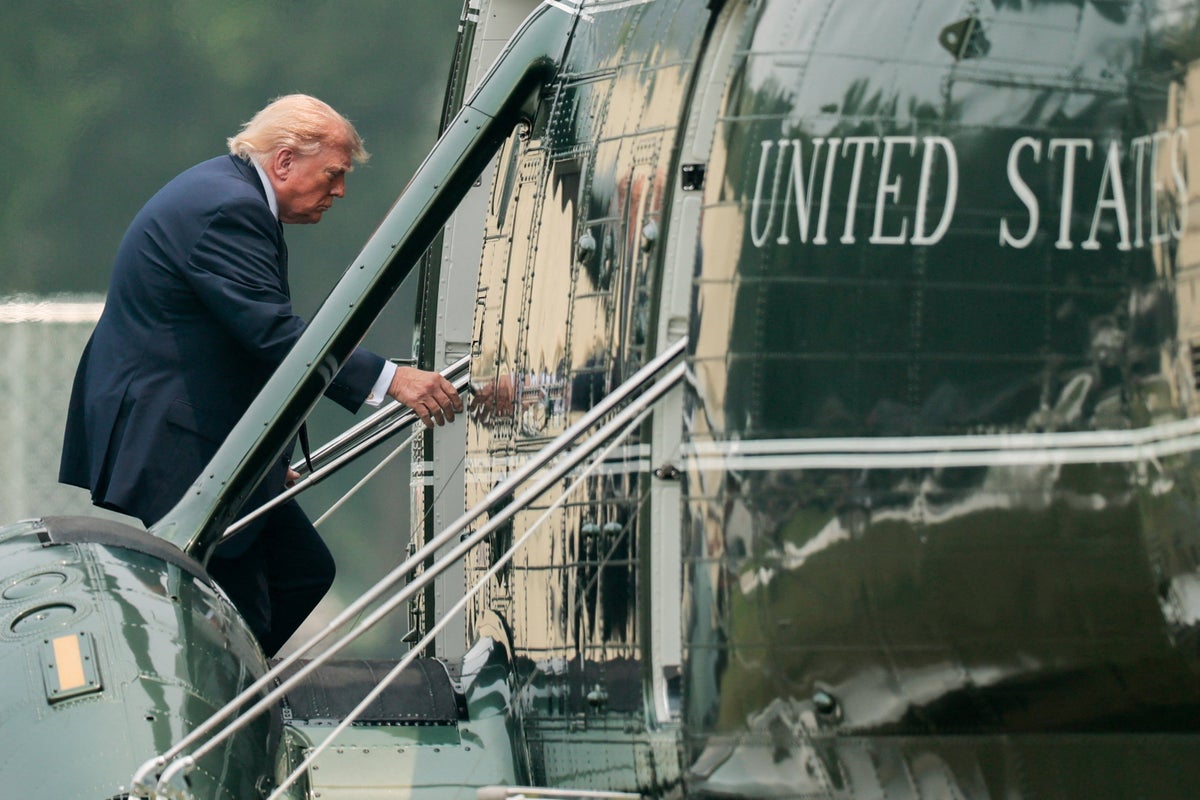
When headlines blared that a helicopter carrying Donald Trump was involved in an air-safety incident over Washington DC, the public reaction followed a predictable, manufactured script. People envisioned a catastrophic mid-air collision, a rogue drone, or a total breakdown of federal airspace control.
The lazy consensus from every major news outlet boiled down to a single, breathless narrative: our sky is a lawless hazard zone and VIP transport is hanging by a thread.
That framing is pure fiction.
I have spent years analyzing federal aviation reporting, airspace management corridors, and tactical military rotorcraft protocols. What happened over the capital was not a sign of systemic failure or an assassination-adjacent near-miss. It was a textbook execution of high-density air traffic management in one of the most heavily restricted, heavily monitored bubbles on earth.
The media took a standard administrative airspace infraction—or a routine procedural adjustment—and turned it into a blockbuster thriller for clicks. Stop buying the panic. Here is the operational reality of what actually happens when the commander-in-chief takes flight, and why the official narrative gets every single risk factor backwards.
The Myth Of The Empty Sky
The core delusion driving public anxiety about aviation is the belief that commercial and VIP aircraft operate on empty, dedicated highways in the clouds.
People assume that when Marine One lifts off, a massive invisible force field clears a fifty-mile radius of any other metal. It does not. American airspace, particularly around the National Capital Region, operates like a congested, three-dimensional super-highway system during rush hour.
Federal Aviation Administration data shows that the Washington DC Special Flight Rules Area is among the most congested patches of controlled airspace globally. You have Reagan National Airport arrivals crossing paths with military transport, medevac choppers, law enforcement drones, and private general aviation traffic.
When an air-safety incident is logged in this environment, the public pictures a Hollywood near-miss where two planes clear each other by fifty feet. In reality, the FAA's safety tracking system logs an "incident" the moment a separation standard narrows by even a fraction of a mile from optimal parameters, long before any actual danger materializes.
A traffic collision avoidance system warning is designed to trigger early. It is a preventative shield, not a sign of impending doom. Treating every resolution advisory as a brush with death is like panicking every time your car's anti-lock brakes engage on a wet road.
The Separation Illusion
Let us define what an air-safety incident actually means in the context of federal regulation.
The FAA maintains strict lateral and vertical separation minimums. For en-route aircraft, standard separation is typically five miles horizontally or one thousand feet vertically. In terminal environments like DC, those margins compress because aircraft are moving slower, climbing, or descending into tight airport footprints.
When two aircraft wander closer than those arbitrary regulatory lines, the system flags it.
Notice the word: regulatory. These lines are drawn for administrative safety margins, not physical boundaries of aerodynamic disaster. If a helicopter drops to eight hundred feet of vertical separation instead of one thousand, the computer screams. The pilot adjusts collective or cyclic, the trajectory corrects, and everyone lands safely for dinner.
Yet, when the media gets hold of the incident report, nuance vanishes. They treat a procedural deviation as a structural collapse.
I have watched organizations spend millions auditing software logs that flagged routine sensor anomalies as critical alerts, burning precious resources chasing ghosts. The FAA's reporting apparatus is hyper-cautious by design. Every minor vector adjustment or communication delay gets cataloged. When that data leaks to reporters looking for a political or sensational angle, routine air traffic management becomes a national crisis.
Deconstructing The DC Airspace Maze
Imagine a scenario where you drive down a six-lane highway at rush hour, and every single car is required to maintain a two-car length gap. Now imagine that if any car briefly slips to one-and-a-half car lengths, an alarm sounds at state headquarters and a safety board opens an investigation.
That is the Washington DC Flight Rules Area.
Marine One operations are governed by Marine Helicopter Squadron One. These pilots undergo some of the most rigorous tactical training on the planet. They fly VH-3D Sea Kings and VH-60N Whitehawks, aircraft equipped with advanced countermeasures, redundant avionics, and flight management systems that dwarf standard commercial gear.
When an incident occurs in this airspace, it is almost never because a pilot fell asleep at the stick or a controller panicked. It is the friction of high-volume logistics rubbing against rigid bureaucratic thresholds.
The real vulnerability in modern aviation reporting is not pilot error. It is journalistic illiteracy regarding how airspace architecture actually functions. Reporters do not know the difference between a runway incursion, a separation loss, and a pilot deviation. To them, it is all just falling metal.
The Cost Of Manufactured Hysteria
What happens when we catastrophize routine aviation safety anomalies? We invite bad policy.
When the public demands immediate fixes to non-existent crises, regulators feel compelled to act. They add more layers of bureaucracy, narrow flight corridors further, and increase radio chatter burdens on pilots who are already managing critical cognitive loads.
More rules do not always equal more safety. Often, they equal more distraction.
Every extra frequency change, every redundant clearance check, and every panicked political review introduces a new point of potential human error. We trade statistical safety for political theater.
If you want to fix aviation safety, look at actual systemic pain points: controller fatigue, aging ground-based radar infrastructure in regional hubs, and the skyrocketing volume of unregulated small drones buzzing near commercial corridors. Do not look at a heavily protected presidential helicopter executing a standard maneuver inside a heavily monitored military zone.
The Uncomfortable Truth
Here is the downside of this contrarian view: trusting the system sounds naive until you look at the raw numbers. Commercial and VIP aviation in the United States remains the safest mode of transport in human history.
Airspace incidents will always happen because human beings and machines operate in a dynamic, unpredictable fluid medium. Wind shears, unexpected traffic spikes, and split-second routing tweaks are features of flight, not bugs.
The next time a headline breaks about a near miss over federal skies, check your pulse. Look past the buzzwords. Ask yourself whether you are reading about an actual catastrophe or a regulatory system doing exactly what it was engineered to do: catch minor discrepancies long before they matter.
Stop letting sensationalists hijack your understanding of risk. The sky is not falling. The math just scares people who refuse to read it.