In a small, dimly lit garage in suburban Ohio, a man named Elias runs his hand over the hood of a pristine, silver sedan. It is German-engineered, a machine built with the kind of obsessive precision that makes the door close with a heavy, satisfying thud—the sound of safety, status, and years of saved wages. Elias doesn't care about trade deficits or geopolitical posturing. He cares about the monthly payment scribbled on a yellowing notepad on his workbench.
That payment is about to change.
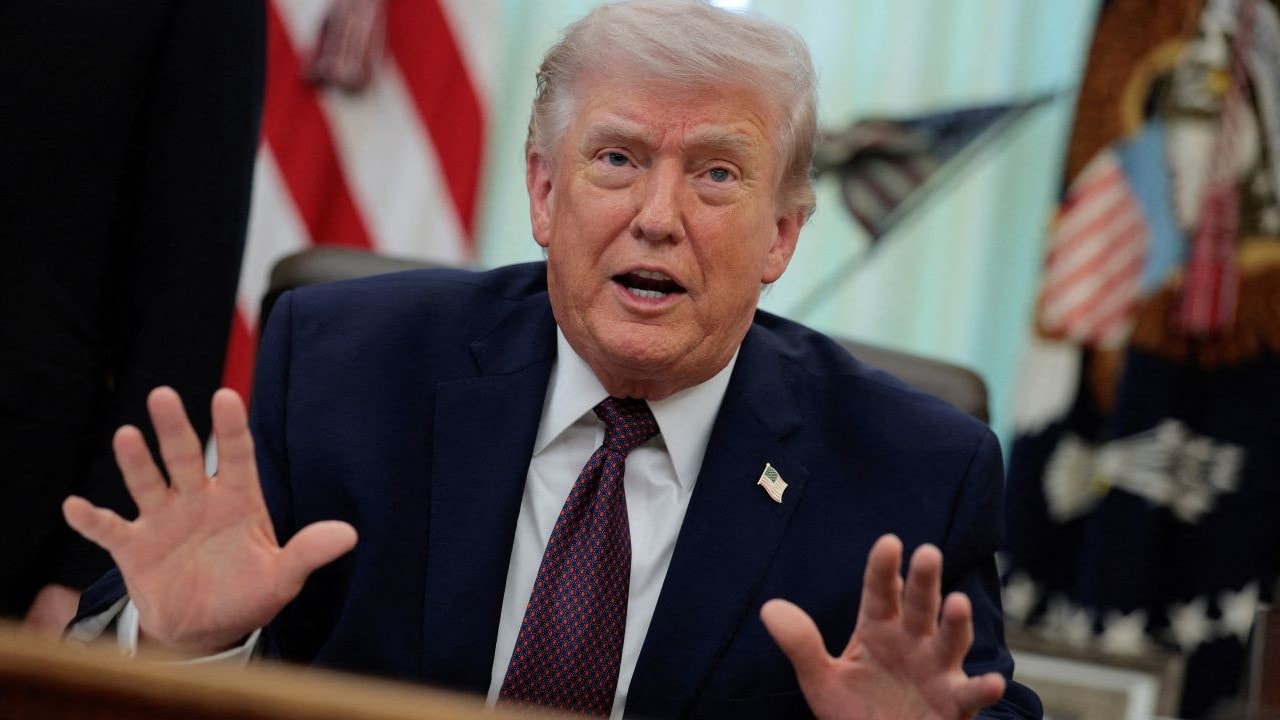
The air in Washington and Brussels has grown thick with the scent of a brewing trade war. President Donald Trump has signaled a return to a high-stakes strategy: a 25% tariff on automobiles imported from the European Union. He claims the EU hasn't played fair, that they haven't lived up to their end of the trade bargains, and that the only way to balance the scales is to build a wall made of taxes.
To a politician, a 25% tariff is a leverage point. To a consumer like Elias, it is a $10,000 surcharge on a dream.
The Math of Friction
Economics is often taught as a series of sterile graphs, but in reality, it is the study of human desire meeting cold barriers. When a government imposes a tariff, it isn't the foreign manufacturer who writes the check to the Treasury. It is the importer—the local dealership, the regional distributor, and ultimately, the person holding the keys.
Imagine a car that costs $40,000 today. If a 25% tariff is applied at the border, that cost doesn't just evaporate. It sits there, a heavy ghost in the machine. The manufacturer might swallow a small portion of the cost to stay competitive, but eventually, the math becomes relentless. That $40,000 vehicle becomes a $50,000 vehicle.
This isn't just about luxury. It’s about the ripple effect.
When European cars become prohibitively expensive, the demand for domestic cars spikes. Basic supply and demand dictates what happens next: American car prices rise too. There is suddenly less pressure to keep prices low when your biggest competitors are priced out of the market by government fiat. The "Metal Curtain" doesn't just keep foreign products out; it traps the domestic consumer inside a rising tide of costs.
The Ghost of the Trade Deal
The tension stems from a perceived betrayal. The administration argues that the European Union is a "brutal" trading partner, using regulatory hurdles and existing tariffs to keep American Fords and Chevrolets off the streets of Paris and Berlin. From this perspective, the 25% tariff is an act of restoration—a blunt instrument used to force a more "reciprocal" relationship.
But the machinery of global trade is not a simple see-saw. It is a web.
Consider the components. A "European" car is rarely just European. The leather might come from cows in the Midwest. The semiconductor chips might be designed in California. The assembly line in Bavaria might rely on American-made software to keep the robots humming. When you slap a tax on the finished product, you are inadvertently taxing the American workers who contributed to its birth.
The stakes are invisible until they aren't. They are hidden in the supply chain, tucked away in the shipping containers that cross the Atlantic every day.
The Counter-Punch
Europe does not sit idly by when its primary exports are threatened. In the quiet offices of the European Commission, planners are already looking at maps of the United States, not for tourism, but for targets. They look for products made in the heartland, items that are culturally and economically significant to the very people the tariffs are supposed to protect.
Bourbon. Motorcycles. Blue jeans.
If the U.S. taxes the German sedan, Europe will tax the American whiskey. It is a game of "eye for an eye" where everyone ends up with a blurred vision of the future. The farmer in Kentucky who exports corn for that bourbon suddenly finds his market shrinking. The factory worker in Wisconsin sees the order books for motorcycles thinning out.
The human element is the collateral damage of the "winning" trade strategy. We speak in percentages, but we live in consequences.
The Myth of the Quick Fix
There is a seductive quality to the idea of a tariff. It feels like a shield. It feels like someone is finally standing up for the home team. There is a primal satisfaction in saying, "If you won't buy our stuff, we'll make it impossible for our people to buy yours."
But global markets are smarter than slogans. Companies don't just sit and wait to be taxed into oblivion. They pivot. They move factories. They automate faster to cut costs elsewhere. Or, more often, they simply pass the bucket down the line until it reaches Elias in his garage.
The reality is that we are no longer in an era where a car is built in one place by one people. We live in an age of the "Global Product." To tax a car is to tax a thousand different handshakes across ten different borders. It is a tax on the very connectivity that has defined the last fifty years of human progress.
Elias looks at his silver sedan and wonders if he’ll be able to afford the parts for it in two years. He wonders if the local dealership, a family-owned business that has been on the corner for forty years, can survive a 25% drop in inventory.
The "trade deal" being discussed in the high-ceilinged rooms of power feels a world away from the grease-stained floor of a suburban garage. Yet, the stroke of a pen in D.C. vibrates through the steering wheel in Ohio.
The engine of global commerce is built on trust and the fluid movement of goods. When you throw a handful of sand into those gears, the noise is deafening. We are told the friction is necessary to fix the machine, but as the heat rises and the parts begin to grind, you have to wonder if the machine will ever run the same way again.
The price of the key turn is going up, and for many, the garage door is staying shut.