The illusion of the "tourist bubble" in Mexico didn’t just crack this week; it shattered under the weight of semi-automatic gunfire. When a group of travelers from Vancouver found themselves diving for cover near a historic pyramid site, they weren't caught in a freak accident. They were witnesses to the new, uncomfortable reality of Mexican travel security. The Cartel Jalisco Nueva Generación (CJNG) and the Sinaloa Cartel have moved their front lines from the dusty backstreets of Culiacán directly into the viewports of Nikon cameras and the lobbies of five-star resorts.
For decades, the unspoken agreement between organized crime and the Mexican state was simple: leave the tourists alone. Dead foreigners bring international heat, FBI involvement, and federal "iron fist" operations that hurt the bottom line. That agreement is dead. The violence witnessed by the Vancouver group is a symptom of a fractured criminal landscape where mid-level lieutenants no longer care about the geopolitical fallout of a stray bullet. They are fighting for "plaza" control—the literal ground beneath the feet of international visitors. You might also find this similar article interesting: The Brutal Truth Behind the Doha Flight Resumption.
The Geography of Risk Beyond the Resort Walls
Travelers often believe that sticking to archaeological sites or high-traffic zones offers a layer of protection. This is a dangerous misunderstanding of how modern Mexican insurgencies operate. The "safety" of a location is now determined by whether the local police force has been compromised or if a rival faction has decided to expand its territory.
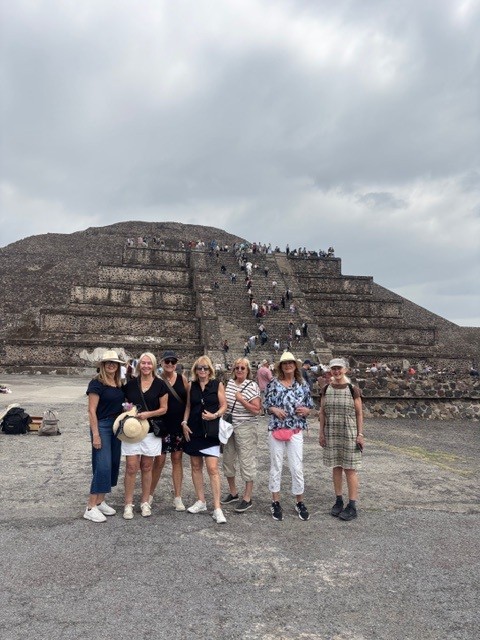
Take the Teotihuacán or coastal pyramid sites. These are not just cultural landmarks; they are strategic corridors. If a highway leading to a major site is the primary route for moving synthetic opioids or human cargo, that highway is a war zone. The tourists are simply an inconvenient variable. When the Vancouver group heard shots, they weren't the targets, but in the eyes of a twenty-year-old gunman with a short fuse, they were invisible. As discussed in latest articles by The Points Guy, the results are notable.
The Failure of the Tourism Battalion
Following a string of high-profile shootings in Tulum and Cancún, the Mexican government deployed the National Guard’s "Tourism Battalion." You’ve seen them—soldiers in digital camo patrolled the white sands with assault rifles. It was a PR move. You cannot fix a systemic collapse of the rule of law by putting a soldier on every street corner.
These deployments often have the opposite effect. They push the violence into "gray zones" just outside the immediate view of the hotels. When the heat gets too high on the beach, the cartels move their disputes to the cultural sites and transit hubs. The presence of the National Guard creates a false sense of security that encourages travelers to lower their guard, right up until the moment the first magazine is cleared.
The Economics of a Targeted Industry
Tourism accounts for roughly 8.5% of Mexico’s GDP. The Mexican government is desperate to protect this revenue, which leads to a culture of suppression and downplaying. When a shooting happens, the official narrative almost always follows a script: "This was a targeted hit between two criminal groups. No tourists were the intended targets."
This is cold comfort to a family from British Columbia pinned behind a stone wall.
The "targeted hit" defense is a rhetorical shield used to prevent travel advisories from turning red. If the world accepts that the violence is internal, the planes keep landing. But the math is changing. As cartels diversify into extortion—taxing everything from the avocados in your guacamole to the tour bus that brings you to the ruins—the separation between the criminal world and the hospitality industry has evaporated.
Extortion and the Tour Operator
Behind the scenes of your booked excursion is a web of "protection" payments. Investigative trails frequently show that local transportation unions are heavily infiltrated by organized crime. When a rival group wants to send a message to a union leader or a local official, they do it where it hurts most: at the point of sale.
A shooting at a pyramid isn't always about a drug deal gone wrong. Often, it is a violent audit. It is a way for a cartel to demonstrate that the current "protection" being paid to a rival or a corrupt official is worthless. The Vancouver group was the collateral damage of a hostile corporate takeover, executed with lead instead of lawyers.
The Intelligence Gap for International Travelers
Global Affairs Canada and the U.S. State Department issue travel advisories that are often weeks or months behind the reality on the ground. These agencies rely on reported crimes, but in Mexico, the "cifra negra" (the dark figure of unreported crime) is staggering. Over 90% of crimes go unreported because the local police are either the perpetrators or are too terrified to file the paperwork.
When you read that a region is under a "Exercise a High Degree of Caution" warning, that information is based on yesterday's data. It does not account for a sudden rift in a local cartel hierarchy that happened six hours ago.
- Real-time volatility: Cartel structures are now more horizontal and chaotic.
- The "Plaza" shift: Territorial boundaries can change overnight without any outward sign until a confrontation occurs.
- Weaponry: The proliferation of .50 caliber rifles and high-capacity magazines means the "kill zone" in a public space is vastly larger than it was ten years ago.
Why the Vancouver Incident is a Warning Shot for the West
The individuals involved in the pyramid shooting were lucky. They walked away with trauma rather than wounds. But their experience highlights a growing trend of "brazenness." The old-school capos like "El Chapo" Guzmán understood the value of the shadow. The new generation, raised on social media and ultra-violence, prefers the light. They want the world to see.
This shift in psychology is the most dangerous development for the travel industry. If the goal is to project power and terrify rivals, doing so in front of a crowd of international witnesses is a highly effective, albeit sociopathic, marketing strategy. It guarantees international headlines and puts immense pressure on local rivals who can no longer guarantee the safety of their business partners.
The Myth of the Luxury Shield
There is a persistent belief among wealthy travelers that "premium" experiences—private drivers, gated villas, exclusive tours—provide immunity. This is a fallacy. In many cases, luxury status makes you a more visible marker of territory. A private van is a more distinct target than a public bus. A high-end villa is a fixed asset that can be easily monitored and "taxed" by local gangs.
The Vancouver group was at a major site, likely with a reputable guide, during peak hours. They followed the rules. The rules didn't matter.
How to Navigate the New Mexican Reality
If you are going to travel to Mexico, you must abandon the idea that the government or the resorts have your back. They are stakeholders in a business that requires you to feel safe, even when you aren't.
True safety now requires a level of tactical awareness usually reserved for journalists or NGO workers in conflict zones. You need to monitor local "nota roja" (red news) outlets—the grisly, often sensationalist local papers that report the bodies the national media ignores. You need to understand which cartels are currently at war in the specific state you are visiting.
Watch the local vibe. If the street vendors suddenly vanish from a normally busy area, or if you see a sudden influx of local police who look nervous, leave. Don't wait for the shots to ring out. The locals always know five minutes before the tourists do.
The era of carefree Mexican tourism is over. It has been replaced by a period of calculated risk. The pyramids remain as a testament to ancient civilizations, but today they sit in the middle of a very modern, very bloody struggle for the future of Mexico’s soul. You are no longer just a visitor; you are a witness to a war that no longer feels the need to hide from your camera.
Check the local news cycles for the phrase "enfrentamiento" (confrontation) daily. If that word appears in the town you are staying in, your vacation is over. Pack your bags and move. Your deposit isn't worth your life.