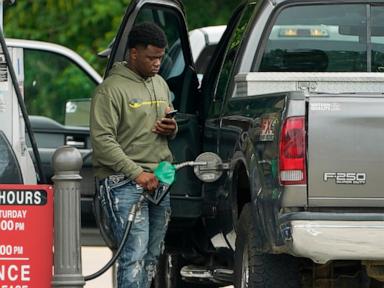
American shoppers haven't stopped spending money, but they're radically changing how they pass it over the counter. Ever since the war in Iran sent fuel shocks rippling through local gas stations, the average household budget has faced a quiet, creeping restructuring. The macro data looks decent on paper, yet retail executives are sounding alarms over behavioral shifts that don't always show up in top-line revenue numbers.
We aren't looking at a sudden, dramatic economic crash. Instead, we're watching millions of subtle, defensive budget tweaks add up. The modern consumer is under a unique brand of financial fatigue, shaped by a couple of years of stubborn inflation and the friction of import tariffs. When you look closely at what people buy, where they drive, and how they shop, you see a consumer base that's actively outsmarting the pricing models.
The Ten Gallon Psychological Boundary
For years, the standard behavior at a gas pump was simple. You insert your card, lift the nozzle, and fill the tank until it clicks. That habit is breaking down. Recent data from Walmart and Sam’s Club shows an unexpected metric tracking lower. For the first time since 2022, the average fuel purchase at their pumps has dipped below 10 gallons per trip.
Drivers aren't necessarily driving less; they're rationing their liquidity. Spending $40 to top off a tank feels manageable. Spending $75 to fill it completely causes a form of sticker shock that triggers broader household budget cuts.
Fuel Squeeze Triggers
├── Under 10 gallons per pump visit (Walmart/Sam's Club data)
├── 10% drop in overall convenience store pump transactions
└── 10.4% decline in in-store c-store purchases
This structural shift at the pump alters physical retail foot traffic. According to analysis by convenience store trade groups, pump transactions dropped nearly 10% across March and April compared to last year. More importantly, sales inside those convenience stores dropped by 10.4%. When people don't walk inside to pay or grab a quick snack, the high-margin impulse ecosystem collapses.
Warehouse clubs like Costco and BJ's Wholesale Club are winning the volume battle because their fuel prices trend lower, but even their executives note that members are making frantic, frequent stops just to top off. They're terrified of what the price might look like tomorrow.
Defensive Buying and the Couch Commerce Surge
High fuel costs are driving an unexpected migration to online shopping. Omnisend reported a massive 20% month-over-month surge in online spending. In a typical year, non-holiday monthly shifts hover between 1% and 5%.
This isn't a sign of booming consumer confidence. It's defensive buying. Shoppers are sitting on their couches to save money on the gas it takes to drive to a physical storefront.
When people do venture out into physical grocery stores, their habits are hyper-calculated. The casual weekend shopping trip has morphed into a precision mission.
- Trip Consolidation: Snipp Interactive data indicates nearly 30% of shoppers are consolidating their errands into a single route, while 21.5% are reducing their total weekly trips.
- The Proximity Play: Over 26% of consumers are choosing retailers simply because they are closer to home, completely cutting out destination shopping centers.
- Bulk Realities: Shoppers are buying meat in bulk to freeze, completely ignoring the live food demonstrations and sampling stations that used to drive impulse buys.
- The Pre-Cut Cull: People are trading down from convenience items, like pre-cut fruit in plastic containers, back to whole fruit.
The Discretionary Divide Hits Retail Hard
While grocery and fuel swallow a larger percentage of the paycheck, non-grocery retail is taking a direct hit. Circana data tracked a 6% decline in non-grocery unit sales over a recent four-week stretch.
The losses are concentrated in specific, predictable categories. Housewares, clothing, footwear, and sports equipment saw drops ranging from 5% to 7%. When families spend more on basic insurance, food, and fuel, the first thing they cut is a new pair of sneakers or an upgraded kitchen blender.
Interestingly, the pullback is uneven. The same Circana data showed that toys and beauty items grew by at least 8%. It turns out parents will still buy a toy for their kid, and consumers refuse to give up small cosmetic luxuries—a classic manifestation of the lipstick index during times of economic anxiety.
Category Performance Shift
├── Housewares & Apparel: Down 5% to 7%
└── Toys & Beauty: Up 8%
The true test for retailers will arrive as income tax refunds completely dry up. Tax season provided a brief, artificial cushion that shored up spring sales. Now that those cash infusions are gone, economists expect a wider retrenchment. Lower-income consumers are already tapped out, trading national brands for private labels at record rates. Now, middle-income shoppers are adopting the exact same playbooks.
How Brands Must Pivot to Survive the Squeeze
If you run a retail operation or manage a product brand, you can't rely on old promotional playbooks. The consumer is too uncommitted. The average driver now checks prices across multiple fuel stations and grocery stores via mobile apps before leaving the house. Loyalty is a luxury they feel they can no longer afford.
Focus on True Pack Size Innovation
Don't just shrink the package and keep the price the same. Shoppers see right through hidden price increases. Instead, introduce distinct high-value bulk options for the stock-up trips, alongside ultra-affordable smaller sizes designed for cash-strapped weeks. You need to meet the consumer wherever their weekly cash flow sits.
Overhaul Digital Loyalty Friction
If your digital app requires three steps to load a coupon at checkout, you're losing the sale. Shoppers are actively looking for cash-back offers and instant discounts. Make those incentives highly visible and automatic. The retailer that offers the most straightforward, frictionless path to saving 5% at the register wins the basket.
Emphasize Utility Over Novelty
In your marketing messaging, cut out the emotional fluff. Consumers don't care about a brand's lifestyle aesthetic when they're rationing gas. They want to know how your product lasts longer, saves them time, or cuts down on waste. If you sell apparel, highlight durability and versatility. If you sell food, focus on meal-prep longevity and zero waste.
The current retail environment isn't a death sentence, but it's an unforgiving landscape for businesses that refuse to adapt to a hyper-calculating customer. Stop looking at aggregate spending data to reassure yourself. Watch the behavior at the pump and the grocery cart, because that's where the real economic story is being written.