National biosecurity interventions during highly infectious disease outbreaks operate under a structural paradox: the economic and logistical costs of deterrence must be incurred immediately, while the primary benefit—the complete absence of pathogens within national borders—remains invisible. The Canadian government’s deployment of aggressive travel and immigration protocols targeting the Democratic Republic of the Congo (DRC), Uganda, and South Sudan isolates this dynamic.
By executing a dual-track strategy under the legal mechanisms of Bill C-12 and the Quarantine Act, Ottawa has instituted a 90-day pause on final immigration processing and a mandatory 21-day self-isolation protocol for arriving travelers. This border management framework introduces a friction-based model designed to artificially suppress inbound volume from the affected region. Understanding the efficacy of this policy requires a rigorous decomposition of its core operational pillars, the viral mechanics driving the intervention, and the specific geopolitical variables that compressed the government's decision-making timeline.
The Dual-Track Deterrence Framework
The intervention is anchored by two distinct regulatory levers that target separate components of the inbound traveler pool. Rather than enforcing a crude, blanket travel ban—which violates International Health Regulations treaties—the framework leverages regulatory friction to systematically lower the probability of pathogen introduction.
Pillar 1: Administrative Immigration Suppression (Bill C-12)
The most severe operational friction occurs at the administrative level. Leveraging the statutory powers of Bill C-12, the Department of Immigration, Refugees and Citizenship Canada (IRCC) has suspended the final adjudication of temporary and permanent visas, electronic travel authorizations (eTAs), study permits, and work permits for residents of the DRC, Uganda, and South Sudan.
[Immigration Application Intake] ---> (Processing Continued) ---> [Final Decision Pause (90 Days)] ---> Volume Reduction
This mechanism functions as a quantitative constraint on the pool of potential incoming travelers.
- Operational Mechanism: Application processing continues internally, but a strict 90-day moratorium is placed on final approvals and issuance.
- Target Cohort: Prospective foreign nationals seeking entry.
- Volume Impact: This measure directly intercepts the fluid component of travel demand. Prior to the policy, the cumulative travel velocity from the three target nations averaged approximately 350 individuals per week.
Pillar 2: Post-Arrival Containment and Isolation (The Quarantine Act)
For individuals who possess valid travel rights—predominantly Canadian citizens, permanent residents, and individuals registered under the Indian Act, who collectively comprise roughly 60 percent of the historical travel volume from the region—the policy transitions from administrative suppression to mandatory containment.
[Arriving Passenger Pool]
       |
       |---> Symptomatic ----> [Immediate Hospital Isolation & Diagnostic Triage]
       |
       |---> Asymptomatic ---> [21-Day Mandatory Self-Isolation]
                                      |
                                      |---> Viable Private Plan ---> [Home Quarantine]
                                      |---> No Viable Plan --------> [State-Managed Isolation Facility]
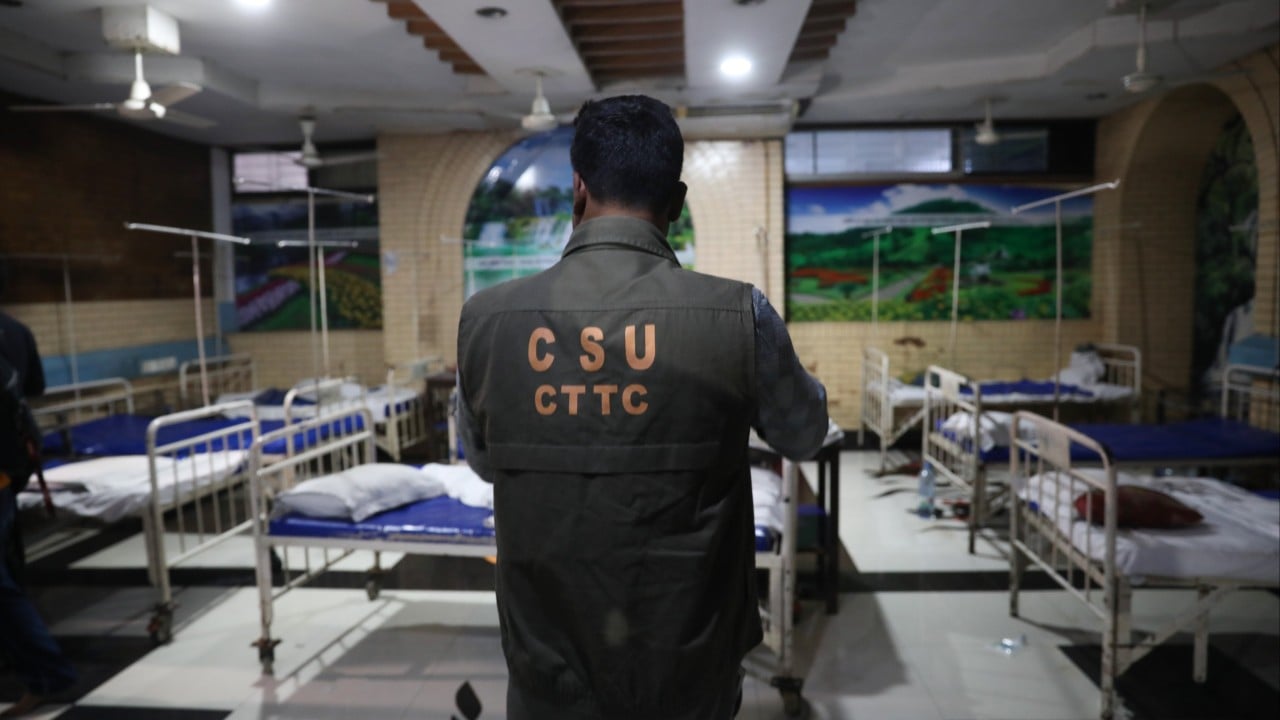
Upon crossing the border, all individuals who have been present in the designated central African nations within the preceding 21 days enter a strict screening funnel. Arriving passengers are triaged based on clinical presentation. Symptomatic individuals bypass secondary screening and undergo immediate transfer to specialized clinical facilities for isolation and diagnostic confirmation. Asymptomatic individuals must submit a legally binding 21-day self-isolation plan. If an individual's private residence or planned accommodation fails to satisfy the epidemiological criteria for safe isolation, the state assumes physical custody, transferring the individual to a designated, secure isolation facility funded and managed by public health authorities.
Viral Mechanics and the Math of Ingestion
The structural design of the 21-day quarantine window is not arbitrary; it is derived from the biological constraints of the pathogen. The current outbreak in central Africa is driven by the Bundibugyo strain of the Ebola virus, a variant characterized by distinct transmission dynamics and clinical severity that complicate traditional syndromic border screening.
Unlike respiratory pathogens, the Ebola virus is characterized by an incubation period that ranges from 2 to 21 days, with a mathematical median typically sitting between 8 and 11 days. The critical epidemiological variable for border control is that individuals are entirely non-infectious during the incubation phase. Pathogen shedding occurs exclusively after the onset of clinical symptoms, which begin with non-specific febrile signs and escalate to severe gastrointestinal and hemorrhagic manifestations.
Because an asymptomatic individual carrying the virus will pass through standard thermal scanners and visual screenings undetected, entry-point screening yields an unacceptably high rate of false negatives. The 21-day mandatory isolation period corresponds directly with the maximum tail-end of the virus's incubation distribution curve. By enforcing a quarantine period equal to the maximum incubation envelope, the border strategy converts an unpredictable variable (the exact point of infection during transit or pre-departure) into a controlled time-bound observation window. If the pathogen is present, the clinical transition from incubation to symptomatic shedding will occur inside the containment zone, preventing community transmission.
The Microeconomics of Interception and the FIFA Variable
The implementation of these measures introduces measurable economic and administrative friction. The decision to accept these inefficiencies points to a shifting risk-benefit calculation catalyzed by a major upcoming demand shock: the FIFA World Cup.
The standard cost-benefit model for public health interventions balances the economic losses incurred by travel suppression against the projected healthcare and societal costs of an outbreak. In a baseline scenario, a weekly volume of 350 travelers represents a highly manageable screening pool. However, the proximity of a global mass-gathering event completely distorts this equation, shifting the policy from a reactive posture to an aggressive, preemptive containment strategy.
The upcoming tournament acts as a massive demand amplifier, accelerating international transit velocities and creating a highly dense environment for potential transmission. In an unconstrained system, mass-gathering events alter the probability of pathogen propagation via specific transmission vectors:
| Vector | Baseline State | Mass-Gathering Event State |
|---|---|---|
| Transit Network Density | Linear, predictable hub-and-spoke routing. | Exponential cross-border connections; hyper-dense terminal nodes. |
| Contact Rate ($c$) | Low localized interactions; easily traceable cohorts. | High non-localized interactions; heterogeneous mixing across international cohorts. |
| Traceability | High; well-defined manifests and predictable locales. | Extremely low; rapid geographic dispersal post-exposure makes contact tracing unviable. |
The introduction of even a single index case into a hyper-dense, highly mixed environment like a stadium or associated transit hub could trigger an exponential increase in the effective reproduction number ($R_t$). Under normal conditions, Ebola’s transmission relies on direct contact with infectious bodily fluids, keeping its basic reproduction number ($R_0$) relatively low (typically between 1.5 and 2.0) compared to airborne pathogens.
However, a mass-gathering environment drastically escalates the contact rate parameter. If an index case becomes symptomatic in a high-density environment, tracking, isolating, and managing contacts becomes an operational impossibility for public health authorities. By implementing a 90-day pause ahead of this event, the Canadian government is deliberately depressing the baseline volume of travelers from high-risk zones, driving down the probability of pathogen introduction to near-zero before the mass influx of global tourists begins.
Operational Bottlenecks and Structural Vulnerabilities
While the framework exhibits high theoretical rigor, its execution introduces significant operational vulnerabilities that limit its long-term viability. A clinical analysis of the strategy reveals three primary points of failure.
1. The Secondary Transit Loophole
The administrative pause enforced via Bill C-12 targets individuals holding passports or applying for visas from the DRC, Uganda, and South Sudan. The primary point of failure rests on the tracking of multi-leg, un-ticketed transit journeys. If a traveler from an affected region departs on a local carrier to a secondary international hub—such as Dubai, Addis Ababa, or Paris—and subsequently purchases a separate ticket to Canada using a secondary passport or an existing, unexpired multi-entry credential, detection relies entirely on self-declaration at primary customs kiosks. Without real-time, global biometric tracking tied to health intelligence databases, the border depends on a human compliance model that can be easily circumvented.
2. Isolation Logistics and Capacity Constraints
The commitment to provide state-managed isolation facilities for travelers lacking a viable private quarantine plan introduces a severe logistical bottleneck. The public health agency has withheld the locations of these facilities, citing security and public safety concerns.
However, the operational constraint is finite capacity. If the volume of arriving passengers requiring state accommodation exceeds the baseline capacity of these secure sites, the system will face a critical decision point: either relax the screening criteria and allow sub-optimal home isolation, or restrict entry further, provoking severe legal challenges under the Canadian Charter of Rights and Freedoms.
3. Diplomatic and Multilateral Erosion
The International Health Regulations (IHR), to which Canada is a signatory, explicitly discourage unilateral border closures and severe travel restrictions unless supported by specific, actionable scientific consensus. By enacting a policy that functions as a de facto regional ban on new arrivals, Canada risks degrading its diplomatic capital with central African states and the World Health Organization. This creates an adverse feedback loop: if nations know they will face immediate economic and travel isolation upon reporting a public health crisis, their incentive to rapidly disclose emerging pathogen clusters diminishes, structurally undermining global early-warning systems.
Strategic Forecast
The current biosecurity framework is bound by a strict sunset clause, with the screening measures under the Quarantine Act set to expire on August 29, 2026, and the IRCC application pause scheduled for evaluation 90 days from inception.
The policy will not be lifted early. The upcoming World Cup guarantees that the federal government will maintain this high-friction posture until the tournament concludes and the associated transient population disperses. The operational play will involve a phased transition in late August, moving away from a blunt, nation-based administrative pause toward a highly targeted, individual risk-profile model. This transition will depend on whether the WHO can successfully deploy experimental therapeutics and contain the geographic footprint of the Bundibugyo strain within the northeastern DRC. Until those epidemiological markers are achieved, the Canadian border will remain an explicitly high-friction zone designed to prioritize absolute risk mitigation over economic and administrative fluidity.
Canada implements stricter travel, immigration measures in response to Ebola crisis
This video provides official government statements and direct technical briefings outlining the exact timelines, legal mechanisms, and specific countries impacted by Canada's updated border protocols.