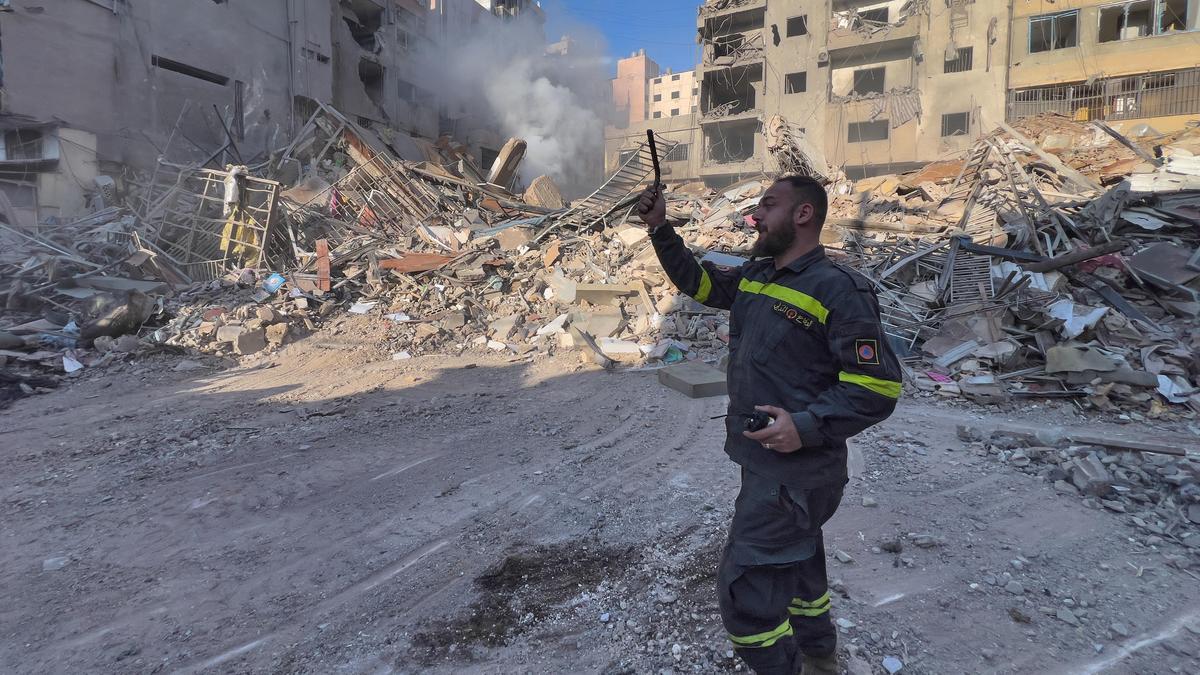
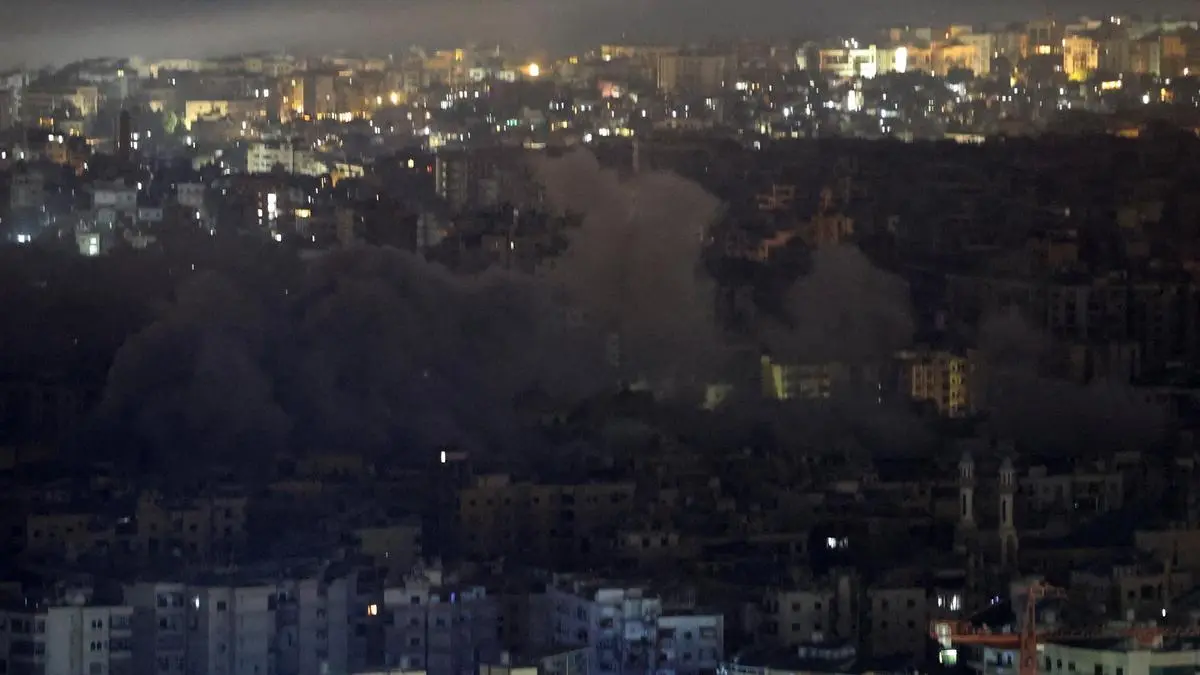
The missiles falling on Tel Aviv and the drones swarming Saudi Arabia’s oil-rich Eastern Province this Tuesday are not just instruments of war; they are the loudest possible "no" to a White House narrative that is increasingly detached from the reality on the ground. President Donald Trump’s claim that the United States is locked in "productive" negotiations with a "respected" Iranian leader has sent global markets into a tailspin of false hope. While Brent crude briefly dipped on the news of a five-day pause in strikes against Iranian energy infrastructure, the smoke rising from a 100-kilogram warhead impact in central Tel Aviv tells a different story. Iran is not talking. It is reloading.
The primary friction point is a fundamental disconnect between Washington’s desire for a market-stabilizing "off-ramp" and Tehran’s perceived necessity for total regional disruption. By denying the existence of talks and simultaneously striking at Israel and Gulf neighbors like Bahrain and Kuwait, the Islamic Republic is signaling that it will not be coached into a diplomatic surrender under the threat of "obliterating" its power plants. For the veteran observer, this isn't just a military escalation; it is a sophisticated play to expose the limitations of American leverage in a region where the old rules of engagement have been set on fire.
The Ghost Negotiator and the Market Trap
The White House insists that Steve Witkoff and Jared Kushner have spent the last 48 hours in deep dialogue with a mystery interlocutor. Trump has described this person as the "most respected" figure left in a leadership structure that has been decapitated by weeks of precision strikes. Yet, in Tehran, the denial is absolute. Parliament Speaker Mohammad Bagher Ghalibaf was blunt, labeling the claims "fake news" designed to manipulate oil prices and provide a breather for an American-Israeli coalition that he claims is trapped in a "quagmire."
There is a cold logic to Ghalibaf’s skepticism. Since the war began on February 28, 2026, the global economy has been held hostage by the effective closure of the Strait of Hormuz. By floating the idea of a breakthrough, the U.S. administration successfully nudged oil prices back toward $100 a barrel, providing temporary relief to a domestic public reeling from skyrocketing fuel costs. But for Iran, such a reprieve only benefits the enemy.
If Tehran acknowledges talks now, it loses its primary weapon: the uncertainty that keeps the world’s energy markets in a state of permanent anxiety. The Iranian leadership knows that as long as the Strait remains a "no-go" zone for tankers linked to the West, they hold a knife to the throat of the global recovery. They aren't looking for a seat at the table; they are looking to see who blinks first when the lights go out in the Gulf.
Why the Gulf States Are Bracing for Impact
While the headlines focus on the exchange between Washington and Tehran, the real "how" of this conflict is being felt in the desalination plants and power grids of America’s partners. Kuwait has already reported partial blackouts after air defense shrapnel severed high-voltage lines. In Saudi Arabia, the destruction of 19 Iranian drones over the Eastern Province is a grim reminder of how thin the margin for error has become.
The "why" behind targeting the Gulf states is clear: Iran is executing a strategy of horizontal escalation. If the U.S. and Israel threaten Iranian power plants, Iran will ensure that no one in the region has electricity. This is a radical shift from previous decades where "neutral" players could hide behind American security umbrellas. Today, if you host a U.S. base or share a maritime border with the Islamic Republic, you are a target.
The Desalination Deadlock
The most overlooked factor in this crisis is water. Most Gulf nations rely almost entirely on desalination for their drinking supply. These facilities are massive, stationary, and highly vulnerable to drone swarms.
- Vulnerability: A single successful strike on a major plant like Ras Al-Khair could displace millions within days.
- The Iranian Calculation: By threatening these "soft" targets, Iran forces the Gulf monarchs to pressure Washington for a total ceasefire, rather than the "conditional pause" Trump is currently offering.
This isn't just about missiles; it's about the fundamental survival of the modern Gulf state. The "Ghalibaf Doctrine" suggests that any attack on Iranian soil will be met with the systematic dismantling of the infrastructure that makes life in the desert possible.
The Strategy of the Disappearing Deadline
Trump’s five-day deadline extension is a classic tactical maneuver, but it carries immense risk. By publicly delaying strikes on Iranian energy hubs, he has signaled that the U.S. is wary of the ecological and economic catastrophe that would follow. It’s a moment of perceived weakness that the IRGC (Islamic Revolutionary Guard Corps) is eager to exploit.
Israeli Prime Minister Benjamin Netanyahu has already broken ranks with the "negotiation" narrative, vowing to continue strikes "with full force" regardless of the five-day window. This split in the coalition provides Iran with the perfect opening to continue its "psychological operations." They can claim the U.S. is losing control of its ally, further destabilizing the diplomatic front.
The reality is that there is no "respected leader" left in Tehran with the authority to sign a deal that looks like anything other than a total retreat. With the death of the previous Supreme Leader in the opening hours of the war, the power has shifted toward hard-line military commanders who view any negotiation as a death sentence. To them, the war is existential. You don't negotiate your own funeral.
Navigating the Rubble of Diplomacy
The coming week will be the most dangerous period of the conflict. If the "talks" are revealed to be a total fabrication—or merely a one-way message sent through a third party like Oman or Pakistan that was never answered—the U.S. will be forced to follow through on its threat to "obliterate" the Iranian grid.
The markets are currently priced for a miracle. They have bought into the idea that Jared Kushner can pull a rabbit out of a hat in a country where his name is synonymous with the very policies that triggered the current conflagration. When that illusion shatters, the spike in oil prices will not be a gradual climb; it will be a vertical jump.
Iran’s decision to strike Tel Aviv on the very day Trump claimed progress is the definitive counter-argument. It is a kinetic rebuttal to a digital claim. As long as the missiles are flying, the "productive conversations" are nothing more than a ghost story told to keep the S&P 500 from falling through the floor. The world should stop looking at the Truth Social posts and start looking at the flight paths of the drones over the Persian Gulf.
Would you like me to analyze the specific impact of the Strait of Hormuz closure on the Asian LNG markets?