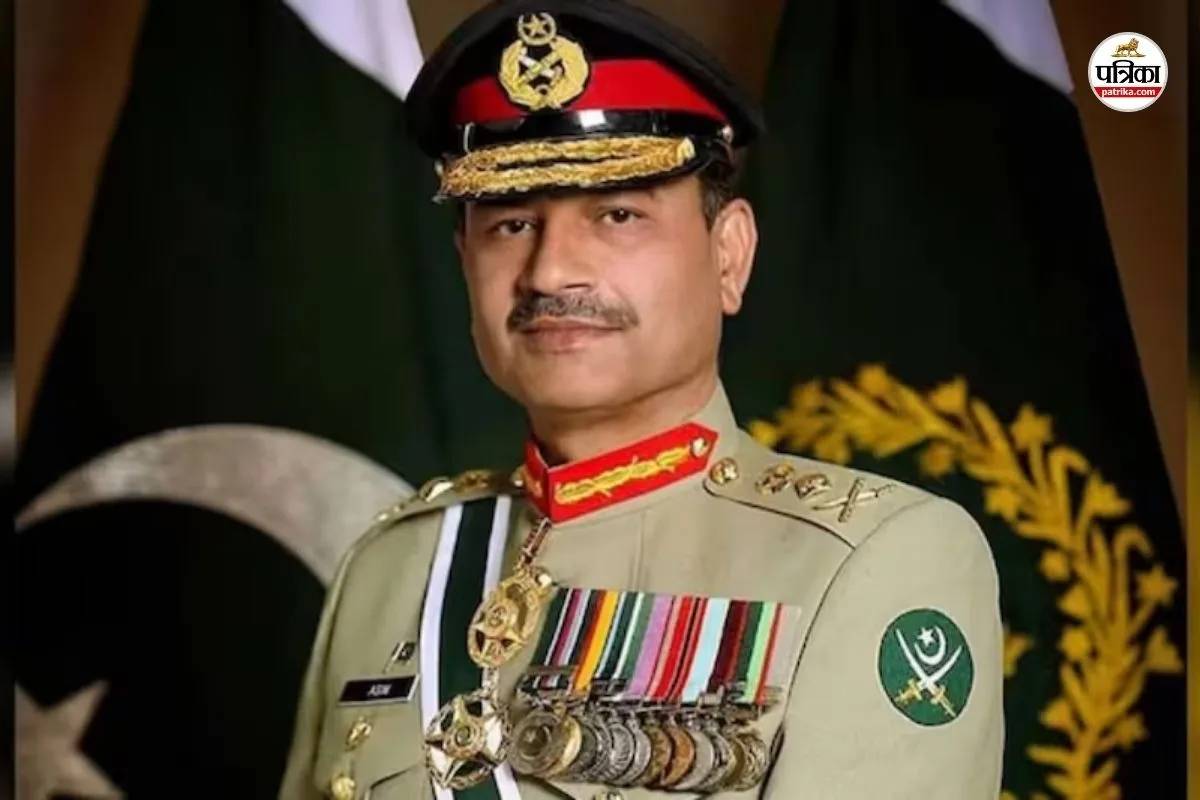
The tarmac at Nur Khan Airbase in Rawalpindi does not sleep, but some nights are quieter than others. On a night thick with tension, a military transport plane idled, its engines a low, vibrating hum that echoed through the concrete barriers. General Asim Munir, the Chief of Army Staff of Pakistan, stepped onto the transport. His destination was not a routine diplomatic summit. He was flying directly into the eye of a gathering geopolitical storm. Destination: Tehran.
To the casual observer scanning the morning headlines, it looked like a standard state visit. The official press releases spoke of "bilateral ties," "border security," and "regional stability." Those words are a mask. They are the dry, clinical language used to cover up the smell of burning fuses.
To understand why Pakistan’s most powerful military man abruptly packed his bags for Iran, you have to look past the official communiqués. You have to look at the map, and you have to understand fear.
Imagine a house hemmed in on all sides by flickering fires. To the east, a historical adversary in India. To the west, an unstable Afghanistan that has turned from a strategic buffer into a hotbed of cross-border militancy. And to the southwest, Iran—a nation currently sitting in the crosshairs of the world's most formidable superpower. For Pakistan, a conflict between the United States and Iran is not a distant news segment. It is a fire in the front yard.
Washington had just issued an ultimatum. The language coming out of the Pentagon was sharp, uncompromising, and heavy with the threat of kinetic action. The message to Tehran was clear: back down, or face the consequences. When America draws a line in the sand in the Middle East, the tremors are felt instantly in Islamabad.
General Munir found himself holding a historical ledger of impossible balances. Pakistan relies heavily on Gulf allies like Saudi Arabia and the United Arab Emirates for financial lifelines and oil. These same Gulf nations view Iran with deep, historical suspicion. Concurrently, Pakistan shares a volatile, nine-hundred-kilometer border with Iran—a stretch of harsh desert and rugged mountains plagued by Baloch separatists who move like ghosts across the frontier.
If Iran is attacked, that border ceases to be a line on a map. It becomes a floodgate.
Consider the immediate human cost that keeps generals awake at night. A strike on Iran triggers a massive, uncontrollable exodus. Hundreds of thousands of refugees pouring into Pakistan’s Balochistan province, a region already strained by economic neglect and local insurgencies. The economic fallout would be immediate. Oil prices would skyrocket, choking a Pakistani economy already surviving on IMF life support.
But the real problem lies elsewhere. It rests in the delicate internal fabric of Pakistan itself. Pakistan is home to the world’s second-largest Shia Muslim population. A war that targets Iran—the global center of Shia authority—runs the immediate risk of igniting sectarian fault lines inside Pakistan's own cities.
Munir was not traveling to Tehran to deliver a message of defiance on behalf of the West, nor was he there to pledge unconditional allegiance to the Iranian leadership. He was acting as a structural shock absorber.
The meetings inside the heavily guarded defense ministries of Tehran were undoubtedly tense. Behind closed doors, the polite protocols of diplomacy vanish. The Iranian leadership, acutely aware of their encirclement, looks at Pakistan with a mixture of necessity and distrust. They know Pakistan is a close ally of the United States; they also know Pakistan cannot afford a war on its western flank.
Munir’s mission was one of cold, pragmatic self-preservation. He needed to extract assurances from Tehran that they would not miscalculate, that they would not provide a catastrophic provocation that would force Washington's hand. At the same time, he had to signal that Pakistan would not allow its soil to be used as a launching pad for any Western military intervention.
It is a high-wire act performed without a safety net. One misstep, one stray drone strike, one poorly timed cross-border skirmish, and the entire apparatus collapses.
The regional landscape is a web of invisible tripwires. In the past, Pakistan tried to play the mediator between Iran and Saudi Arabia, achieving quiet successes when the two regional rivals agreed to restore ties. But an American ultimatum changes the math entirely. The stakes are no longer about diplomatic prestige. They are about survival.
As the General’s plane cleared Iranian airspace on its return journey, the view below revealed a vast, dark expanse of mountains and desert straddling two ancient lands. The lights of the border villages looked small, fragile, and utterly vulnerable to the decisions made in distant, carpeted rooms.
The ultimatum from Washington still stands. The drones are still fueled. The missiles remain locked on their coordinates. Pakistan has done what it always does when the world begins to fracture around it: it has negotiated for time, pleaded for sanity, and prepared for the worst.
The fuses are still short, the air is still dry, and the spark could come from anywhere.