The air down by the Victoria Harbour smells of salt water, charcoal smoke, and old yeast. If you stand long enough near the Central waterfront just as the humidity breaks, you can hear the deep, rhythmic groan of ferry hulls rubbing against their pilings. For most of the year, this city moves at a terrifying velocity. People eat standing up. Escalators hum with the silent panic of commuters late for an exchange that happened five minutes ago.
Then autumn arrives, and something strange happens to the geometry of time.
Consider a hypothetical office worker named Marcus, though you could easily substitute your own reflection. Marcus spends fifty weeks a year staring at glowing spreadsheets on the 38th floor of a concrete monolith, surviving on lukewarm flat whites and hasty canteen lunches. To Marcus, Hong Kong is a vertical maze of sharp angles and neon glare. But for a few fleeting nights every October, the city drops its shoulders.
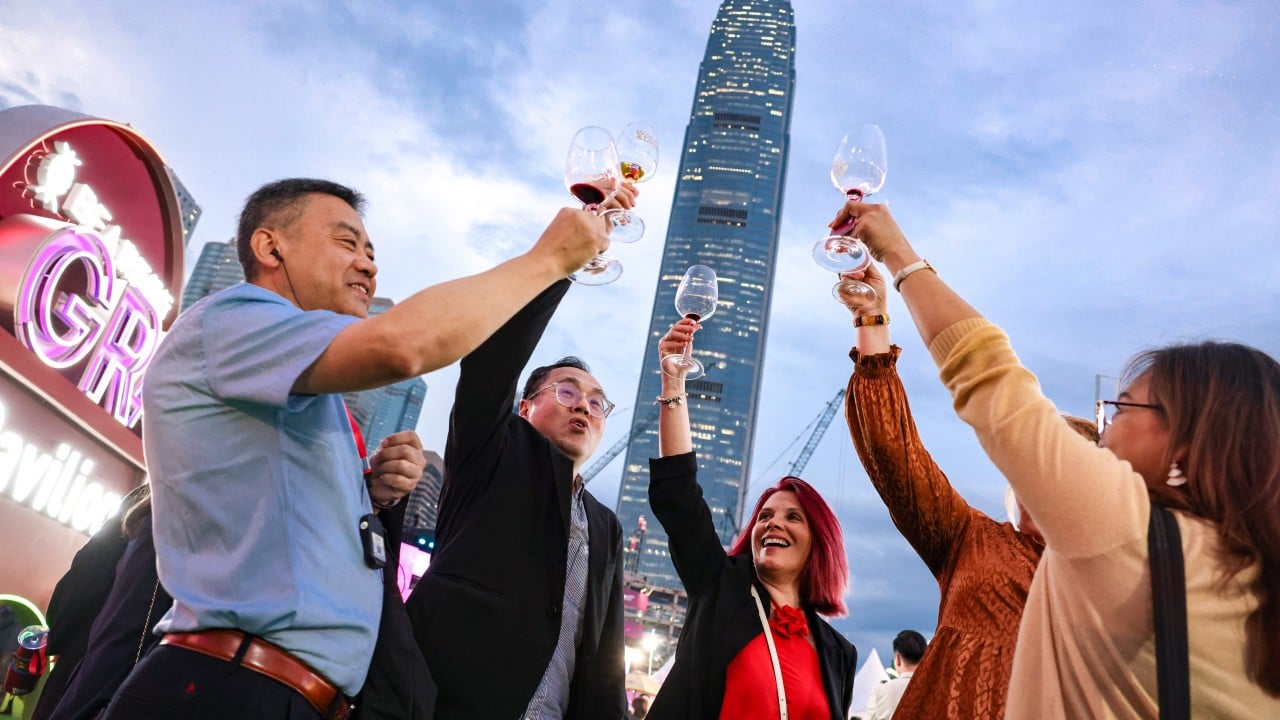
Marcus walks down the granite steps toward the water. The air hits him differently here. It is warm, heavy with the scent of oak-aged tempranillo and seared Wagyu fat. He is not alone. Tens of thousands of people are drifting through a sprawling labyrinth of white tents, their faces illuminated by the amber glow of pendant lights and handheld wine glasses.
This is the annual Wine and Dine Festival. And this year, the machinery behind the magic has shifted in a way that changes everything.
The Mathematics of Thirst
Scale matters. In the architecture of large public spectacles, a ten percent increase in physical footprint sounds like a dry logistical footnote for city planners to file away in an archive. On the ground, however, ten percent more booths means something entirely different. It means breathing room. It means the difference between being shoulder-to-shoulder in a suffocating crush of elbows and actually having enough lateral space to turn toward a stranger and ask, "What are you drinking?"
The organizers didn't just expand the perimeter; they stretched the clock. Extended hours mean the frantic rush to sample a rare Bordeaux before the final bell rings has dissolved into a leisurely, midnight-adjacent amble.
Walk through the gates this season, and you notice the absence of panic. In past years, the festival operated like an open-air trading floor during a market crash. You grabbed your glass, fought your way to a wooden counter, pointed at a label, and swallowed fast to make room for the next wave. It was thrilling, but it was exhausting.
By stretching the hours into the late-night quiet, the festival allows the city to exhale. The vendors, too, look different. Winemakers who flew in from the valleys of Bordeaux, the volcanic slopes of Etna, or the boutique vineyards of Marlborough aren't shouting over the roar of a stampede anymore. They have time to talk about soil composition. They have time to explain why a 2018 syrah tastes like black pepper and scorched earth.
The Sensory Archive
Memory lives in the palate long after the calendar page turns.
Recall the first time you tasted something that completely realigned your understanding of flavor. For many, it happens over a plastic plate holding a piece of char siu so tender it yields to the blunt edge of a plastic fork, paired unexpectedly with a bold, fruit-forward Australian Shiraz. That juxtaposition is the secret heartbeat of this festival. It refuses to stay inside the sterile boundaries of traditional wine-pairing etiquette.
You find yourself wandering past a station specializing in heritage dim sum, watching a chef fold translucent dumpling skins with fingers that move like mechanical butterflies. Next door, a sommelier pours a crisp, mineral-laden Riesling that cuts straight through the richness of the pork.
This is where the human element asserts itself. The festival is not merely a commercial engine designed to move inventory or boost tourism metrics. It is a temporary republic of the senses. For four days, lawyers, taxi drivers, tourists from Kyoto, and university students from Pok Fu Lam share the exact same sticky high-top tables. They argue about the finish on a Chilean cabernet. They laugh when someone spills a drop on their white sneakers. They remember, briefly, that the city belongs to the people who inhabit it, not just the corporations that occupy its towers.
Beyond the Gates
The expansion of the festival ripples far beyond the waterfront perimeter. Down the street in Sheung Wan, independent wine importers report a surge in curious walk-ins days after visitors sample an obscure orange wine at a harbor-front booth. Restaurants across the districts revamp their autumn menus to mirror the playful pairings debuted beneath the tents.
Economics often gets discussed in cold integers—visitor counts, economic impact reports, hotel occupancy rates. But the true ledger of an event like this is written in human confidence. It tells a story about a metropolis reclaiming its rhythm after years of turbulence and uncertainty. It is a physical manifestation of resilience, served in a crystal-thin glass that catches the reflection of a million city lights bouncing off the dark water.
Stand by the harbor at midnight now. The last ferries are making their final runs across the ink-black channel. The crowd has thinned to a steady trickle of couples walking hand-in-hand, their laughter echoing off the stone promenade. The booths are dark, the wine has settled, and the city is finally quiet enough to hear itself breathe.


