The headlines are bleeding heart and predictable. A soldier’s wife gets picked up by ICE after trying to enter a military base. The public cries "betrayal." The activists scream about "military families." The government eventually flinches and releases her. Everyone goes home feeling like justice was served or a tragedy was averted.
They are all wrong. If you found value in this post, you should check out: this related article.
This isn't a story about a broken immigration system or a cruel enforcement agency. It is a story about the total collapse of administrative competence at the intersection of national security and federal law. We are watching a high-stakes game of "Not My Job" played with the credentials of the United States military. If you think the "win" here is that she was released, you’re missing the terrifying reality of how easy it is to trigger a federal crisis through simple bureaucratic laziness.
The Illusion of the Military Sanctuary
The common consensus is that a military installation should be a safe harbor for the families of those who serve. That is a sentimental lie. A military base is a high-security job site. For another look on this event, check out the latest update from TIME.
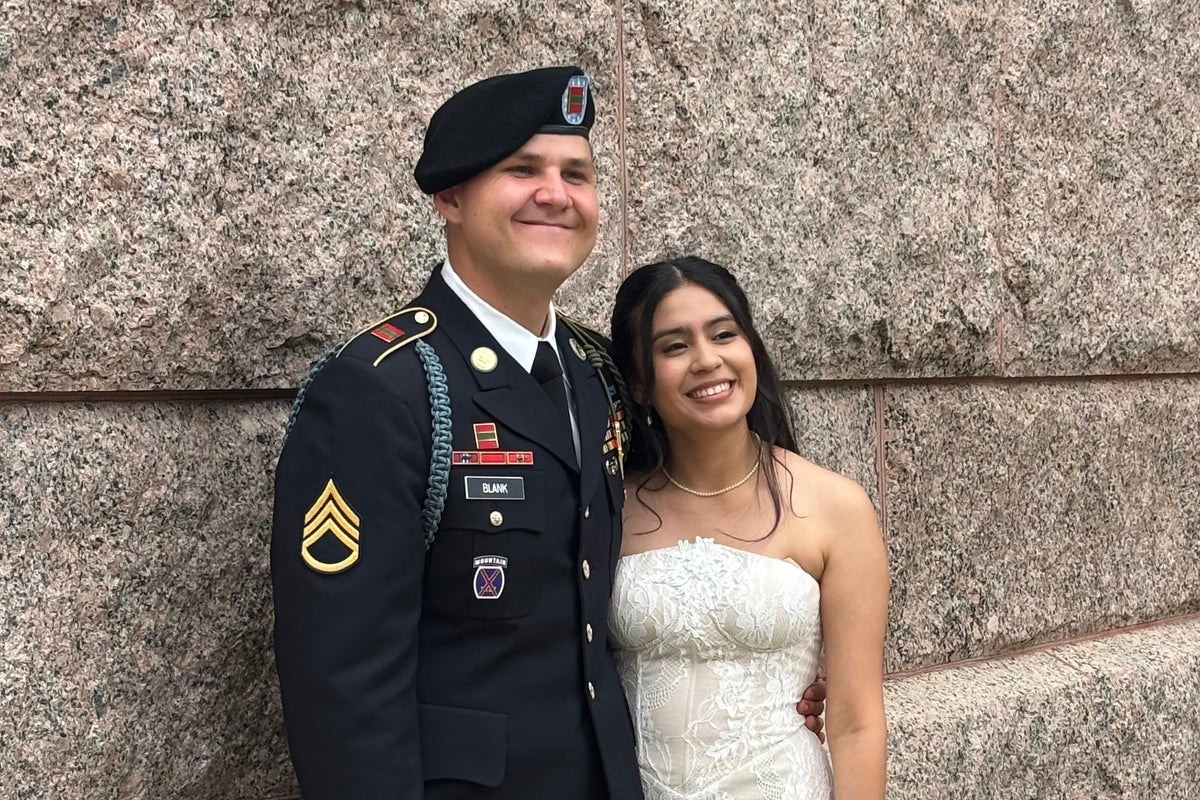
When Sandra de la Cruz—the wife of a U.S. Army soldier—showed up at the Fort Bliss gate without a valid Real ID, she didn't just stumble into an immigration check. She tripped a security protocol that has been standard for years. The "shock" expressed by the media suggests that military bases should somehow ignore federal warrants if the person in question is wearing a wedding ring.
I’ve seen this play out in corporate security and federal contracting for decades. When you have a gap between policy and sentiment, people get hurt. The "lazy consensus" here is that ICE was being aggressive. The reality? The Army didn't know how to handle its own gate.
Military ID is Not a Get Out of Jail Free Card
Let’s dismantle the biggest misconception first: the idea that being a military spouse grants a legal "cloak" against federal law.
In most of these cases, the individual has a pending deportation order or a "red flag" in the National Crime Information Center (NCIC) database. When a guard scans an ID at the gate of a base like Fort Bliss or Fort Drum, that system doesn't care if your husband is a Private First Class or a General. It cares about the warrant.
The failure isn't that ICE picked her up. The failure is that the Department of Defense (DoD) and the Department of Homeland Security (DHS) have zero functional synchronicity.
- The DoD wants to keep the base secure but doesn't want the PR nightmare of arresting "Army Moms."
- The DHS wants to enforce the law but doesn't have the manpower to monitor every base gate.
The result is a messy, inconsistent application of law that depends entirely on which MP is working the shift. That’s not a legal system; that’s a lottery.
The Parole in Place Trap
Activists often point to "Parole in Place" (PIP) as the solution. For the uninitiated, PIP allows certain undocumented family members of U.S. military personnel to stay in the country and apply for a green card without leaving.
But here is the bitter truth no one admits: PIP is a bureaucratic band-aid on a gunshot wound.
It is discretionary. It is slow. And most importantly, it creates a false sense of security. I have seen families rely on the hope of PIP while ignoring active removal orders from years prior. When they eventually hit a federal checkpoint—like a military base gate—the "hope" vanishes and the law takes over.
If you are a soldier and your spouse has an active removal order, taking them to the base gate is not "living your life." It is professional and personal negligence. It’s harsh, but it’s the truth. The military environment is the most scrutinized square footage in the country. Expecting "don't ask, don't tell" for immigration status at a high-security checkpoint is delusional.
Security vs. Sentimentality
The public outcry usually forces a "release on recognizance." This is exactly what happened in the recent case involving the soldier’s wife at Fort Bliss. She was released to pursue her legal options.
Does this solve the problem? No. It just pushes the problem back into the shadows until the next time she needs to pass a federal background check.
We are currently prioritizing "the optics of the week" over actual policy reform. If the government truly cared about military readiness, they would automate the PIP process for every active-duty family member the moment they are enrolled in DEERS (the military's personnel database).
Instead, we have a system where:
- The military invites the spouse on base.
- The security system flags the spouse as a "threat" or "fugitive."
- ICE is legally obligated to respond.
- The media creates a firestorm.
- ICE releases the spouse.
This is a loop of pure, unadulterated inefficiency. It wastes thousands of man-hours and millions in taxpayer dollars to achieve a net result of nothing.
The National Security Blind Spot
Let’s talk about the counter-intuitive danger of these "compassionate releases."
When we allow public pressure to dictate who gets processed at a military gate, we create a massive security hole. If an individual with an active warrant can be released simply because they are married to a soldier, we have successfully signaled that the gate security is negotiable.
I’ve worked in environments where "exceptions" became the rule. It always ends in a breach. Security must be binary. You are either cleared to enter, or you are not. By mixing immigration politics with base access, we are muddling the primary mission of the military: protecting the installation.
Imagine a scenario where a foreign intelligence asset marries a low-level service member specifically to gain base access, knowing that any attempt by ICE to intervene will be met with a wall of "military family" PR. It’s not just a plot for a spy novel; it’s a glaring vulnerability created by our refusal to have a consistent, hard-line policy.
Why the "Betrayal" Narrative is Weak
The "betrayal" argument suggests that by arresting a spouse, the government is failing the soldier.
Actually, the government is failing the soldier by not providing clear legal pathways before they reach the gate. The betrayal isn't the arrest; it's the lack of guidance. The military is excellent at training you to strip a rifle in the dark, but it is catastrophic at helping you navigate the USCIS (U.S. Citizenship and Immigration Services) paperwork for your family.
Soldiers are told to keep their "house in order." But when the house is an immigration nightmare, the leadership often looks the other way until the handcuffs come out. That’s not leadership. That’s cowardice.
The Cold Reality of the "Release"
When a spouse is released after an arrest at a base, the media treats it as a victory. It isn't.
She is still undocumented. She still has no work permit. She still faces a future of court dates and legal fees that will drain her husband’s modest E-4 salary. The "release" is a temporary stay of execution that does nothing to provide the stability a military family actually needs.
If we want to stop this cycle, we have to stop treating these cases as "heartbreaking anomalies" and start treating them as "systemic failures of the DoD-DHS interface."
Stop Fixing the Wrong Problem
The activists want ICE to stop arresting people at bases.
The hardliners want more arrests at bases.
Both are wrong.
The goal should be to ensure that no person with an unresolved legal status ever reaches the gate in the first place. This requires a mandatory, streamlined legal audit for every service member with a foreign-born spouse. Not a suggestion. A requirement.
Until then, we are just watching theater. We are watching the government arrest people it has no intention of deporting, to satisfy a security protocol it has no intention of enforcing, while families are used as props in a never-ending political skirmish.
Stop asking why she was arrested. Start asking why the system allowed her to be in a position where an arrest was the only possible outcome of a Tuesday morning commute.
The gate is doing exactly what it was designed to do: flag people who shouldn't be there. If you want a different result, change the law, not the security guard.
Fix the paperwork or stop pretending the gate matters.