The Architecture of an Ego
A gold-leafed ballroom in Palm Beach is not a vacuum. It is a resonant chamber. Every sound, every flicker of applause, bounces off the walls and returns to the center of the room with increased velocity. For Donald Trump, this feedback loop isn't just a byproduct of his lifestyle; it is the oxygen that sustains his political and personal existence.
Intelligence officers have a specific term for the psychological profile of a target: the "vulnerability assessment." When foreign adversaries look at the 45th and potentially 47th President of the United States, they don't see a standard ideological opponent. They see a specific, identifiable need for constant, unblinking affirmation. To a professional manipulator, a man who requires a daily diet of praise is not a threat. He is an opportunity.
Consider the way a master angler operates. They don't jump into the water to wrestle the fish. They study the current, choose the exact lure that glimmers in the light, and wait for the creature to follow its own natural instincts. Foreign leaders in Moscow, Beijing, and Riyadh have become expert anglers. They have realized that traditional diplomacy—the dry exchange of white papers and treaty drafts—is useless here. Instead, they trade in the currency of ego.
The Flattery Offensive
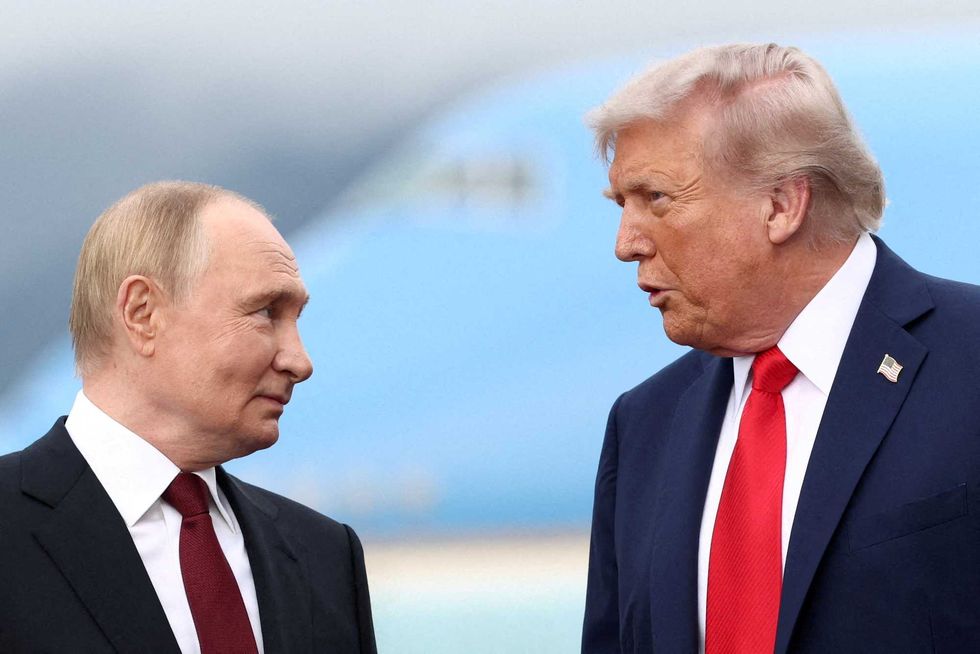
The mechanics of this manipulation are sophisticated, yet they rely on a primitive human drive. Most people want to be liked. A narcissist needs to be adored. When Vladimir Putin calls a leader "brilliant" or "talented," he isn't making a geopolitical assessment for the Russian press. He is sending a signal directly to the nervous system of his counterpart.
It is a form of psychological hacking. By bypassing the State Department, the National Security Council, and the layers of seasoned diplomats whose jobs are to protect American interests, foreign foes can go straight to the source. They create a "private channel" of ego-stroking that makes the official channels look like nagging parents or obstructionist bureaucrats.
Think of a hypothetical scenario where a high-level advisor presents a briefing on trade deficits. It’s dense. It’s filled with charts and warnings about long-term stability. It’s boring. Now, imagine a phone call from a foreign strongman who tells the President that he is the only one brave enough to fix the world, that his "genius" is misunderstood by his own staff.
Who wins that tug-of-war?
The data suggests the flatterer wins every time. When a leader's sense of self is tied to the perception of being a "winner," any criticism—even constructive, factual criticism from his own intelligence community—is perceived as a personal attack. Conversely, any praise from an adversary is welcomed as a rare moment of honesty.
The Invisible Stakes of a Handshake
The danger isn't just in the words. It is in the concessions that follow. When a dictator rolls out the red carpet, stages a massive parade, or builds a literal monument to a visiting leader, they aren't doing it out of respect. They are doing it to soften the ground.
We saw this in the "love letters" exchanged with Kim Jong Un. To the American public, the idea of a brutal dictator writing poetic missives to a U.S. President seemed absurd, even comical. But to the North Korean regime, it was a tactical masterpiece. They realized that by providing the affirmation Trump craved, they could stall sanctions, gain international legitimacy, and keep their nuclear program humming along while the American President boasted about their "special bond."
This is the hidden cost of the mirror. When you are looking for your own reflection in the eyes of an adversary, you aren't looking at the map. You aren't seeing the troop movements on the border or the cyber-attacks on your power grid. You are too busy admiring the glow of the gold leaf.
The world’s most dangerous players—men who have spent decades climbing over bodies to reach the top—do not give praise for free. They are some of the most transactional humans on the planet. If they are giving you a gift of affirmation, they are expecting a payment in sovereignty, territory, or influence.
The Silence of the Experts
The real tragedy of this dynamic is the systematic hollow-out of the American protective apparatus. Imagine a ship where the captain refuses to listen to the navigator because the navigator keeps pointing out icebergs. The captain prefers the guy in the rowboat nearby who keeps shouting that the ship looks beautiful and the water is perfectly warm.
Over time, the navigators quit. They get fired. They stop speaking up.
This isn't a partisan point; it's a structural one. The U.S. presidency is designed to be a collaborative office, supported by millions of man-hours of intelligence and research. But when that office becomes a theater for one man's ego, the "deep state"—a term often used as a pejorative—is actually just the collective memory and expertise of the nation being ignored.
Adversaries know this. They know that if they can isolate the leader from his experts by feeding his paranoia and his pride, they can win battles without firing a single shot. They turn the President's own temperament into a weapon against his country. It is the ultimate asymmetrical warfare.
The Mirror Cracks
The human element here is deeply relatable. We have all known someone who is "allergic to the truth," someone who surrounds themselves with "yes-men" because the reality of their own flaws is too painful to acknowledge. Usually, this results in a failed business or a messy divorce. When it happens at the level of the nuclear triad, the consequences are existential.
Foreign foes aren't just manipulating a man; they are manipulating the very idea of American strength. They want the world to see that the superpower is led by its vanity. They want our allies to see that a few kind words from a tyrant can undo seventy years of security agreements.
It works because it feels good. Truth is often cold, jagged, and demanding. Flattery is warm, smooth, and effortless.
The strategy of our enemies is to keep the room warm. To keep the applause going. To make sure the mirror stays polished so that the leader never has to look away and see the shadows lengthening across the map.
In this high-stakes game of psychological chess, the board is not made of wood or stone. It is made of nerves, dopamine, and the desperate, unquenchable need to be told that you are the best, the brightest, and the only one who matters. As long as that need exists, the lure will be in the water. And the angler will be waiting.