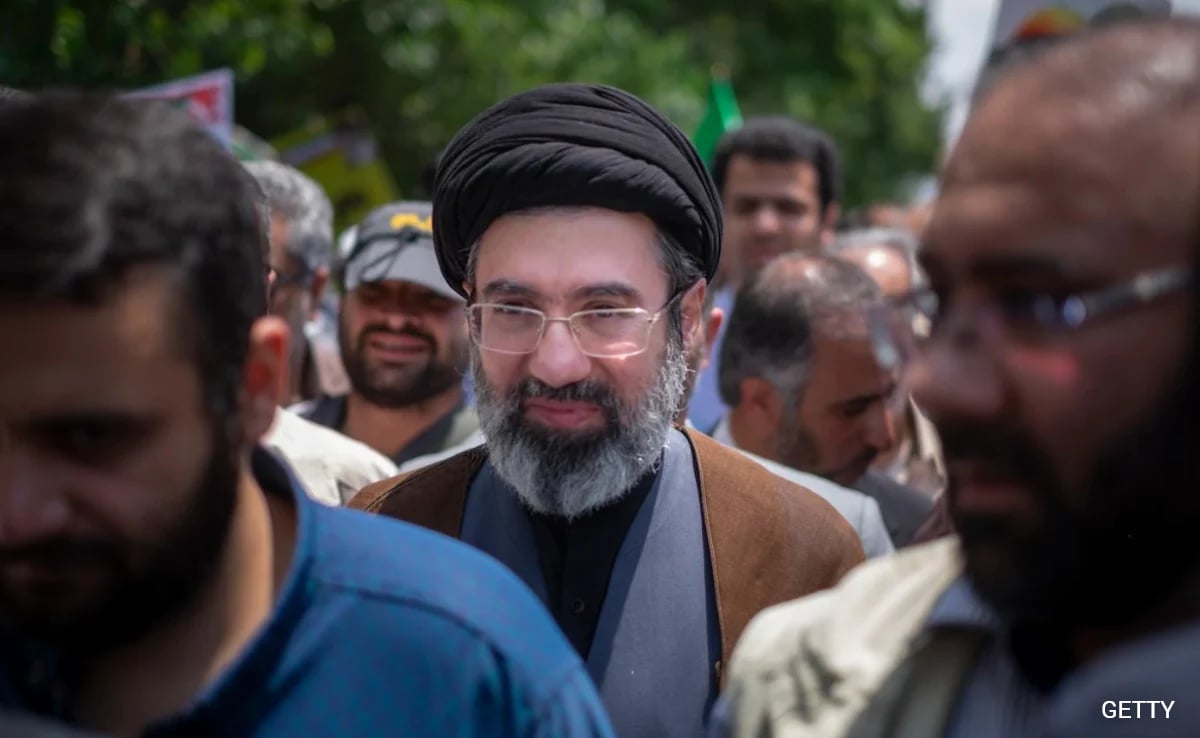
The shadow man of Tehran just stepped into the light, and he did it with a pen rather than a sword. For decades, Mojtaba Khamenei has been the ghost in the machine of Iranian politics. He’s the second son of Supreme Leader Ali Khamenei, a man often whispered about as the real power behind the throne but rarely seen in the public eye. Now, reports suggest he played a massive role in brokering a quiet truce deal with the United States. This isn't just another diplomatic blip. It’s a seismic shift in how the Islamic Republic operates and who's actually running the show when the stakes are highest.
If you’ve been following the Middle East, you know the tension between Washington and Tehran usually feels like a ticking time bomb. But behind the scenes, a different story was unfolding. Mojtaba, a man who has spent most of his life avoiding cameras and official titles, reportedly acted as the central figure in high-stakes negotiations. He didn't just attend meetings. He directed the flow. This move suggests that the succession plan in Iran is no longer a matter of "if" but "when," and the heir apparent is already testing his diplomatic muscles.
Why Mojtaba Khamenei is the focus now
For years, the intelligence community viewed Mojtaba as a hardliner’s hardliner. He was the guy linked to the suppression of the 2009 Green Movement. He was the one who allegedly controlled the Basij militia from the shadows. So, why is he suddenly the face of a de-escalation effort with the Great Satan?
It’s about survival. The Iranian regime is facing an internal pressure cooker of economic decay and public dissent. They need a win. By positioning Mojtaba as the architect of a "truce" or a "grand understanding" with the West, the old guard is trying to give him a veneer of statesman-like pragmatism. It makes him look like a leader who can actually solve problems instead of just shouting slogans at a podium.
The report indicates that this deal wasn't about a formal treaty. Those are too hard to pass through a hostile US Congress. Instead, it was a series of "unwritten" agreements. Iran slows down its uranium enrichment. The US looks the other way on certain oil sanctions. Both sides stop shooting at each other's proxies for a while. It’s a pragmatic, dirty, and effective way to lower the temperature without anyone having to sign a piece of paper that might get them killed at home.
The end of the MIA era
Most people didn't even know what Mojtaba’s voice sounded like until recently. He’s been "largely MIA" by design. In the Byzantine world of Iranian clerical politics, being too visible makes you a target. You stay in the shadows until the path to the top is clear.
But things changed when his father’s health became a constant topic of speculation. The Supreme Leader is 86. The clock is ticking. For Mojtaba to take the seat, he needs more than just a famous last name. He needs the backing of the Islamic Revolutionary Guard Corps (IRGC) and the religious establishment in Qom. More importantly, he needs to show he can handle the Americans.
This reported truce is his debutante ball. It signals to the world—and to the power brokers in Tehran—that he has the authority to make the big calls. If he can manage a relationship with the US, even a cold and hostile one, he proves he can protect the regime’s interests better than any of the shouting heads in the Majlis.
Breaking the cycle of failed deals
The 2015 JCPOA was a formal, multi-lateral nightmare that fell apart the moment a new administration took office in DC. This new "Mojtaba-led" approach is different. It’s bilateral. It’s quiet. It relies on a "don't ask, don't tell" policy regarding enforcement.
- Sanction Relief: Iran gets access to frozen funds in exchange for specific behavioral shifts.
- Regional Stability: A temporary freeze on high-profile attacks by Iranian-backed groups.
- Nuclear Guardrails: Keeping enrichment levels just below the "red line" that would trigger a regional war.
It’s a cynical arrangement. Both sides know it’s temporary. But for Mojtaba, it’s a masterclass in optics. He gets the credit for the influx of cash and the reduction in war talk without having to publicly shake hands with an American diplomat.
The internal battle for the soul of the Revolution
Don't think for a second that this move is popular across the board in Tehran. The "ultra-hardliners" see any talk with the US as a betrayal. They want total defiance. Mojtaba’s involvement in this truce is a direct challenge to that faction. He’s telling them that the Khamenei brand is still in charge, and that brand is willing to be flexible to ensure the system’s longevity.
This is where it gets interesting for those of us watching from the outside. If Mojtaba is the one cutting deals, it means he’s secured the loyalty of the IRGC's top brass. They are the ones who benefit most from the "shadow economy" that thrives under these kinds of unwritten truces. They get to sell oil, the money flows back in, and they keep their grip on power.
We’re seeing a shift from ideological purity to cold, hard realism. It’s a move that mirrors how China transitioned after Mao. The rhetoric stays the same, but the actions become increasingly focused on economic stability and regime preservation. Mojtaba is the face of this "New Iran"—a place where the slogans are still loud, but the deals are made in backrooms with the very enemies they claim to hate.
What this means for the global oil market
Whenever Iran and the US stop glaring at each other through gun sights, the markets react. This truce has already led to a more "lenient" enforcement of oil sanctions. Iranian crude is flowing into global markets at higher volumes than we've seen in years, mostly headed to China.
This isn't an accident. It’s a pressure valve. The US wants lower gas prices to keep inflation in check. Iran wants the cash. Mojtaba’s role in facilitating this shows he understands the global economic levers. He’s not just a cleric; he’s a strategist who knows that a starving population is a dangerous population. By easing the economic strangulation, he buys himself and his father’s regime more time.
The risk of the shadow deal
Shadow deals are fragile. They rely on the personal credibility of the people making them. Because nothing is on paper, either side can walk away at any moment. If a proxy group gets out of line and kills a US service member, the truce is dead. If the US decides to seize a tanker, the deal is off.
Mojtaba is betting his political future on this stability. If the truce holds, he’s a genius. If it fails and leads to a direct confrontation, his rivals will use it to bury his ambitions forever. It’s a high-stakes gamble that shows just how confident—or desperate—he has become.
The path to the Supreme Leadership
Everything Mojtaba does right now should be viewed through the lens of succession. The Assembly of Experts, the body responsible for choosing the next leader, is already being shaped by the Khamenei inner circle. By taking charge of the most sensitive file in Iranian foreign policy—the relationship with the US—Mojtaba has effectively neutralized his competition.
Who else can claim to have de-escalated a potential war while keeping the revolutionary pillars intact? Not the sitting president, who is often seen as a mere administrator. Not the mid-level clerics in Qom. Only Mojtaba.
He’s moved from being the guy "largely MIA" to the indispensable man. He’s building a resume that the IRGC can get behind. They want stability. They want their business interests protected. They want a leader who can navigate the shark-infested waters of international diplomacy without drowning. Right now, Mojtaba is the only one swimming.
Stop waiting for a public announcement
If you're waiting for a joint press conference or a signed treaty, you're looking at the wrong map. That’s not how this works. The "truce" is visible in what doesn't happen. It’s the attack that was called off. It’s the shipment of oil that wasn't seized. It’s the rhetoric that was slightly dialed back during a religious holiday.
Mojtaba Khamenei has mastered the art of the invisible win. He’s shown that he can operate at the highest levels of global power without needing a title or a podium. This is the reality of the new Middle East. The power isn't always where the cameras are pointing. It’s in the quiet rooms where the sons of leaders make the deals that keep the world turning.
Watch the oil prices. Watch the enrichment levels in Natanz. But mostly, watch the names that don't appear in the official state media. When Mojtaba Khamenei starts being mentioned as a "facilitator" or a "representative of the Office of the Supreme Leader," you’ll know the transition is almost complete. He’s no longer the ghost in the machine. He’s the operator.
The US knows it. The IRGC knows it. Now the rest of the world has to catch up. The truce isn't a peace treaty; it’s a job interview for the most powerful position in Iran. And by all accounts, Mojtaba is passing with flying colors.