Thirty-five thousand feet. It is a strange altitude to contemplate mortality. Down here, on the solid, unyielding earth, we take gravity for granted. We walk on pavements that do not shift, breathe air that does not thin, and trust in invisible pacts made with engineers we will never meet. We board a metal tube, slide into a narrow seat, plug our headphones in, and surrender our lives to the physics of lift, thrust, and corporate accountability.
We assume the metal shell will hold. We assume the window beside us, a mere pane of acrylic and composite layers, is a fortress wall. For another look, consider: this related article.
Then comes the sound.
It is not a polite rattle. It is a tearing. A violent, concussive scream of compressed air rushing to escape a dying cabin. Further analysis on this matter has been shared by Travel + Leisure.
Picture, for a moment, a routine flight on a Ryanair jet. Imagine the hum of the Pratt and Whitney engines—a low, rhythmic vibration that usually lulls passengers to sleep or keeps them glued to their glowing screens. Passengers are reading, chatting, perhaps nursing a lukewarm cup of airport coffee. The mundane rhythm of mass transit.
Now, strip that away in a fraction of a second.
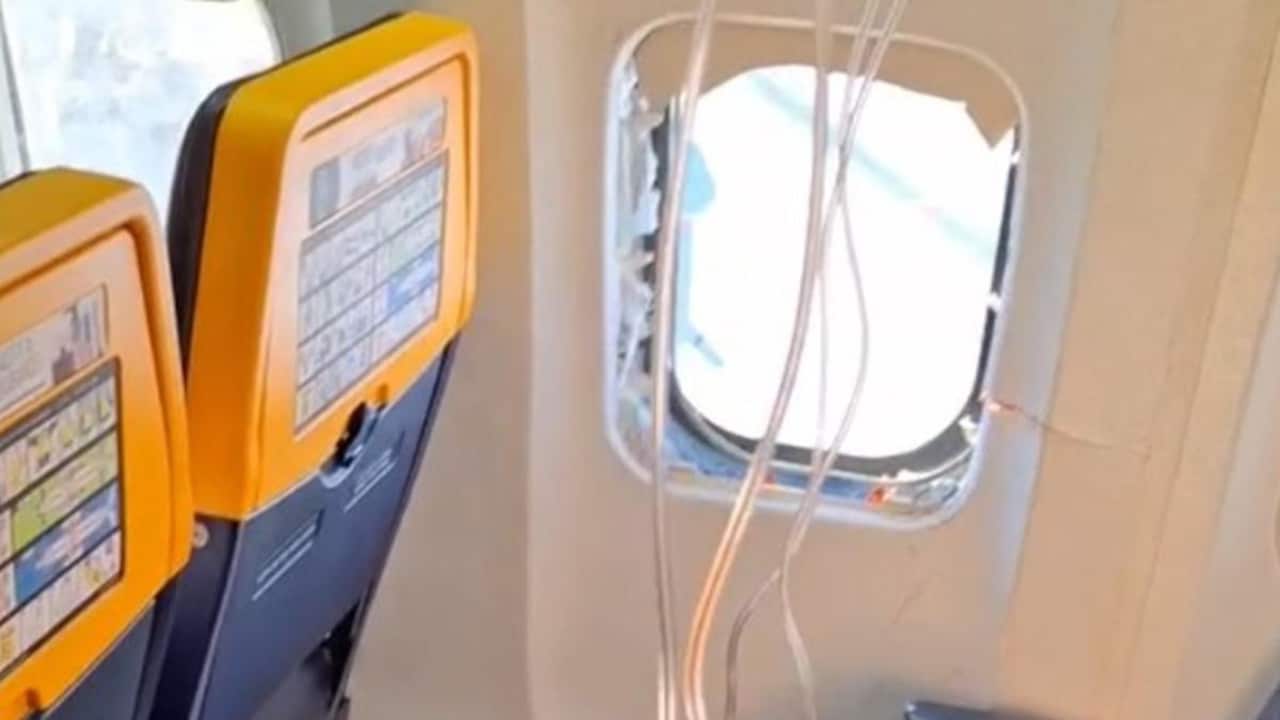
A Boeing engine, buried in internal stress and microscopic fractures, sheds a part. Not a loose bolt. A structural fragment. It becomes a high-speed projectile, hurled outward with terrifying kinetic energy. It strikes the fuselage. It smashes directly into the window of the aircraft.
Crack. Shatter. Gone.
The cabin pressure does not leak; it explodes.
In aviation safety reports, this is logged as an uncontained engine failure followed by rapid decompression. In dry legal briefs, it is a failure of maintenance intervals, material fatigue, and quality control. But to human nerves, it is the threshold of the abyss.
Let us be completely transparent about the physical reality here. When a window fails at cruising altitude, the pressure differential between the freezing, thin atmosphere outside and the pressurized cabin inside creates an instantaneous vacuum. Air rushes outward with the force of a hurricane.
And sometimes, it takes more than air.
Reports detailing such terrifying airborne incidents reveal a nightmare scenario that haunts every nervous flyer: a man's head pulled dangerously outward by the fierce, howling vacuum of the breach. Imagine the sheer terror of that split second. The rushing wind deafening all thought. The sudden, brutal realization that the thin plastic barrier separating you from freezing oblivion has simply vanished.
How does a man survive that? Pure, desperate luck, combined with the frantic, heroic intervention of fellow passengers who anchor themselves against the gale to pull him back from the edge.
Behind every chilling headline about Boeing engine parts and budget airline windows lies a deeper, more unsettling question. How did we get here? How did the skies—once treated as a cathedral of modern human achievement—become a chessboard for cost-cutting, deferred maintenance, and manufacturing shortcuts?
To understand this, we have to look past the flashing lights of breaking news and examine the invisible architecture of modern aviation.
Air travel is arguably the safest mode of transportation in human history, strictly speaking. Statistically, you are more likely to be struck by lightning while winning the lottery than to perish in a commercial jetliner. The system works because it is built on redundancy. If one engine fails, the other can fly the plane. If one system breaks, a backup cuts in.
Yet, redundancy only works if the parts themselves are trustworthy.
When a manufacturing giant like Boeing faces intense market pressure to deliver aircraft faster, cheaper, and in greater volume, corners do not always get cut with a chainsaw. Often, they are shaved away with a scalpel. A slightly looser tolerance here. A deferred inspection there. A reliance on software patches to mask physical hardware aging.
Consider the engine. A modern turbofan is a marvel of thermodynamic efficiency. Inside its housing, turbine blades spin at blistering speeds under immense heat, enduring forces that would warp steel girders in seconds. They are engineered to microscopic tolerances. They operate in a state of perpetual, controlled violence.
When those parts fail, they do not simply stop working. They shatter.
And when an uncontained failure occurs—when shrapnel bursts through the engine casing—the structural integrity of the entire wing and fuselage is tested to its absolute limit. If the casing holds, the plane lands safely, and the incident becomes a minor footnote in an internal FAA safety log. If the casing fails, and the shrapnel finds a path toward the passenger cabin, the invisible pact between passenger and airline is instantly shattered.
We must confront an uncomfortable truth about the modern travel economy. Ryanair, the airline operating the flight in question, is a titan of low-cost efficiency. Their business model relies on turning planes around in minutes, maximizing flight hours, and keeping operational costs surgically low. There is nothing inherently unsafe about low-cost aviation; budget airlines must adhere to the exact same rigorous safety certifications as legacy carriers.
However, when budget carriers operate aircraft powered by engines facing widespread manufacturing and durability scrutiny—such as specific Pratt and Whitney powerplants that have plagued global airlines with recall and inspection crises—the strain on the entire ecosystem becomes palpable.
Maintenance schedules tighten. Supply chains for replacement parts stretch thin. Mechanics are asked to do more with less time.
And the passenger sits in row twelve, completely unaware that an invisible clock is ticking down inside a turbine housing three hundred feet away.
Let us step back into the cabin after the chaos subsides.
The oxygen masks have dropped, dangling like yellow fruit from the ceiling. The pilot's voice crackles over the intercom—calm, measured, professional—announcing an emergency diversion. The descent is steep, aggressive, terrifying. Every creak of the airframe is magnified a hundredfold in the minds of the terrified passengers.
When the wheels finally slam onto the tarmac, there is no cheering. Only stunned silence. Trembling hands pulling out phones to text loved ones. The deep, visceral realization of how fragile our engineered safety truly is.
What happens after the doors open?
The investigations begin. Regulators issue directives. Airlines point fingers at manufacturers, and manufacturers blame supply chain disruptions or maintenance oversight. Press releases are drafted. Stock prices dip for a day or two, then recover.
The system absorbs the shock. It always does.
But for the man whose head was pulled toward the freezing sky, and for the people sitting in adjacent seats who watched human fragility laid bare against the cold expanse of the stratosphere, the world has permanently changed. They will never board a plane and look out the window the same way again. They will see the seam lines. They will notice the vibration. They will remember the wind.
Safety in the skies is not a permanent state. It is an ongoing, exhausting struggle against entropy, corporate complacency, and mechanical fatigue. It requires vigilance that never sleeps, inspections that are never rushed, and a culture that values human life far above profit margins.
The next time you slide into your seat, fasten your seatbelt, and stare out at the massive engine glowing in the morning sun, listen closely to the hum.
It is a marvel of human ingenuity. But it is also a reminder. We are flying on the edge of a precipice, trusting our lives to the invisible integrity of strangers.
Let us hope they remember how much is riding on every single bolt.