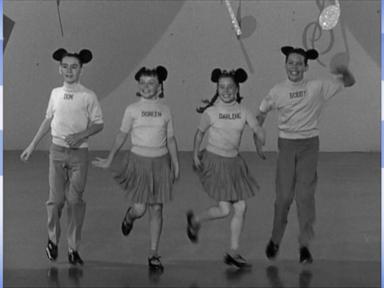
Disney+ has commissioned a pilot for a modernized iteration of The Mickey Mouse Club, outsourced to Fulwell 73. To view this simply as an exercise in millennial nostalgia or a structural filler for a streaming catalog is to misunderstand the foundational economics of the Walt Disney Company. This program historically operates as the research and development (R&D) laboratory for the company’s most lucrative intellectual property: human capital.
By analyzing the structural mechanisms of the variety show format, we can map the exact financial and operational architecture that transforms raw adolescent talent into multi-decade revenue engines.
The Talent Incubation Value Chain
The entertainment industry typically relies on open-market talent acquisition, purchasing established stars at a premium. The Mickey Mouse Club framework inverses this model through vertical integration, controlling every tier of the talent lifecycle.
[Audition & Discovery] ➔ [Multi-Disciplinary Training] ➔ [IP Integration] ➔ [Cross-Platform Monetization]
Phase 1: Low-Cost Extraction
The initial input into the pipeline consists of unrefined, non-union, or entry-level youth performers. By recruiting cast members before they establish market leverage, the studio secures long-term, highly favorable options contracts. The cost of discovery is minimal relative to the lifetime value (LTV) of the assets generated.
Phase 2: Accelerated Depreciable Training
The variety show structure serves as an intensive corporate boot camp. Cast members do not specialize; they are systematically cross-trained in vocal performance, choreography, comedic timing, and teleprompter proficiency. This creates a highly versatile labor supply capable of pivoting across any branch of the parent company's ecosystem.
Phase 3: The Synergy Multiplier
Once a performer achieves baseline market viability, they are deployed across separate corporate business units. The historical 1989–1996 iteration demonstrates this mechanism: performers were simultaneously utilized to drive cable subscriptions for the Disney Channel, anchor live performances at theme parks, and record albums for the company’s internal music labels. The talent becomes a self-replicating marketing vehicle for the broader corporate portfolio.
The Portfolio Risk Mitigation Framework
Investing in human capital is inherently volatile; individual performers carry high churn risk, behavioral liabilities, and unpredictable market appeal. The Mickey Mouse Club mitigates this asset volatility through a diversified portfolio strategy.
Rather than positioning a single child actor as a single point of failure, the program utilizes an ensemble cast model. This creates a structural buffer where the collective brand identity remains stable even if individual components underperform or exit the ecosystem.
| Metric | Individual Star Model (e.g., Hannah Montana) | Ensemble Pipeline Model (Mickey Mouse Club) |
|---|---|---|
| Asset Concentration Risk | Critical. If the lead actor exits or faces reputational damage, the franchise collapses. | Low. The brand identity belongs to the collective "Mouseketeers". |
| IP Lifespan | Bound by the physiological aging of the performer. | Infinite. The cast undergoes cyclical turnover through structured age-outs. |
| Contractual Leverage | Shifts heavily to the talent as the franchise matures. | Remains anchored to the studio due to the fungibility of individual cast members. |
This portfolio approach yields an asymmetric risk-return profile. The downside is capped by the controlled production costs of an ensemble variety show, while the upside is theoretically infinite if a single cast member achieves global superstar status. The 1990s cohort—which yielded Britney Spears, Justin Timberlake, Christina Aguilera, and Ryan Gosling—represents the maximum statistical optimization of this portfolio model.
The Modern Streaming Bottleneck
While the historical efficacy of this pipeline is undeniable, the 2026 media landscape introduces severe operational bottlenecks that did not exist during the show's linear television peaks in the 1950s and 1990s.
The primary challenge is the fragmentation of audience attention and the decentralized nature of modern talent discovery. In previous eras, the Disney Channel operated as a centralized cultural gatekeeper. A child performer featured on the network commanded a monopoly on youth attention.
Today, decentralized platforms like TikTok, YouTube, and Instagram allow independent creators to build massive, direct-to-consumer audiences without corporate intermediation. This shift creates two distinct structural issues for the Disney+ reboot:
- The Content Discovery Deficit: Streaming platforms are pull-mediums rather than push-mediums. Audiences must actively select content, reducing the passive, linear discovery that originally built the Mickey Mouse Club audience.
- The Talent Monetization Friction: Top-tier youth talent with existing digital footprints may resist the restrictive, vertically integrated contracts that Disney historically enforced. The opportunity cost of signing away multi-platform monetization rights to a single studio is higher than it has ever been.
To bypass these bottlenecks, the production strategy for the pilot relies on pre-hedged talent assets. The announced cast features performers already integrated into other Disney pipelines, such as Camp Rock 3, Young Rock, and Pixar's Elio. This reveals a tactical shift: the reboot is not merely discovering unrefined talent; it is being deployed to consolidate and cross-promote existing internal corporate assets.
Structural Execution Strategy
For the streaming iteration to replicate the enterprise value of its predecessors, the production framework must look past the superficial aesthetic of a variety show and execute a rigorous cross-platform deployment strategy.
- Deconstruct the Linear Hour: The traditional 30- or 60-minute television format is obsolete for youth demographic engagement. Production must decouple the show into modular, platform-agnostic assets. Performance segments must be engineered to function as algorithmic fuel for short-form video platforms, driving external traffic back to the Disney+ ecosystem.
- Establish a Shared Universe ROI: Cast members should not exist solely within the boundaries of the show. The program must serve as a live-action sandbox where performers are systematically tested for spin-off series, theatrical casting, and musical touring units. The pilot's success should be quantified not by its streaming viewership metrics alone, but by the downstream pipeline velocity of its cast.
- Monetize the Development Arc: Modern consumers demand authenticity over polished curation. The value of the asset is no longer just the final performance, but the narrative of the performer's development. Documenting the training, failures, and technical progression of the cast creates an secondary layer of low-cost, high-engagement content that deepens the consumer's emotional equity in the talent asset.
The Mickey Mouse Club reboot is not a creative play; it is a corporate infrastructure project. Its ultimate utility lies in its ability to solve the streaming era's most expensive problem: the skyrocketing cost of acquiring premium talent. By rebuilding the industrial pipeline from the ground up, Disney attempts to reclaim control over the talent lifecycle and protect its operating margins for the next decade of media distribution.