The "Monroe Doctrine" is the favorite ghost story of the academic left and the preferred punching bag of South American populists. We are told, with breathless urgency, that a "turbulent" South America is finally rising up to break the chains of U.S. hegemony. The narrative is comforting in its simplicity: Washington exerts "Donroe" style pressure, and a unified bloc of sovereign nations heroically resists.
It is also a fantasy.
If you are looking for a David vs. Goliath struggle for regional soul, you are looking in the wrong century. What is actually happening isn't a "resistance" movement. It is a liquidation sale. South American leaders aren't fighting to be free of external influence; they are running a sophisticated bidding war to see who can get the best price for their lithium, their soy, and their ports.
The U.S. isn't being "kicked out." It is being outbid. And the "resistance" is merely a price-discovery mechanism.
The Myth of Sovereign Solidarity
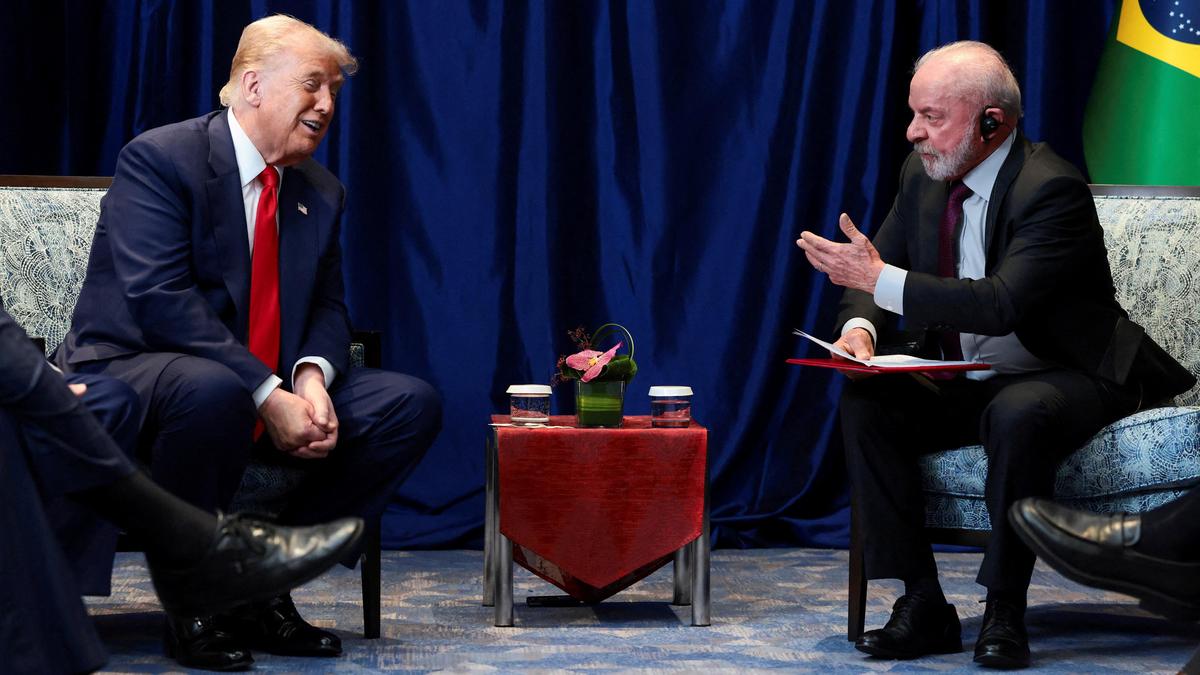
The biggest lie in the "resistance" narrative is that there is a "South America" to begin with. The region is more fragmented today than at any point since the 19th-century post-colonial wars. Brazil under Lula behaves as a global power-broker, indifferent to the chaos in Caracas. Argentina under Milei is attempting a radical, scorched-earth pivot back to the West that makes the State Department look like socialist lite.
When analysts talk about "resistance" to the U.S., they usually mean a handful of insolvent regimes—Venezuela, Cuba, Nicaragua—clinging to ideological life rafts. That isn't a geopolitical shift. It’s a bankruptcy proceeding.
The real players—Chile, Uruguay, and increasingly Colombia—aren't looking for a "new paradigm." They are looking for the highest ROI. If the U.S. offers a lukewarm trade preference and China offers a $10 billion deep-water port with no human rights strings attached, the choice isn't "anti-imperialist." It’s basic math.
The China Bogeyman is a Mirror
Critics love to point to China’s massive infrastructure spending in the region as proof of a "Donroe doctrine" in reverse. This ignores the internal mechanics of how these deals actually work. I’ve seen these negotiations from the inside. They aren't about "building a new world order." They are about local politicians securing enough capital to win the next election cycles.
China doesn't want to govern South America. Governing South America is a nightmare of bureaucracy, labor strikes, and shifting legal frameworks. China wants the dirt. Specifically, the dirt containing lithium, copper, and iron ore.
The U.S. failure isn't a failure of "imperialism." It’s a failure of salesmanship. For decades, Washington treated South America as a backyard that would always be there. Meanwhile, Beijing treated it as a warehouse. When you ignore your warehouse, don't be surprised when someone else starts managing the inventory.
The Lithium Triangle and the High Cost of Purity
Consider the "Lithium Triangle" (Argentina, Bolivia, and Chile). This region holds more than 50% of the world’s known lithium reserves.
- Bolivia has effectively nationalized its reserves, resulting in almost zero actual production.
- Chile is mired in regulatory debates that have stalled new private investment.
- Argentina is the only one moving the needle because they stopped caring about the "geopolitics" and started caring about the cash.
The U.S. approach to this has been to wag a finger about "democratic values" and "environmental standards." While those are noble goals, they don't build refineries. When a Chilean mining minister is choosing between a U.S. company that requires five years of environmental impact studies and a Chinese state-owned enterprise that shows up with a check and a construction crew, the "resistance" to the U.S. is actually just a resistance to boredom and delay.
Commodities Don’t Care About Your Ideology
We are entering a period of "Competitive Multipolarity." This isn't the Cold War. There are no "sides." There are only customers.
Brazil’s massive agribusiness sector is a perfect example. They will take U.S. agricultural technology, use Russian fertilizers, and sell the resulting harvest to China. To call this "anti-American" is to fundamentally misunderstand how global trade functions in 2026.
The "Donroe doctrine" implies a level of U.S. control that hasn't existed since the 1980s. The U.S. share of global GDP has shrunk. The South American share of global resource importance has grown. The leverage has shifted.
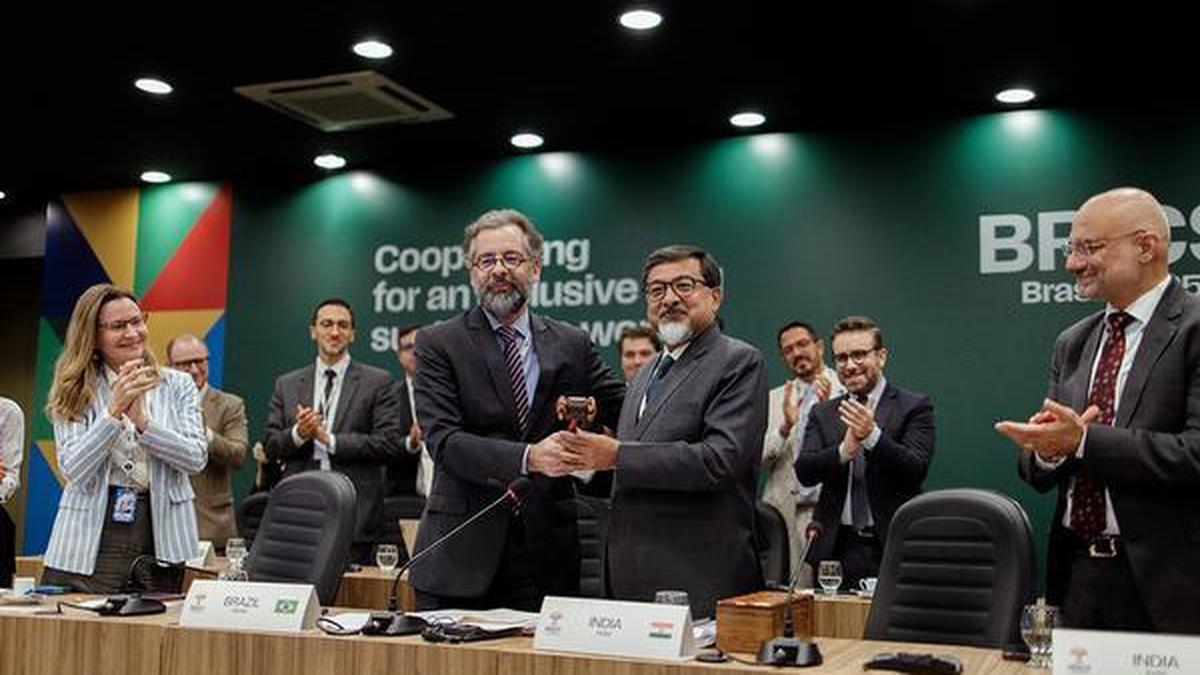
When Brazil, India, and South Africa (the heart of the BRICS+ expansion) meet, they aren't plotting the downfall of the dollar. They are plotting the rise of their own local currencies to avoid the volatility of the Fed. That’s not a revolution. That’s risk management.
The Internal Collapse: Why Populism is the Real Threat
If you want to find the real source of South American "turbulence," stop looking at the White House. Look at the presidential palaces in Lima, Bogota, and Brasilia.
The region’s biggest enemy isn't "the Gringo." It is the inability to maintain a consistent rule of law for more than two consecutive administrations.
- The Pendulum Effect: Every four to eight years, the entire economic philosophy of a nation flips 180 degrees.
- The Brain Drain: The smartest people in Caracas aren't staying to "resist the U.S." They are moving to Miami and Madrid.
- The Security Void: Transnational crime syndicates now have larger budgets than some national militaries.
These are internal failures. Blaming the "Monroe Doctrine" is a convenient way for Latin American elites to dodge accountability for the fact that they haven't modernized their tax codes or education systems in half a century. It is easier to point at a map of Washington than it is to fix the corruption in your own judiciary.
Stop Asking if the U.S. is "Losing" South America
The question itself is flawed. You can’t lose something you never owned.
The U.S. is not a parent and South America is not a rebellious teenager. They are business partners in a crowded marketplace where better deals are being offered by a new guy across the street.
If Washington wants "influence," it needs to stop sending "special envoys" to talk about "regional cooperation" and start sending capital that can compete with the China Development Bank. It needs to stop using sanctions as a blunt instrument and start using trade as a scalpel.
The "resistance" isn't a wall. It's a revolving door.
The Brutal Reality of "South-South" Cooperation
There is a lot of talk about "South-South" cooperation—the idea that developing nations will trade among themselves and cut out the West.
Check the trade balances. These nations aren't trading with each other. They are all trading with China. Brazil’s trade with its Mercosur neighbors is a rounding error compared to its exports to Shanghai. The "resistance" to the U.S. isn't creating a new, independent South America. It is creating a South America that is a subsidiary of the Chinese industrial machine.
Is that "sovereignty"? Only if you define sovereignty as the right to choose your master.
The Argentine Experiment: The Counter-Counter-Intuition
While the rest of the continent flirts with "multipolarity," Javier Milei’s Argentina is doing the most contrarian thing possible: doubling down on the West.
By dollarizing (effectively or literally) and aggressively courting U.S. tech and energy firms, Argentina is betting that the "resistance" is a losing play. They are betting that being the U.S.’s best friend in a neighborhood of skeptics will yield a "loyalty premium."
It is a high-stakes gamble. If it works, it exposes the "anti-imperialist" rhetoric of its neighbors as the economic suicide pact that it is. If it fails, it will be cited as the final nail in the coffin of Western influence.
The End of the "Backyard"
The era of the "backyard" is over. But it wasn't ended by a revolutionary fire. It was ended by a lack of interest and a better price point.
The U.S. has spent the last two decades focused on the Middle East and the South China Sea. South America didn't "build resistance." It just moved on. It found other dates to the dance.
The "Donroe doctrine" isn't being dismantled by protesters in the streets. It is being deleted from the spreadsheets of multinational corporations who realized that the U.S. government no longer has the political will or the financial stomach to back up its "manifest destiny" with hard cash.
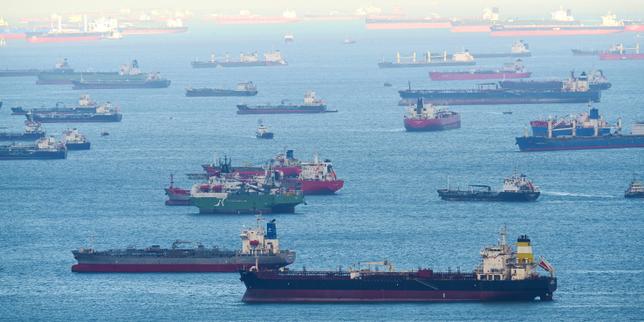
If you want to understand the future of the continent, stop reading political manifestos. Start reading the shipping manifests of the Port of Santos.
The U.S. isn't being pushed out. It’s being ghosted. And in geopolitics, being ignored is far more dangerous than being hated.
Stop looking for a revolution. Start looking for the liquidation sale. The price of Lithium just dropped, and the U.S. didn't even put in a bid.