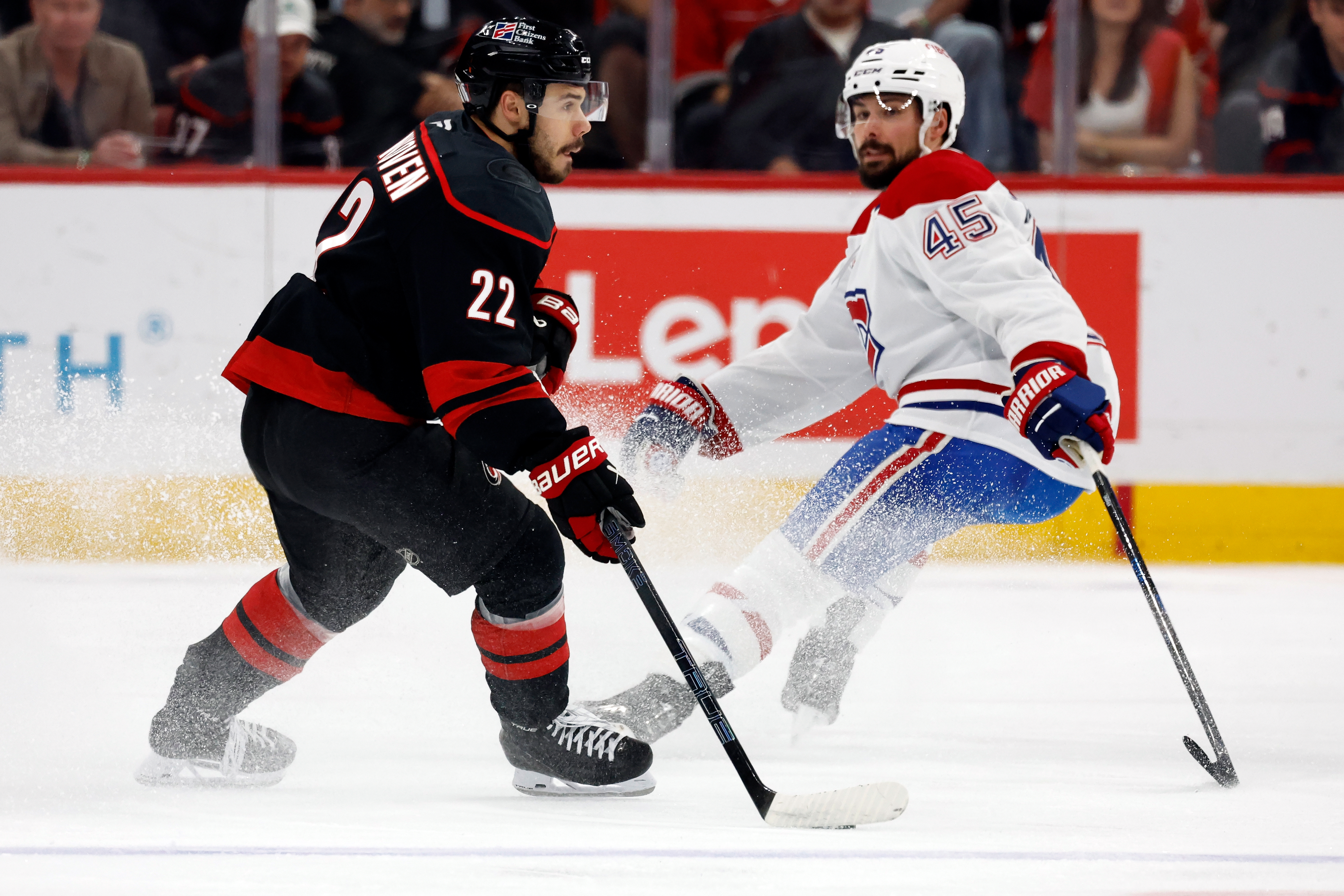
The tank ran completely out of gas. That's the simplest explanation for why the Montreal Canadiens watched their improbable playoff run crash into a wall on Friday night in Raleigh. A 6-1 drubbing at the hands of the Carolina Hurricanes in Game 5 of the Eastern Conference Final officially ended the season.
It hurts right now. Nobody wants to see a magical spring finish with a blowout loss while opposing fans mockingly chant your own team's slogans. But let's look at the reality of the situation. This group played 19 gruelling games in 41 nights. They hit their physical limit.
They ran into a Carolina squad that has spent eight seasons under Rod Brind'Amour learning how to choke the life out of opponents. The Hurricanes were rested, organized, and entirely healthy. Montreal was held together by medical tape, sheer will, and prayer.
We don't need to overanalyze the individual mistakes from Game 5. The details of a five-goal blowout aren't going to teach us anything new about a team that gave everything it had. Instead, we need to focus on what this deep run actually tells us about where Kent Hughes has this franchise heading. Hint: it's much faster than anyone anticipated.
The Brutal Reality of the War of Attrition
The first two rounds of the post-season were absolute wars on ice. Going through a seven-game battle with the Tampa Bay Lightning followed by another seven-game slugfest against the Buffalo Sabres completely emptied the tank.
Physicality takes a massive toll. In the opening rounds, Josh Anderson was an absolute menace on the forecheck, physically punishing defenders on every dump-in. By the time the Eastern Conference Final rolled around, that relentless physical edge completely vanished. It's safe to assume he was playing through something significant.
Look at the matchup disparity that decided this series.
- Carolina played the absolute minimum number of games to reach the third round.
- Montreal played the absolute maximum, surviving back-to-back Game 7s.
- The Hurricanes suffocated Montreal's transition game by forcing five odd-man rushes in the opening 20 minutes of Game 5 alone.
When you run out of energy, your brain slows down. When your brain slows down, your gaps widen, and you give up odd-man rushes. Jakub Dobeš actually made massive breakaway stops on Jackson Blake and Nikolaj Ehlers early in the first period to keep it close, but the floodgates were bound to open. Getting blasted 6-1 on your 25th birthday is a tough pill to swallow for Dobeš, but he wasn't the problem. The team in front of him simply had nothing left to give.
Demidov and the Urgent Need for a Second Line Center
If this postseason proved one thing, it's that Ivan Demidov is the real deal. The young winger used these 19 playoff games to figure out exactly how to play at a higher level of intensity. He didn't just survive the faster pace; he began to dictate it at times.
But this run also exposed the missing piece that Kent Hughes must address this summer. Montreal doesn't have a functional second line.
Right now, opposing coaches can dump all their defensive attention directly onto Nick Suzuki’s line. Because there isn't a secondary offensive threat to scare them, guys like Jordan Staal can spend the entire night neutralizing Montreal's top trio.
Demidov needs a specific type of center to unlock his full potential. This isn't about finding a passenger. The Canadiens need an elite transition pivot who can effectively gain the blue line, establish zone control, and extend offensive-zone time. When you look at championship teams, their coaches can throw out two distinct lines that force the opposition to hesitate. Right now, Martin St. Louis doesn't have that luxury.
Why the Rebuild Timeline Just Shifted into Overdrive
Let's gain some perspective on where this team stands. The Canadiens entered the playoffs as the sixth seed in the East. They knocked off the fourth and fifth-ranked teams before running directly into a second-ranked powerhouse.
This isn't a time to lament what went wrong. It's a time to celebrate how far ahead of schedule this entire project is.
Look across the league at teams in similar positions. The Anaheim Ducks have a brilliantly talented young core, but they ultimately bowed out because they hadn't learned how to win heavy games against a veteran squad like Vegas. The exact same thing happened to Montreal. It takes a specific type of polish to win in late May, and that polish only comes from getting your teeth kicked in at least once on the big stage.
Consider the asset management that got the Canadiens here. Kent Hughes flipped Sean Monahan for a first-round pick. He weaponized that draft capital to secure Noah Dobson, who is now locked up on a steady eight-year deal as a premium right-shot defender. That's an masterclass in acceleration.
When older, heavy teams like Carolina and Tampa Bay eventually age out over the next two seasons, Montreal is primed to inherit the Eastern Conference.
The Blueprint for the Summer
The front office has an immense amount of salary cap flexibility to play with. The blueprint for transforming this roster into a true Stanley Cup contender requires three definitive steps this summer.
First, stop hoarding draft picks and hunt for a proven second-line center via trade or free agency. The analytics show that late first-round picks have a terribly low probability of turning into impactful NHL players. Trade the hope for a proven commodity.
Second, the defensive core must add size and nastiness. Arber Xhekaj has the physical tools, but he needs to learn how to harness that aggression into clean, open-ice hits that stop cycles rather than landing himself in the penalty box.
Finally, stop worrying about regular-season line combinations and build a system designed for heavy, low-event playoff hockey. The Hurricanes provided a masterclass in swarming forechecks. Copy it.
The disappointment of Game 5 will fade. The lessons learned by Cole Caufield, Lane Hutson, and Juraj Slafkovský during this grueling two-month stretch will last forever. Walk around Montreal this summer and picture what the parade is going to look like on Sainte-Catherine. The foundation is officially built. Now it's time to add the muscle.